









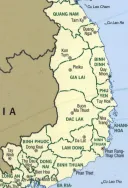







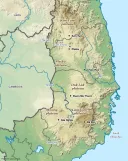




The Se San and the Srepok carry the water of our highlands into Cambodia, where the same peoples live on both banks. In 2017 the gates closed on Lower Sesan 2, a dam just below the rivers’ meeting in Stung Treng. It flooded some 30,000 hectares and displaced nearly 5,000 people, most of them Bunong, Brao, Lao, Jarai and their neighbors; more than 180 families refused to go, and some of them live still at the edge of the water. It was planned by Vietnam, built by China and owned by both with a Cambodian partner. This page is what happened, in the words of the people it happened to.

Upstream first
Lower Sesan 2 was not the first dam on these rivers. From 1996 releases from Vietnam’s Yali Falls dam sent floods down the Se San into Ratanakiri; at least thirty-two people had drowned by 2000, and the story, with the resettlement on the Vietnamese side, is on The dams. The villages organized in 2001 into what became the 3S Rivers Protection Network. In August 2005 it recorded four more deaths after a release from Yali. In January 2016, as the new dam went up below them, a Lao villager of Pong commune in Ratanakiri, Voy Sot, said what the river people had understood for twenty years: “We can handle floods from rain but when the Yali [Falls] Dam opens its reservoir we get flash floods. We are caught in the middle. If they finish the Lower Sesan II, how can we survive?”

The dam
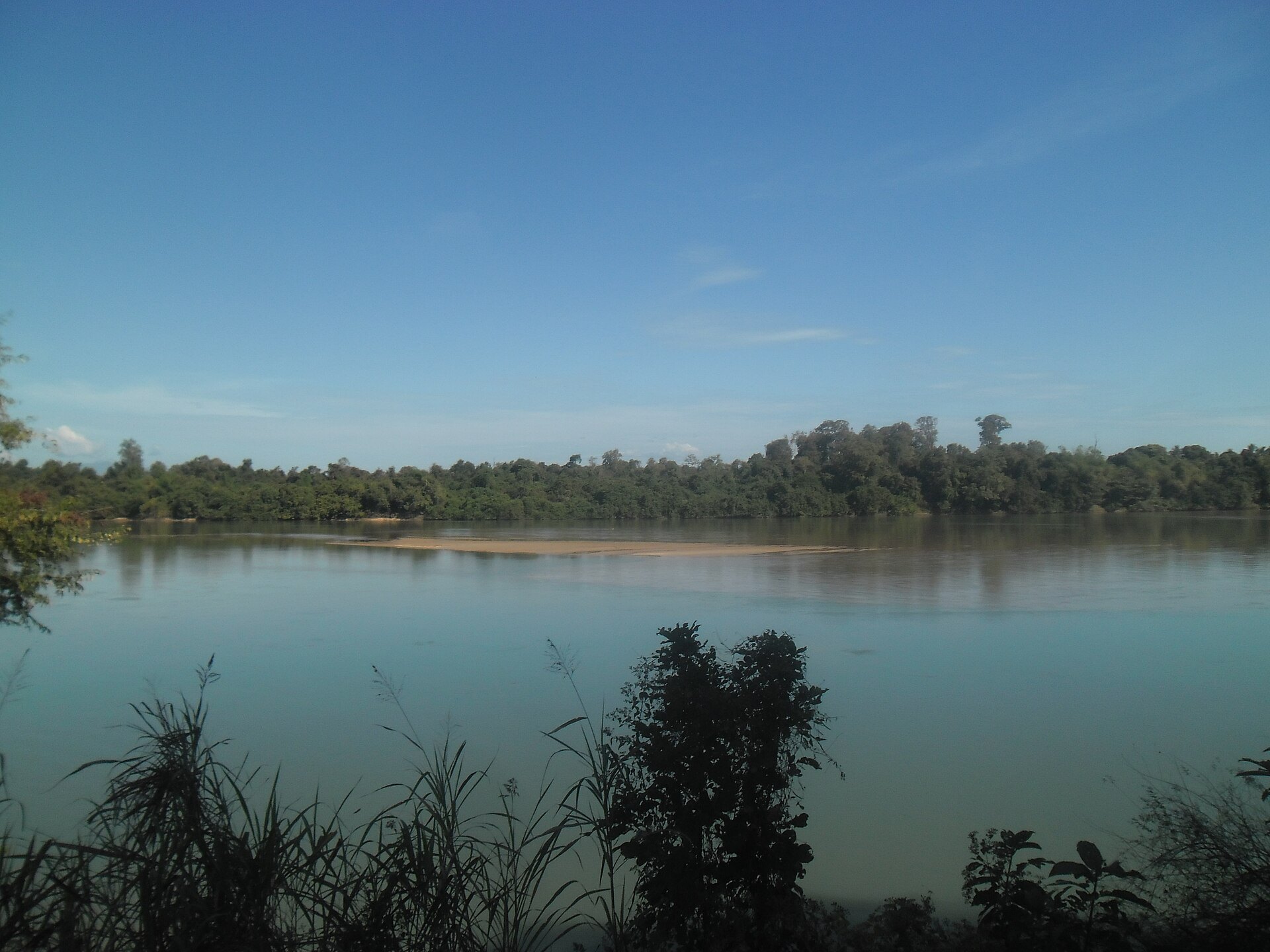
The geographers Ian Baird and Akarath Soukhaphon summarize its history: “The Lower Sesan 2 Dam (LS2) is the largest and most controversial hydropower dam ever developed in Cambodia. The 400 megawatt-capacity project, which blocks both the Sesan and Srepok rivers in Stung Treng province, northeastern Cambodia, was first envisioned in 1998, although the project was only completed in 2018. LS2 was initially an Electricité du Viet Nam (EVN) project. Later, however, with strong Chinese government support, a Chinese company, Hydrolancang International Energy Company, took over the Vietnamese share in the project, with EVN holding just a 10 per cent stake, and the Royal Group, a Cambodian company, holding a 39 per cent share.” It was built as part of China’s Belt and Road Initiative. Construction began in 2013; the gates began to close in 2017; Prime Minister Hun Sen and officials of the China Huaneng Group inaugurated it on December 17, 2018.
In 2012, before a stone was laid, a study in the Proceedings of the National Academy of Sciences had worked out what the dam would do to the river system. Of all the dams planned on the Mekong’s tributaries, “the dams with the largest impact on fish biomass are Lower Se San 2 (LSS2, 9.3% drop in fish biomass basin-wide).” Nine percent of the fish of the whole Mekong, from Laos to the delta, for four hundred megawatts. The network that represented the villages put that number in its appeal to stop the dam in March 2012, and said that it would resettle 5,000 people and affect more than 100,000. It was built anyway.
Who was moved
Human Rights Watch went back in 2019 and 2020 and interviewed more than sixty people for its report Underwater, published in August 2021 and now in our library. Its findings:
- “Completed in 2018, the Lower Sesan 2 dam ultimately resulted in the displacement of nearly 5,000 people, mostly Indigenous peoples and other ethnic minorities”: Bunong, Brao, Kuoy, Lao, Jarai, Kreung, Kavet, Tampuan and Kachok.
- “In addition, the project impacted tens of thousands of other people upstream and downstream of the dam who depended on the rivers’ fisheries for food and income.”
- The offer was “a parcel of land in a resettlement site of about five hectares, as well as a pre-built home or US$6,000.” Fishing losses were paid once, for one year; farming losses were not paid.
- “By 2017, when CHNG completed the walls of the dam and began flooding the villages, over 700 families agreed to receive offered compensation packages, but a total of over 180 still refused … Those who refused mostly moved to smaller areas of remaining ancestral land near the newly flooded reservoir area.”
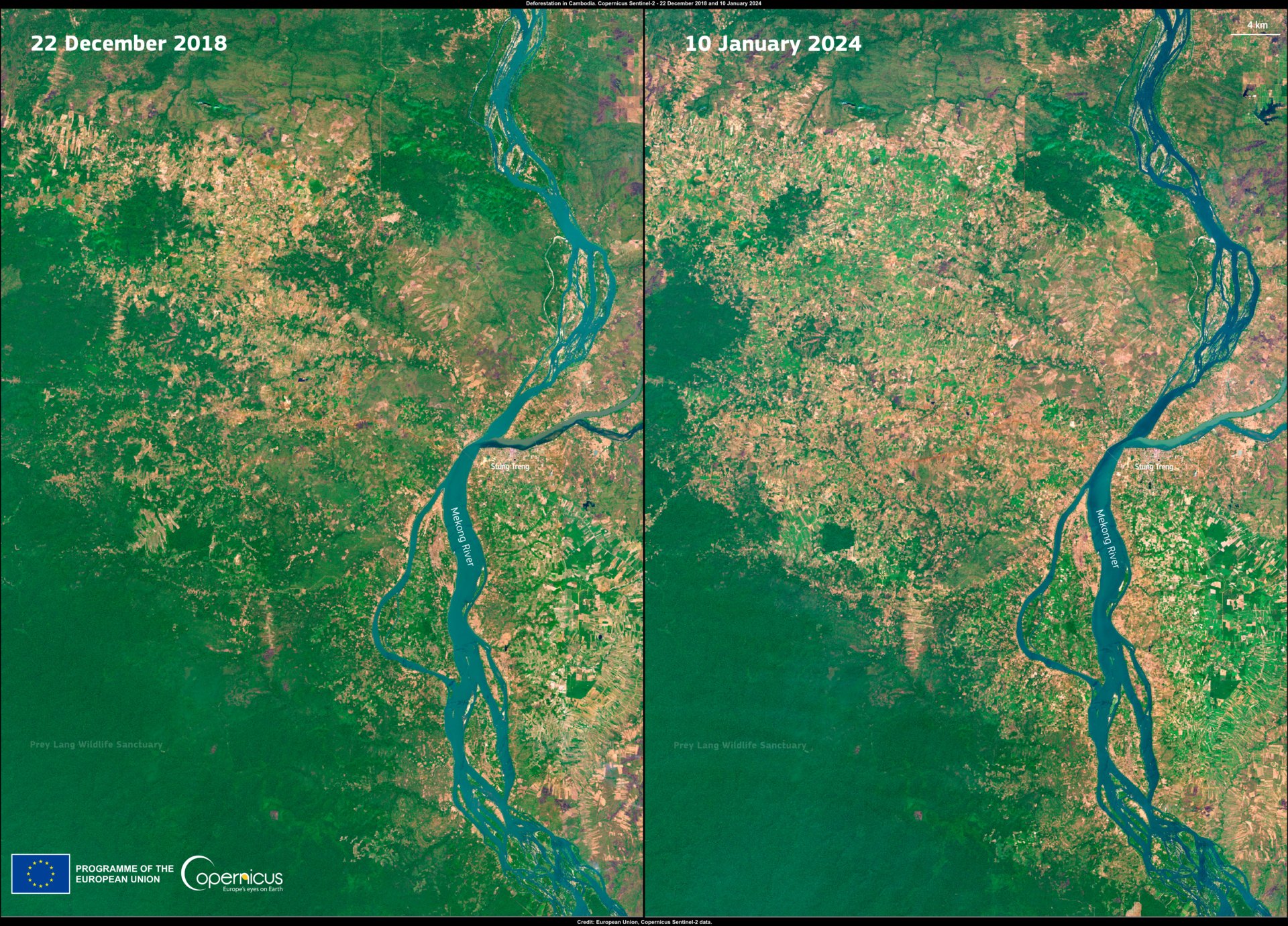
- “Of the 30,000 hectares of land flooded, most comprised forest, with roughly 5,000 hectares being used for agriculture.”
- Villagers “used to catch up to 40 kilos of fish a night. Now they sometimes struggle to get 10 kilo.”
International Rivers, reviewing the company’s own plan in 2019, found the scale of the thing had been decided on paper before anyone counted: “while the Lower Sesan 2 compensation plan lists only six villages as being affected, there are widely publicized studies evidencing that the dam impacted more than 250 villages.”
Srekor and Kbal Romeas
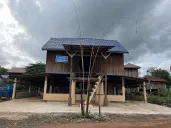
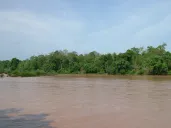
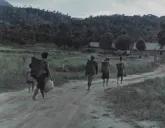
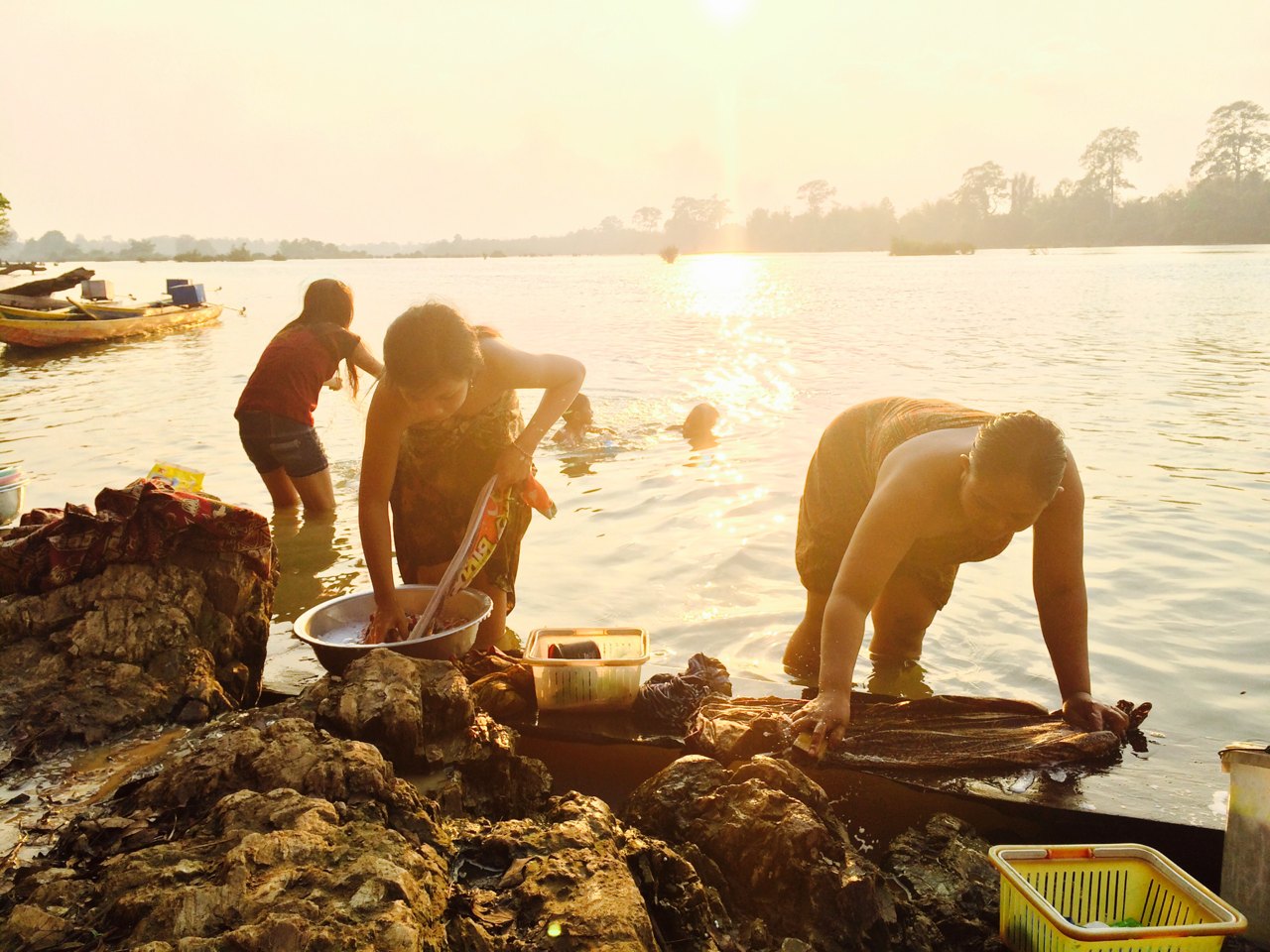
Srekor was two Lao villages on the Srepok. The Cambodia Daily was there on the day the first floodgate closed for testing, July 15, 2017: “Srekor village is burning. On the north bank of the Srepok River, trash fires make ashes of what the families have left behind. They had fled before the rising waters promised by the Lower Sesan II dam, which closed its first floodgate for testing on Saturday morning after three contentious years of construction.” About 120 families were still spread along the bank, waiting. Dam Morn, forty-seven: “If the village floods, we will move to the safety hill. I’m worried about a flood, but let’s see.” Hem Khat, sixty: “The villagers don’t believe the government. Sometimes the things they say are not true.” Ly Hen, twenty-eight: “The company has offered compensation, but the compensation is not enough.” A year and a half earlier a fisher of the village, Vany, thirty-eight, had told a reporter: “We will die because of the dam. It is better to kill my family than relocate us.” The photograph at the head of this page was taken there in February 2015, of women washing clothes in the river that was about to take the village. When the water came, “72 ethnic Lao families rebuilt their homes on customary lands at the edge of the reservoir.”
Kbal Romeas was a Bunong village. The Bunong are the Mnong of Dak Nong under their Cambodian name; see The Mnong. Sarah Milne, Sango Mahanty and Thomas Cristofoletti recorded in 2021 that “52 indigenous Bunong families refused the resettlement package and remained nearby on their customary lands after losing their village,” and that “one-third of the Kbal Romeas resettlement village consists of empty houses, because 52 families refused to take the resettlement package.” A Bunong villager told Human Rights Watch why, and it is the sentence this page exists for: “I can’t leave my ancestors here … I can’t abandon their spirits.” Another, on why no one had fought harder: “I thought about confronting them … There was no use because sooner or later they would build the dam anyway.” Of the resettlement site: “Our healthcare center’s roof was leaking … Almost all the wells are not usable.” “The soil of our old farmland was much better than the new farmland because it was close to the river.”
.png)
The spirits and the dead
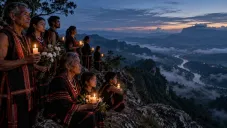
For the people of these villages the loss was not only land and fish. Baird and Soukhaphon studied the spirit mediums of the Lao villages of the reservoir, women who “have contested the LS2 since before its construction began and have also been directly affected by the dam,” and argue that “apart from having potentially important material impacts, dams such as LS2 also serve to alter nature-society relations through variously affecting spirit mediums, their practices, and beliefs associated with spirits.” The ancestors of Kbal Romeas are buried where the old village stood, and that is why fifty-two families would not leave. The same pattern, spirit forests and burial grounds lost to projects designed elsewhere, runs through Forests, logging and the sacred groves and Rubber.
Why this is in our library
The Bunong of Kbal Romeas are the Mnong of Dak Nong; the Jarai of the Se San are the Jarai of Gia Lai; see Kin across the border. A border drawn by France divides a single people, but not a single river. The dam that drowned their villages was designed by Vietnam’s electricity company, financed and built by China, and sold to them as development, which is the same story as ours told one province downstream. And it is the one place on these rivers where the people who were moved were interviewed by name, in numbers, by outsiders who wrote it down. If you have family in Ratanakiri or Stung Treng, their account of the dams belongs here too.
Sources
- Human Rights Watch, Underwater: Human Rights Impacts of a China Belt and Road Project in Cambodia, August 10, 2021, DCHO library (also at hrw.org) — the figures, the compensation, and the villagers, whom the report quotes under pseudonyms
- International Rivers, Watered Down: How do big hydropower companies adhere to social and environmental policies and best practices? (November 2019), DCHO library
- Sarah Milne, Sango Mahanty and Thomas Cristofoletti, “Ruptured Worlds: A Photo Essay on the Lower Sesan 2 Dam,” Made in China Journal 6:2 (2021)
- Ian G. Baird and Akarath Soukhaphon, “The Belt and Road Initiative and spirit mediums: the Lower Sesan 2 dam and sacred space in northeastern Cambodia,” Modern Asian Studies 58:5 (2024)
- Guy Ziv and others, “Trading-off fish biodiversity, food security, and hydropower in the Mekong River Basin,” Proceedings of the National Academy of Sciences 109:15 (2012)
- 3S Rivers Protection Network, “Stop Plans to Construct the Lower Sesan 2 Hydropower Project,” March 30, 2012
- Paritta Wangkiat, “Trapped Between Two Dams,” Mekong Eye, January 26, 2016
- Cambodia Daily: September 2, 2005 and “Waiting for the Flood,” July 17, 2017
Compiled September 2026. Figures for the people displaced range from about 2,000 in early estimates to more than 5,000; we follow Human Rights Watch.