
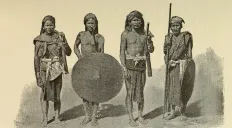


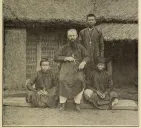
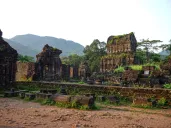

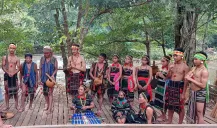






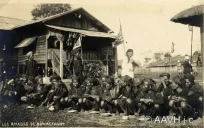
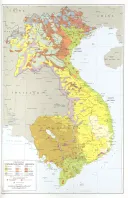
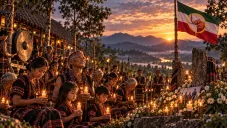
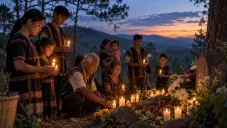
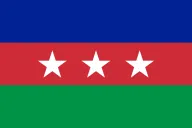
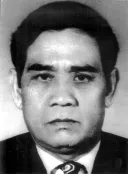
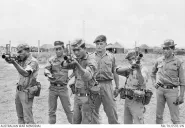

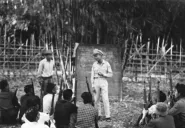
The Jarai are the largest of our peoples and the largest Chamic-speaking people on the mainland — larger than the Rhade, and far larger than the Cham themselves. Their country is the Pleiku plateau and the valleys falling away from it into the Ayun and the Ba, and it does not stop at the border: a fifth of Ratanakiri province in Cambodia is Jarai. They count descent through women. They had no chief above the village, and yet they kept two offices, the Master of Fire and the Master of Water, whose reach ran to the courts of Huế and Phnom Penh. And a Jarai scholar in Texas has published their name for themselves: Anăk Čư̆ Čhiăng.
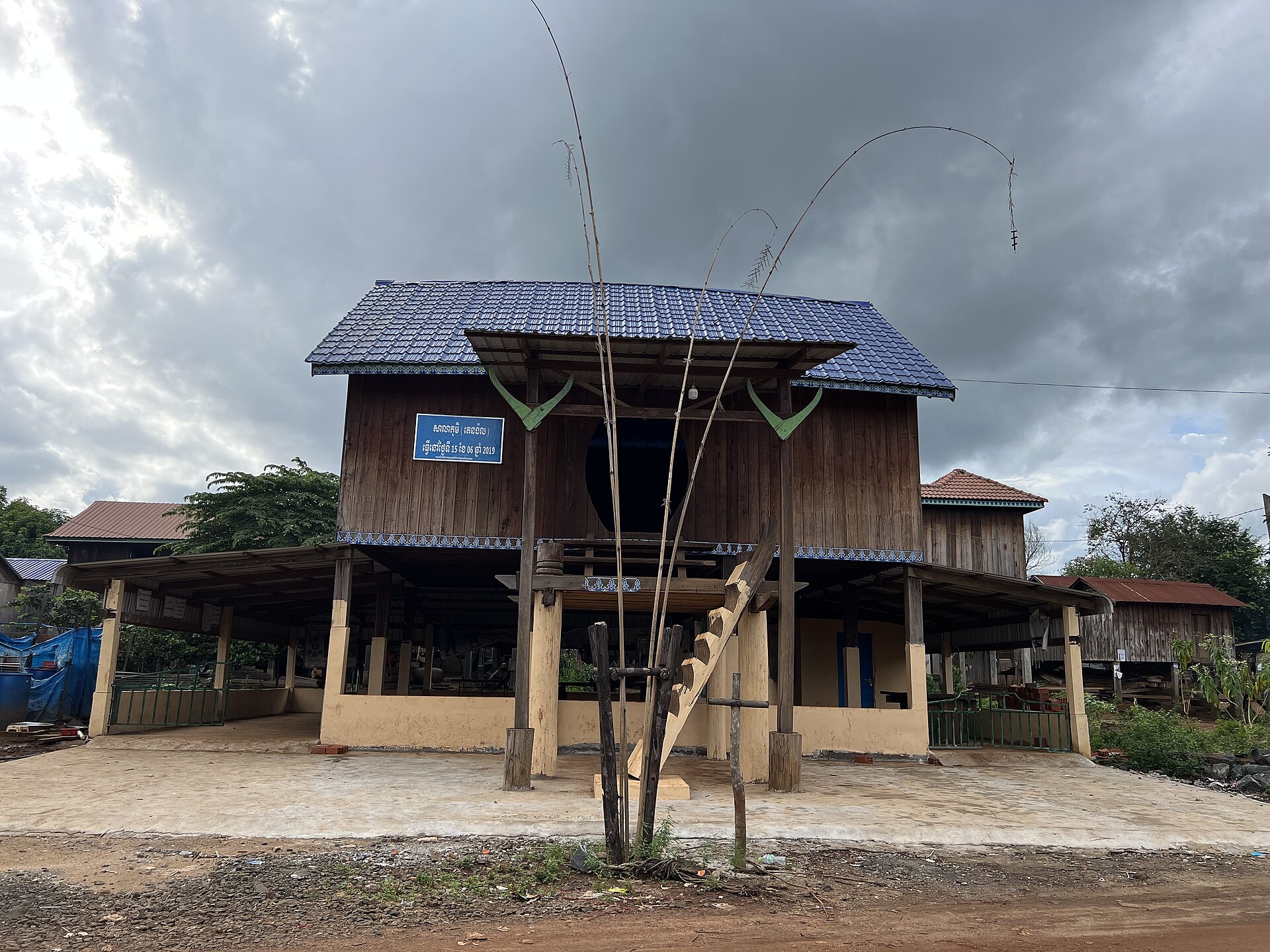

The country
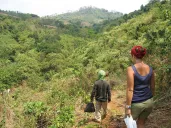
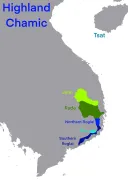
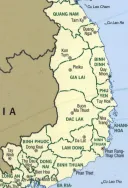
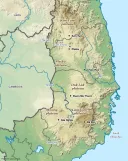
The Jarai country is the Pleiku plateau, basalt at seven or eight hundred meters, and the valleys that fall away from it south and east. Its rivers are the Ayun and the Ba, which the Jarai of Cheo Reo live along; the Se San and the Sa Thay running north-west toward Cambodia; and the Ia Drang running west.
Ia is the Jarai word for water. That is why so many names in Gia Lai begin with it — Ia Grai, Ia Pa, Ia Drang, Ia Hrung — and it is why the Master of Water is the Pơtao Ia. If the name of the people means what Jarai people say it means, the people and the office are named from the same running water.
The places a reader of this library should be able to put on a map: Pleiku, Cheo Reo — now Ayun Pa — Chu Se, Dak Doa, Ia Grai, Mang Yang, Krong Pa, Ia Pa, Phu Thien, Chu Prong, Chu Pah, Duc Co. And across the line in Cambodia: Ou Ya Dav, Andoung Meas, Bar Kaev.
The name
What the people is called depends entirely on who is speaking. Jarai, Jrai, Jơrai is the people’s own, in Latin script. Jörai is the French ethnographic spelling. Gia Rai is the Vietnamese state’s. Charay is Khmer. Sadet, which the French and then the Americans used for the Masters of Fire and Water, is not a Jarai word at all; it is Khmer-derived, and the Jarai word is pơtao.
And then there is the one a Jarai man chose for the title of his own article, published in an American musicology journal in 2010: Anăk Čư̆ Čhiăng, which he and his co-author render as the Original People of Vietnam’s Central Highlands. Anăk is child or offspring; čư̆ is mountain. That is the phrase to start from, because it is ours.
What Jarai means. Jarai people say it means waterfall, or people of the waterfalls, or people of the flowing river. A survey of the Jarai of Ratanakiri records it in exactly those terms: the name they use for themselves means waterfall. No dictionary we can reach establishes the etymology independently. Under the rule this library works by, that does not make it doubtful; it makes it a thing Jarai people say about their own name, reported as such.
And on the relationship to the Cham, the Jarai have their own formulation, recorded by a linguist at the Royal University of Phnom Penh:
“We and the Chams, we are brothers of the same mother.”
A matrilineal people describing a linguistic relationship as a kinship one, which is the correct way round.
How to read a Jarai name
This section will change how you read four other pages of this library, so it goes early.
A Jarai name puts the clan first and the person second. Ksor Ruk. Siu Hlom. Rmah Del. Rahlan Lam. Nay Luett. Kpa Cul. Kpuih Grit. Rcom Phoh. Puih Bang. Hiao Mem.
That is the opposite of the Rhade convention, where the first element is the sex marker — Y for a man, H’ for a woman — and the clan comes last: Y Bham Enuol, H’Lo Kbuor. And it is different again from the Bahnar and Sedang, where a man’s name often opens with A.
Our own prisoner records show all three at once. The Gia Lai page holds 233 people whose names begin with a clan. The Dak Lak page holds sixty-six whose names begin with Y or H’. The Kon Tum page holds eleven, ten of whose names begin with A. Learn that one contrast and you can sort most highland lists by people at a glance.
The clans, counted from our own record
Here is what the 233 Gia Lai entries give when the clan element is counted:
| Clan | People in our Gia Lai record |
|---|---|
| Ksor | 41 |
| Siu | 41 |
| Rahlan | 25 |
| Rmah | 24 |
| Kpa | 20 |
| Rcom | 16 |
| Kpuih | 11 |
| Nay | 7 |
| Puih | 5 |
| Hiao | 2 |
Plei in the north, Bon in the south
A US Army handbook of 1966 states, at page 282, that Jarai villages are called plei in the north and bon in the south.
Our own register, compiled between 2001 and 2006 by Dega people writing down the names of their own villages, says the same thing without having been told. Of the 233 Gia Lai entries, 189 villages are Plei, thirty-two are Bon, and four are Ploi. And the Bon villages are not scattered. They fall in exactly three districts:
| District | People | Plei | Bon |
|---|---|---|---|
| Chu Se | 91 | 85 | 0 |
| Ayun Pa | 50 | 27 | 22 |
| Dak Doa | 35 | 35 | 0 |
| Mang Yang | 8 | 8 | 0 |
| Ia Grai | 8 | 7 | 0 |
| Krong Pa | 8 | 0 | 8 |
| Ia Pa | 5 | 0 (3 Ploi) | 2 |
Ayun Pa, Krong Pa and Ia Pa are the old Cheo Reo country. Nowhere else in the record does a Jarai village begin with Bon. Kok Ksor was born at Bon Broai, Cheo Reo, and the pattern holds: Bon Croh Ponan, Bon So Ama Rong, Bon So Ama Hang, Bon Tang, Bon Tuat, Bon Nu, Bon Ling, Bon Tul. (Ama X in those names means father of X; villages are named for men who are somebody’s father.)
The southern Jarai use the word their Rhade neighbors use, buôn. The northern Jarai use plei, which is also the Bahnar word. The line between the two runs through the middle of the Jarai people, and it runs where the plateau drops into the bottomlands of the Ayun and the Ba.
And one more thing falls out of the same data. All seven of the Nay in our Gia Lai record are from Ayun Pa and Krong Pa — six and one — and not one from Chu Se, Dak Doa, Ia Grai or Mang Yang. The clan sits exactly where the Bon villages sit. There is an explanation that fits, and it comes from an onomastic collection rather than from a dictionary, so we give it as a lead and not as a finding: Nay is said to mean the lowland where silt is laid down every year by the floods, and farmed. The Nay are named for the ground they farm, and the ground is in the valley.
The same collection glosses the others as landscape and trees: Ksor, the high field cultivated to exhaustion and gone back to forest; Siu, a small-leaved tree with dark wood used for building houses; Rơmah, the sweetsop; Kpă, a rough-leaved forest tree with small dark sweet fruit; Rơ Ô, a kind of bamboo; Rah Lan, along the road.
One of those is independently corroborated, and by an unlikely witness. The same 1966 Army handbook uses kso’r as an ordinary farming word, at page 709: a swidden supports no more than four successive crops, is then abandoned and called a kso’r, and the kso’r grows over, returns to its wild state, and is not cultivated again for at least twelve years.
So the largest Jarai clan name in our prisoner records is the word for a field left to go back to forest. An elder, or the Jarai–English dictionary a Jarai scholar published in 2010, could settle the rest of them in an afternoon, and we would like that done.
What a clan is, and what it eats
Every Jarai belongs to a clan. The clans are scattered across the whole country and have no political function at all — the village is the highest political unit there is. The clan name descends through women. Marriage or sex inside the clan is forbidden, and the offense is understood as damaging the fertility of the soil as much as the fertility of the clan, so the punishment people feared was crop failure.
Each clan has an allied animal and a food prohibition attached to it. The 1966 handbook sets out the mechanism at page 289: a member may not kill, eat, or bring into the house the animal his clan is bound to, because the bond is with the animal’s spirit; breaking it is believed to bring vomiting and sickness, and the offender must placate the spirit with rice wine and a pig. If a stranger carries a tabooed animal into a longhouse, the head of that house will fall ill.
Two of those clan charters survive in story form, and both are worth reading closely, because in both the ancestor is a woman:
Rcom — cattle. “Once two Ro’chom sisters washed a fishing net and put it out to dry. During the night the net disappeared; the older sister accused the younger of having stolen it. A fight ensued in which the older sister killed the younger one. Later when a cow was killed, the stolen net was found inside its carcass. Since then the Ro’chom have not eaten the flesh of cows because a cow caused the death of one of their people.”
Ksor — reptiles. “In the Kso’r clan, an ancestor once discovered the scales of a dragon in the rice storehouse. She asked a sorcerer what this meant, and he replied that the reptiles … wanted to make an agreement with her clan and to help them. Therefore, the Kso’r do not trap and kill any reptiles.”
Which reptiles are forbidden to the Ksor varies from region to region and even from village to village. The clans also have reputations: the Ksor are said to be under a curse and condemned to fail at whatever they attempt, while the Rcom, the Rơ Ô and the Rmah are held to be able to make terms with the spirits and get wealth and power that way.
These are Jarai narratives. They were written down by an army, and they were told by Jarai people, and they are the closest thing to Jarai oral literature that this page has been able to recover.
The clan of the adopted
And then this, from page 287 of the same book, which explains a good deal:
“Certain non-Jarai people live in Jarai villages. Such strangers have been adopted by the village and have the Jarai clan name Kso’r. Although these people are never fully integrated into the tribe, they are afforded protection by the Jarai.”
A Jarai village had a formal procedure for turning an outsider into a person with a name. The name it gave him was Ksor — forty-one of the 233 in our own Gia Lai record — and Ksor is the word for the old field going back to forest. A people who takes in a stranger and calls him the fallow ground is telling you something about how it thinks about both.
The language
Jarai is Austronesian, Chamic, with the code jra. Glottolog places it inside a Rade node — which is a stronger statement about the Rhade relationship than the usual formula that they are each other’s closest relatives. It was misfiled as Mon-Khmer well into the twentieth century; the Chamic affiliation was argued as early as 1864 and set out for modern readers in 1957.
Jarai is the largest Chamic language on the mainland. Bigger than Rade. Far bigger than Cham.
The language on the page
A page about a people ought to carry some of the language, so here is some, with glosses.
| Jarai | Gloss |
|---|---|
| sang / sang anŏ | house / household, family |
| kơnung djuai | clan, lineage |
| ayŏng / adơi | elder sibling / younger sibling |
| amĭ / ama | mother / father |
| pơtao | king |
| khua | chief, elder |
| phat kơđi | to judge a case |
| ia / apui / angin | water / fire / wind |
| yang | spirit |
| Ơi Adai | God — literally something like grandfather sky |
| hră / adoh / hia | book, writing / song / to weep |
| plei / bon | village, north / south |
The numbers are sa, dua, klâo, pă, rơma, năm, tơjuh, sơpăn, duarơpăn, pluh — and note the ninth, duarơpăn, which is built as two-from-ten. To greet someone you say Kơkuh; to thank them, Bơni; to someone leaving, Nao hiam.
Jarai has two words for we: ta, which takes the person you are speaking to into the group, and gơmơi, which leaves them out. It makes no distinction of gender in the third person at all.
And this, which is not decoration on a page about a people whose prisoners fill four other pages of this library — the first article of the Universal Declaration of Human Rights, in Jarai:
“Abih bang mơnuih-mơnam tơkeng rai rơngai laih anŭn mơdơ̆-mơđơr amăng tơlơi pơpŭ-pơyôm hăng tơlơi dưi.”
All human beings are born free and equal in dignity and rights.
What exists in Jarai, and who made it
The New Testament and Psalms, 1975 — Tơloi Pơgop Phrao hăng Tơloi Adoh Hơdăp, which reached Jarai readers on February 16, 1975, a few weeks before the highlands fell.
The whole Bible, 2016 — Hră Ơi Adai Pơhiăp, the Book of God’s Speaking. It is online and anyone can read it.
The Vietnamese–Jarai dictionary, 1977, compiled by Rơmah Dêl. A Jarai man — Rơmah is one of the principal clans — publishing a dictionary of his own language two years after the war ended.
The first Jarai–English dictionary, published in 2010 by Lap Minh Siu, a Jarai anthropologist at Texas Tech University whose native language is Jarai and whose master’s thesis was on making it. He has also published on Jarai echo morphology with Cambridge University Press.
Sixty-seven books of the Bible, read aloud in Jarai by Jarai people. Between June and October 2023 the Jorai Bible Association put the entire recorded canon onto the Internet Archive, free, twenty-five tracks a book. It is a Jarai institution publishing a Jarai corpus for Jarai listeners, and it is incidentally the best free Jarai lexical resource on the open internet, because the item titles give the Jarai names of the books: Genesis is Čơdơ̆ng Phŭn, the beginning of the root; Judges is Ƀing Khua Phat Kơđi, the chiefs who judge cases; Kings is Ƀing Pơtao; Chronicles is Hră Ruai, the book of the telling; Psalms is Adoh Bơni Hơơč; Lamentations is Čŏk Hia, weeping.
And schoolbooks that no longer exist. Jarai primers were prepared at Kon Tum in 1967 under the Highlander Education Project. Jarai was taught in at least some primary schools in the highlands until the minority-language programs were eliminated in the 1990s. Few schools teach it now. What keeps written Jarai alive is worship. See Writing our languages and Language resources.
The Jarai assessment of the Jarai of North America, from the scholar who made the dictionary, is not comfortable: it is in danger of disappearing, because Jarai children are learning English rather than Jarai.
The house and the line
Descent runs through women, and so do property and title. A mother takes the initiative in her daughters’ marriages, and a husband is expected to come and live in his mother-in-law’s house. The basic social unit, as the 1966 handbook puts it, is all the women descended from one particular woman, plus their husbands and their children.
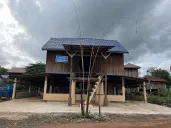
A village is four to fifty longhouses. It is the highest political unit the Jarai had; the clans do not govern and there was no chief above it.
Hold that fact in mind for the next section, because it is what makes the Masters of Fire and Water interesting. A people with no political authority above the village nevertheless maintained two named offices whose reach ran to two royal courts.
Farming was swidden on a long rotation — four crops at most, then twelve years of fallow — with permanent fields around Pleiku, Plei Kly and Cheo Reo by the 1960s. The difference between the two kinds of field is the whole of the land-loss story told at Land taken for coffee: a registry can see the permanent field and cannot see the twelve-year fallow. See also The rice year and Dega women.
The Masters of Fire and Water
The institution has its own page at Kings of fire and water and is not repeated here. What belongs here is the Jarai part of it: these were Jarai men, in Jarai villages, among Jarai people.
The word is not theirs. Sadet, which the French used and the Americans copied, is Khmer-derived. The Jarai word is pơtao, which in ordinary Jarai simply means king — the Jarai Bible’s books of Kings are Ƀing Pơtao. And the English word king is the thing that has caused all the confusion. The 1966 handbook, at page 307, puts it as honestly as anyone has:
“According to the legendary history of the Jarai, the Sadets were powerful rulers; however, factual sources indicate their power was more religious than political.”
Where they were is not settled and we print the disagreement. The same handbook places the Master of Fire in the Pleiku area and the Master of Water in the Cheo Reo area. Most other accounts, and this library’s own page, put the Master of Fire in the Ayun valley around Ayun Pa. We have not been able to settle it.
The clan. Hickey records that the Master of Fire was traditionally chosen from the Siu, which is consistent with the name of the man designated to succeed in 1987. We give that on Hickey’s authority and have not corroborated it.
A name and a date. This is new to this library. The Master of Fire whom Prosper Odend’hal went to see in 1904 has a name in the record, and the account of what happened is not mysterious at all. From page 280:
“The most serious incident involving the Jarai and the French occurred in 1904, when Odend’hal, a French official attached to the Ecole Française d’Extrême-Orient, traveled into Jarai territory without military escort to persuade a Jarai religious leader, the Sadet Oi At, to submit to French rule. Odend’hal was warmly received by the Sadet; but after drinking much ceremonial wine, he became sick and refused further offers of wine and chicken. The refusal annoyed the Sadet, as did Odend’hal’s request to see the sacred sword, symbol of the Sadet’s office. The Jarai interpreted a letter Odend’hal wrote to another French official as a request for reinforcements, and on April 7, 1904, they attacked and killed him.”
Oi At — oi is the Jarai term of respect for an old man. A Frenchman was received warmly, drank the ceremonial wine until he was sick, refused any more of it, asked to see the sabre that is the office, and was then read as sending for troops. Every step of that is a reason. The French account of the time, printed in Paris, was headed as a letter about the assassination of Monsieur Odend’hal by Jarai sorcerers. We prefer the version in which our people act for reasons, and we note that it comes to us through a US Army handbook of 1966, which is its own kind of witness.
The Cambodian half, in one image. A linguist working in Phnom Penh records that the Master of Fire held the blade of the Preah Khan while the Khmer kings held the sheath — the two halves of one sacred sword, one on the plateau and one in the capital, until the reign of Norodom I. From the capital that arrangement looked like submission. From the plateau it looked like a thing divided between equals.
How it ended. The last Master of Fire died in 1987. Siu Aluan, named to succeed him, was never installed, because the authorities objected, and died in 1999. The office did not end because the Jarai stopped believing in it.
The tombs
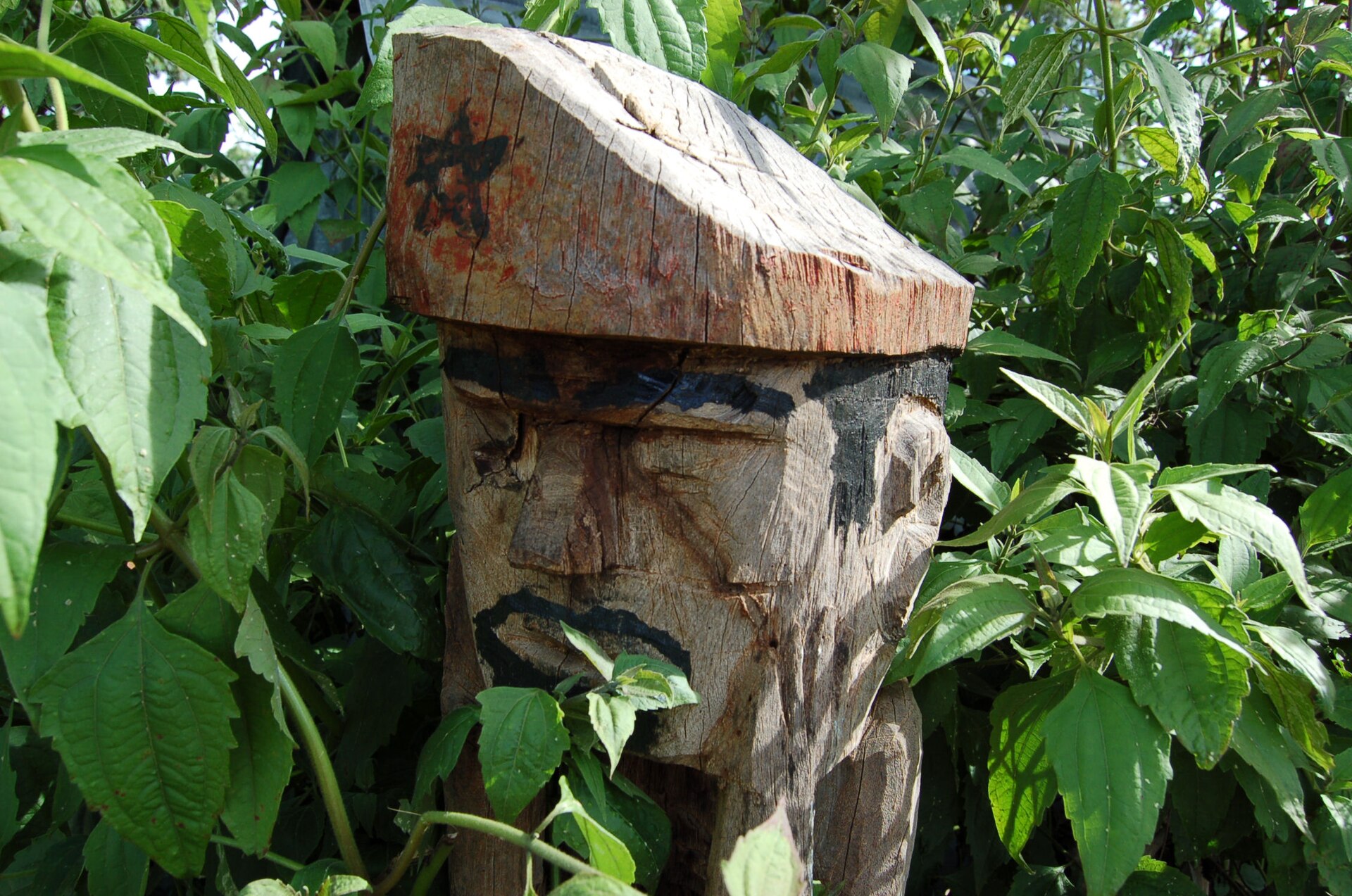
The full account is at The tomb house. Four things belong here.
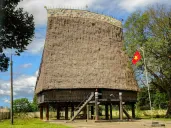
The words are Jarai. Pơthi is the abandonment feast that the Vietnamese call bỏ mả. Pơsat is the tomb house. And the carved figures — the mourners with their hands at their faces, the couples, the animals, the most recognizable Dega art anywhere in the world — are kra kom.
The interval. A Jrai writer in Pleiku puts it this way: at least three years later, when the sympathy of the living for the dead is inconsolable, the family holds the pơthi. After it, the tomb is left. The dead are not abandoned in the sense the English word carries; they are released, and the living are released from them.
A living carver has a name. Ksor Hnao of Gia Lai is described by that same writer as one of the very few Jrai in the province still fluent in carving the tomb figures. This library has not carried his name until now and should.
And the honest gap. There is no photograph we are free to publish of a pơthi taking place, or of a tomb with its kra kom standing in a village rather than behind glass in a museum in Hanoi. The figures on this page and on the tomb-house page are museum pieces, and their captions say so.
Across the border
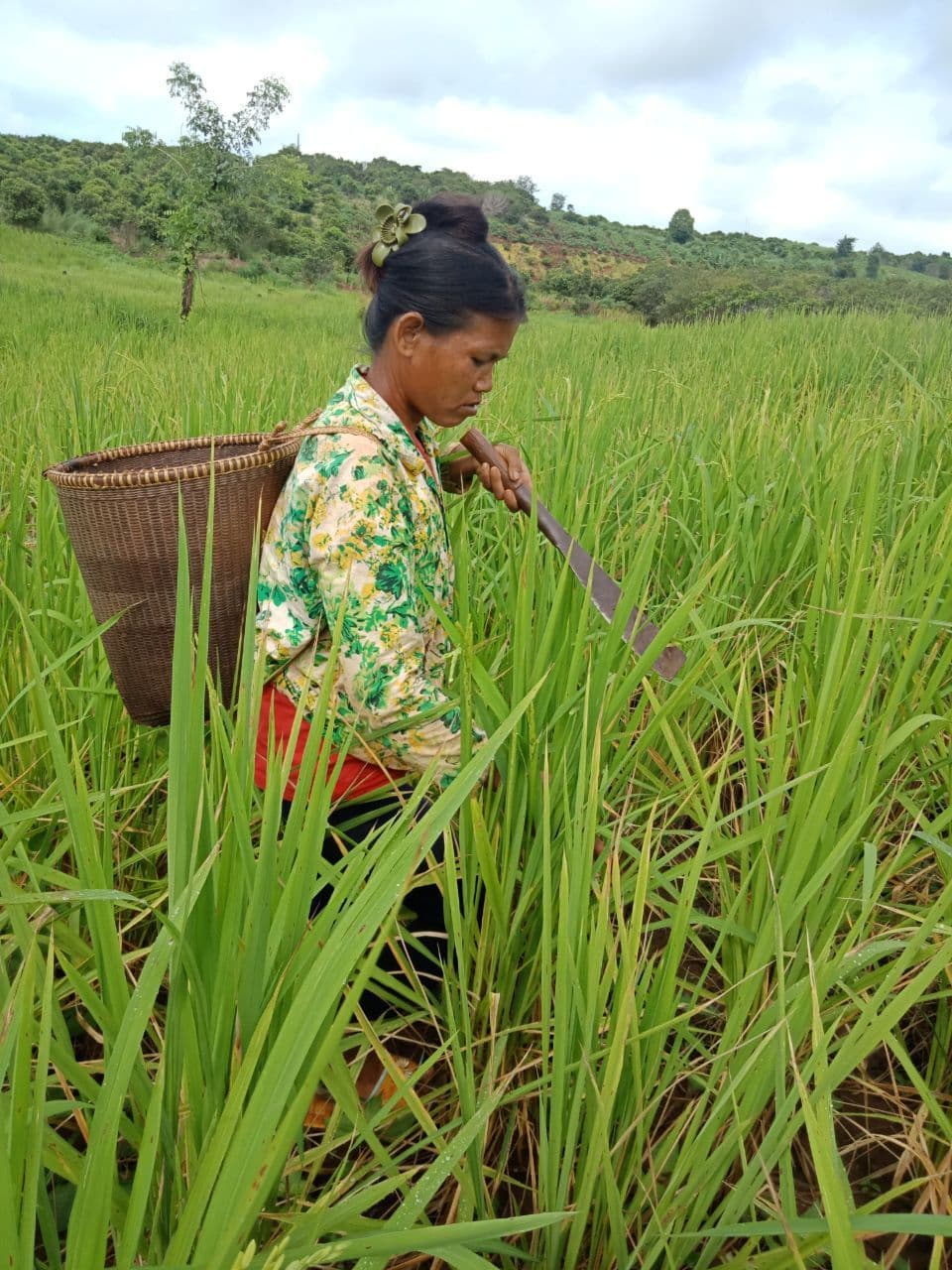
About twenty thousand Jarai live in Ratanakiri, by a survey done in 2006 — 12,451 in Ou Ya Dav, 4,918 in Andoung Meas, 2,665 in Bar Kaev, seventy-six in Lumphat. Other counts run higher: 26,335 for the province in 2008, and 26,922 for the whole of Cambodia at the 2019 census. Between a quarter and a fifth of Ratanakiri is Jarai.
The villages have names and a page about a people should carry them: Ket and Muoy in Nhang commune; Reu Han in Ke Chong; Saom Kaning, Phi, Plang, Lam and Ta Kok Pnong in Ou Ya Dav.
The border is beginning to tell, and the measurements show exactly how. The Jarai varieties inside Cambodia share eighty-two to ninety-four percent of their basic vocabulary with each other. The Pleiku dialect of Vietnam shares eighty-one percent with them — below the internal floor. Everyone interviewed agreed they could talk easily to any Jarai in Cambodia. But the Cambodian Jarai have difficulty with the Jarai Bible, because it was translated in Vietnam and the literary dialect is not theirs.
And the Jarai of Vietnam have started calling their cousins across the line umpuan Jarai — Tampuan Jarai, after the neighboring people. A people that has begun calling half of itself by somebody else’s name is a people with a border running through it.
There is no Khmer-based script for Jarai. What circulates in Cambodia is the Latin orthography made in Vietnam before 1975 — and perhaps sixty to seventy percent of Jarai Christians there have taught themselves to read it. Asked which script they would want, twenty of thirty-six said Latin, fourteen said either, two said Khmer; all fifteen church leaders said Latin.
The literacy figures underneath that are stark. Seven of eighteen men could read and write Khmer; none of the women. About a third of the men could read Jarai; one of nine younger women; none of the older women. Across five villages the leaders could between them name seven people who read and write Jarai.
And the finding that matters most: every single person interviewed said Jarai is the language they speak best. Whatever else is happening, in Ratanakiri there is no language shift. See Kin across the border.
Two recent books are about Jarai villages on the Cambodian side and this library should be citing both: Jonathan Padwe’s Disturbed Forests, Fragmented Memories (2020), built from oral histories in the Jarai village of Tang Kadon near the border, on the American bombing, the weed that villagers say spread after the forests were bombed, and the collision between Khmer Rouge agriculture and Jarai swidden; and Krisna Uk’s Salvage (2016), on how Jorai villagers turned the war’s metal into objects of their own.
Why so much of the movement is Jarai
Four reasons, and none of them is about temperament.
Bajaraka has a J in it. The name is made of four peoples — Bahnar, Jarai, Rhade, Koho — and the Jarai were a founding quarter of the first modern Dega political movement in 1958. Nay Luett was one of the men arrested for it. See The Bajaraka movement.
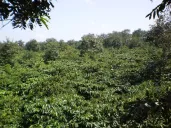
Numbers and ground. The Jarai are the most numerous of our peoples and they hold the plateau where the coffee and the rubber went. Chu Se, Dak Doa, Ia Grai and Chu Prong are precisely where the land pressure of the 1990s fell hardest.
The house churches. The congregations the state treats as unregistered and separatist are concentrated in Jarai districts. Look down the list of named religious prisoners in this library and count the Jarai clan names.
The border. Ratanakiri is Jarai country on the far side. A family from Duc Co or Ia Grai can walk to relatives. That is why the asylum route after 2001 is a Jarai route, and why The Cambodian camps is in part a Jarai story.
The dates, in Jarai places
January 1897 — the Jarai subdued after resisting the French columns of the 1890s. April 7, 1904 — Odend’hal killed, and the French return in force.
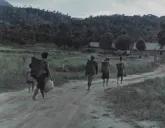
February 2, 2001 — Pleiku, the first provincial capital walked into. Eight hundred people from four communes left home at four in the morning and covered twenty kilometers. See February 2001.
March 10, 2001 — Plei Lao, Chu Se district. Rmah Blin, thirty-three, shot; the church pulled down with a cable and burned, and fresh earth smoothed over the ashes.
April 11, 2004 — the roads into Pleiku blocked, so Easter Sunday happened in the district centers instead: Ayun Pa, Chu Se, Dak Doa. Twenty-six people beaten and arrested at Nhon Hoa commune. Police firing at Ha Bau commune and killing Ksor Hnun, eighteen, of Plei Ring. See Easter Week 2004.
And then the register. Two hundred and thirty-three people from Gia Lai alone, arrested between 2001 and 2006. Sixty-three with a recorded sentence. Sixty-two whose whereabouts are unknown or whose families believe they were murdered. They were sent to Ha Nam, to Thanh Hoa, to Phú Yên. That is the Jarai chapter of the whole story, and it is in our own record at Prisoners: Gia Lai.
The people of this people
| Name | What they did |
|---|---|
| Sadet Oi At | Master of Fire in 1904, when Odend’hal came to ask him to submit to France and was killed |
| Siu Aluan (d. 1999) | Designated Master of Fire in 1987; never installed, because the authorities objected |
| Nay Luett (d. 1983) | Bajaraka founder; imprisoned 1958–63; minister for ethnic minority development from 1971; on April 4, 1975 asked the Americans for protection and for leave to raise fifty thousand Dega to hold the highlands, and was refused; nine years in prison after 1975. See Paul Nur and Nay Luett |
| Kok Ksor (1944–2019) | Born at Bon Broai, Cheo Reo. Bajaraka as a schoolboy in 1958; FULRO from 1964; founded the Montagnard Foundation in South Carolina in 1990. See Kok Ksor |
| Rơmah Dêl | Compiled the Vietnamese–Jarai dictionary, Hanoi, 1977 |
| Lap Minh Siu | Jarai anthropologist and lexicographer at Texas Tech; made the first Jarai–English dictionary; published Anăk Čư̆ Čhiăng in 2010 |
| Ksor Hnao | Wood carver of tomb figures in Gia Lai; one of very few Jrai still fluent in the work |
| Siu Hril | Jrai writer and cultural guide in Pleiku, writing in English about Jrai carving, music and funerals |
| Dock Rmah | Jarai traditional musician in Guilford County, North Carolina; a North Carolina Heritage Award recipient |
| H’Ngach Rahlan | Montagnard-Dega weaver in Guilford County; also a North Carolina Heritage Award recipient. See Weaving and dress |
| Rơ Mah Đaih | Dega Protestant; arrested September 2016, sentenced April 2017 to ten years |
| Ksor Ruk (b. 1975) | Protestant missionary from Krong Pa; six years from 2007; re-arrested October 30, 2018; ten years from March 15, 2019 |
| Siu Hlom and Rmah Bloanh | Twelve years from April 2011 and eight years from September 2014 |
How many
| Figure | Year | Where | Who counted |
|---|---|---|---|
| about 137,500 | about 1960 | South Vietnam | Hickey, RAND, under US military contract |
| about 150,000 | 1966 | South Vietnam | US Army handbook |
| 241,889 | 1989 | Vietnam | Vietnamese census |
| 320,000 | late 1990s | Vietnam | UNDP, via Human Rights Watch |
| 513,930 | 2019 | Vietnam | Vietnamese census, reported by non-Vietnamese sources |
| 20,149 | 2006 | Ratanakiri | SIL survey |
| 26,922 | 2019 | Cambodia | Cambodian census |
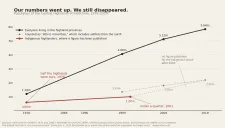
Between 1989 and 2019 the counted Jarai population doubled. That is what a young population with high fertility looks like. It is also what a changed counting practice looks like. We are not in a position to say which, and we are not going to pretend otherwise. National totals are argued at How many Dega there are.
What we do not have
A Jarai epic in print. The Rhade have nine klei khan in the collections and a bilingual Dam San. For the Jarai we could not find a single published epic cycle in a bilingual edition, or a customary-law text in Jarai, or a Jarai-authored memoir. That is the largest hole in this batch, and it is not because there is nothing; it is because nobody has printed it.
A Jarai account of the Masters of Fire. There is one, written down in 1949 — a legendary history of the Master of Fire as the Jarai told it. We have not been able to get a copy. It is the closest thing to a Jarai account of the office that exists.
The clan glosses, settled. Ten clan names that may all be pieces of landscape and vegetation, resting on an onomastic collection and one corroborating sentence in an army handbook. Any Jarai elder could settle this.
What Čhiăng means. We are using a Jarai scholar’s own name for his people in the first paragraph of this page, and we have not been able to read his article to give you the gloss of its third word.
If you can supply any of these, write to us. See How to record an elder.
Terms
- kơnung djuai
- Clan, lineage. It descends through women, it governs nothing, and it decides whom you may marry and what you may not eat.
- plei / bon
- Village. Plei on the plateau, bon in the Ayun and Ba bottomlands of the old Cheo Reo country. The word tells you which half of the Jarai country a person comes from.
- pơtao
- King, in ordinary Jarai. The Masters of Fire and Water were Pơtao Apui and Pơtao Ia. Sadet, the word the French and the Americans used, is not Jarai.
- pơthi
- The tomb-abandonment feast, held at least three years after a death, after which the tomb is left to the forest.
- kra kom
- The carved wooden figures set around a tomb.
- kso’r
- A swidden cultivated to exhaustion and left to go back to forest for twelve years or more — and also the name of the largest Jarai clan, and the clan name given to an adopted stranger.
See also: The Rhade, Kings of fire and water, The tomb house, Kin across the border, Prisoners: Gia Lai.
Sources
- Lap Minh Siu, A Preliminary Jarai–English Dictionary (2010); with Jeffrey P. Williams, “Anăk Čư̆ Čhiăng: The Original People of Vietnam’s Central Highlands,” Asian Music 41:2 (2010), and “The Aesthetics of Jarai Echo Morphology,” in The Aesthetics of Grammar (Cambridge University Press, 2014) — a Jarai scholar on the Jarai language
- Rơmah Dêl, Từ Điển Việt – Gia Rai, Hanoi, 1977
- American University, Minority Groups in the Republic of Vietnam, Ethnographic Study Series, 1966 — the clan animals and their stories, the adopted stranger, the plei and bon line, the Sadet Oi At and the death of Odend’hal, and the kso’r fallow. A handbook prepared for the United States Army, on the eve of a war fought across the country it describes, to make its people legible to soldiers. That is what it was for, and it is also the fullest open account of Jarai clan organization in English
- Eric and Mee-Sun Pawley, Sociolinguistic Survey of Jarai in Ratanakiri, Cambodia, SIL International, 2010 — the district figures, the lexical percentages, the literacy counts, and the finding that Jarai is the language everyone interviewed speaks best
- The Jorai Bible Association recordings of sixty-seven books of the Bible in Jarai, Internet Archive, 2023; and Hră Ơi Adai Pơhiăp, the Jarai Bible, 2016
- Siu Hril, Plei Jrai, Pleiku — a Jrai writer on the pơthi, the kra kom and the carver Ksor Hnao. He sells cultural tours, which is an interest worth declaring, and he is a Jrai man writing in English about Jrai work
- Jean-Michel Filippi, “Les Jaraï, une minorité ethnique singulière,” Cambodge Mag, April 9, 2024 — the brothers of the same mother, and the blade and the sheath
- Our own prisoner record for Gia Lai, 233 people, compiled by Dega people from their own villages — read here as evidence about naming, and it is evidence
- Jonathan Padwe, Disturbed Forests, Fragmented Memories: Jarai and Other Lives in the Cambodian Highlands (University of Washington Press, 2020); Krisna Uk, Salvage: Cultural Resilience among the Jorai of Northeast Cambodia (Cornell University Press, 2016)
Compiled September 2026. No Vietnamese government or state media source is used. Several things here are unsettled and printed unsettled: whether the Master of Fire belonged to the Pleiku country or the Ayun valley; whether a married Jarai man takes his wife’s clan name, which one source states and others contradict; and what the Jarai clan names mean, which rests on an onomastic collection corroborated on a single term. The clan counts and the plei and bon tables on this page were compiled from our own prisoner record and can be checked against it line by line. The Jarai words are spelled as the 2016 Bible and the published dictionaries spell them; where a source of ours spells a name differently we have kept its spelling and said so. If you can correct a gloss, a clan name or a village on this page, we want it.