











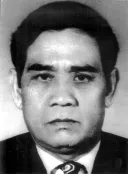

He was born in 1913 in the village beside the mission at Ban Me Thuot, went through three schools the French and the missionaries had built, and became an agricultural official in the provinces he would later petition about. In 1958 he put his name to letters asking President Diem, three foreign embassies and the United Nations to look at what was being done to us. Within weeks of the last of them he was in a cell.
Buon Ale-A
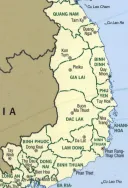
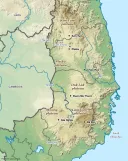
Human Rights Watch, following Gerald Hickey, gives his birth year as 1913. The Encyclopedia of the Vietnam War gives his birthplace as Buon Ale-A, the Rhade village on the southern edge of Ban Me Thuot where the Christian and Missionary Alliance had its station; Hickey notes that the first leaders of our movement, Y Thih Eban among them, came from that same village. The CIA study of 1966 records an unconfirmed report that on a release in 1960 he went back to a village it calls Buon Ta. We cannot settle that, and the difference matters less than what the two names have in common: he came from the ring of Rhade villages around the town the French had made the capital of the highlands.
One source gives a different year altogether. A Cham historical site, writing in Vietnamese in 2020, puts his birth in 1923. Neither year rests on a paper we have seen, and that is unremarkable rather than suspicious: almost no Dega child born in the highlands in those years was registered by anybody. We record both.
The same CIA study says something that no other source repeats, and that we record because it is how our own society reckons standing: that he was the oldest male of his family, and that by Rhade tradition this made him the leader of the highlanders. It adds, on the same authority, that his was held to be the bravest of the Rhade families.
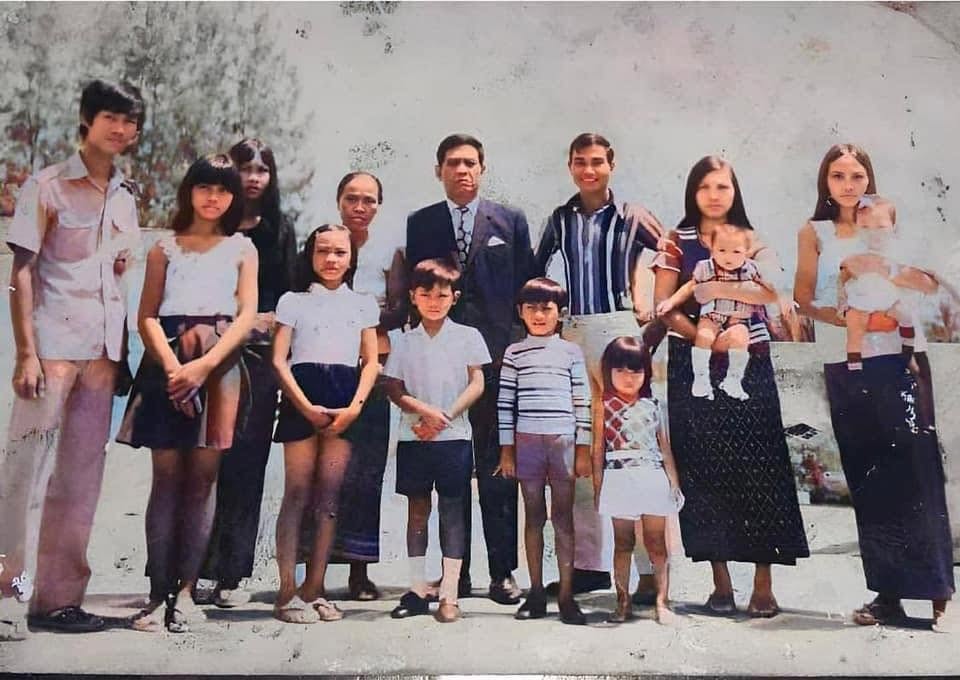
Of his parents and his brothers and sisters, the published record we can reach says nothing at all, and it does not name his wife or his children either. Our own records do. His wife was H’Bem Êban; in the Rhade way the two of them were known as Ama H’Ni and Ami H’Ni, the father and the mother of H’Ni. They had eight children, five daughters and three sons, and a son-in-law, Y-Em Niê. All eleven names are set down on the Phnom Penh page. His family was with him in Phnom Penh at the end.
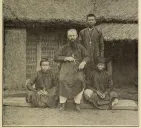
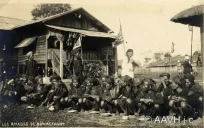
The one photograph we hold of the household is above, and with the rest of them on the photographs page. Fifteen people stand in it. We hold the names of the household, but not which face is which; if you can match them, write to us.
Three schools
He was educated at the Franco-Rhade school, at the mission Bible school, and at the national agriculture school. That is Hickey’s list, reported by Human Rights Watch, and it describes a particular kind of man: literate in French and in written Rhade, formed in part by the Protestant mission, and trained in the one technical subject the administration was willing to teach highlanders.
The Franco-Rhade school is described elsewhere in this library. What it produced was a generation that could put our case in the vocabulary, the forms and the language of the people governing us — which is exactly what he did, and exactly what he was punished for.
The agriculture service
Through the 1950s he was a civil servant in the provincial agriculture service in Darlac and in Pleiku. The American army handbook of 1967 calls him simply “a former government official.” The CIA study — a 1966 assessment by a foreign intelligence service of which highland leaders its government could work with — records that in 1957 and 1958 he asked the province chief of Darlac for hospitals and schools and got nothing, and that he led the faction of highland leaders that still wanted to work with the Vietnamese government. The second half of that is a judgment made by people who had a use for it, and we give it as theirs.
That is the fact to hold on to about the man at forty-five: he was an official of the state, asking the state for clinics and classrooms, through the proper office, and being refused.
What came before BAJARAKA
The movement did not begin in one day, and the sources do not agree on which day.
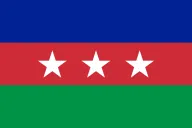
- Hickey records a secret Front pour la Libération des Montagnards that wrote to President Diem in March 1955, asking among other things for the right to fly our own flag.
- The CIA study places a meeting of the tribes at Buon Trap, in Darlac, in May 1957, called by Y Bham Enuol.
- Hickey’s RAND study of 1967 says the movement was formed early in 1958, with a special committee organized in May.
- Cham and Vietnamese-language accounts give May 1, 1958 as the founding date of BAJARAKA.
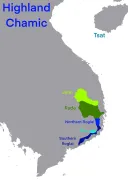
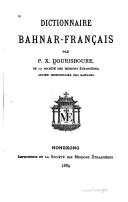
The name BAJARAKA was made from the first syllables of four peoples: Bahnar, Jarai, Rhade and Koho. The point of the name was the point of the movement, and both are set out on BAJARAKA, 1958.
The letters of 1958
This is the part of his life that is documented almost line by line, because the Americans kept the paper.
What the petitions actually said is on What he actually asked for. In summary, they said that the semi-autonomous status we had held under the French had been taken away without asking us; that our land was being settled by outsiders without payment; that our schools and clinics were nothing; that soldiers stole from villages and were not punished; and that the officials sent to govern us knew neither our languages nor our customs. A Catholic priest in Ban Me Thuot, Father Roger Bianchetti, advised the delegation to ask for autonomy rather than independence. They took the advice.
The demonstrations and the arrests
Two accounts, and we give both.
| Source | What it says |
|---|---|
| Hickey, RAND (1967) | A general strike and a five-hour demonstration at Ban Me Thuot on September 9, 1958; all seven leaders arrested on September 15. The seven: Y Bham Enuol, Paul Nur, Nay Luett, Y Ju Eban, Touneh Yoh, Siu Sipp and Y Thih Eban. |
| CIA (1966) | Demonstrations at Ban Me Thuot, Kontum, Pleiku and Di Linh on October 15, 1958; about two thousand people at the Ban Me Thuot rally, which lasted five hours and was broken up by armored vehicles. The arrests followed. |
| Human Rights Watch, following Hickey (2002) | Two members arrested north of Kontum in September; the letter to Diem; then the arrests of the leaders, the petition and the rally. |
What none of them disputes: the demonstrations were announced, unarmed and orderly, the men who organized them were the schoolteachers and officials of our people, and every one of them went to prison for it. That is the subject of the next page.
What we do not know
- His parents, his clan line, his brothers and sisters.
- Which of his children were living in 1975, and where each of them was.
- Whether he was a member of the Protestant church, as against having been schooled by it.
- Whether he taught, as some accounts say, or only served in the agriculture office.
If your family holds a photograph, a letter or a memory of him, our contact page says how to reach us.
Sources
- Human Rights Watch, Repression of Montagnards (2002), the historical chapter — birth year, schools, the August 1958 letter, the arrests
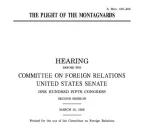
- CIA, The Highlanders of South Vietnam: A Review of Political Developments and Forces (June 1966) — pp. 20–29 for 1957 and 1958, the embassies, the UN petition and the grievances
- Gerald C. Hickey, The Highland People of South Vietnam: Social and Economic Development, RAND RM-5281 (1967) — the founding, the strike of September 9 and the seven arrested
- Department of the Army, Area Handbook for South Vietnam, Pamphlet 550-55 (1967) — “a former government official”
- David M. Berman, “Enuol, Y Bham,” in Spencer C. Tucker (ed.), Encyclopedia of the Vietnam War (ABC-CLIO) — Buon Ale-A and the schools
- Our own records — the names of his wife, his children and his son-in-law
Compiled September 2026. Where the sources conflict, both are given above.