








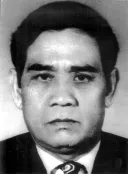

Seventeen years of demands, as they were written down at the time. Read in order they show a case that never changed in substance and got smaller every year in what it asked for: a commission of inquiry in 1958, a country in 1964, a statute and a flag in 1965, eight points in 1967, a political party and a flag in 1968, and, from a house in Phnom Penh, a signature on a paper naming who should lead in his absence.
1958: the grievances
The petition his delegation carried to the American, British and French embassies in July 1958 asked the Secretary-General of the United Nations for a commission to investigate conditions in the highlands. Forty-five highland leaders signed it. The grievances it listed, as the CIA study summarized them, were these. The petition itself we have not been able to read; what we have is the list as set down in 1966 by the intelligence service of the government that was at that moment arming and steering our movement, in a study written to tell American policymakers what highlanders wanted. It is a summary with an interest in it, and it is the only version we have found. If anyone holds the petition or a copy of the signatures, tell us.
- The semi-autonomous status of the French period had been ended without consulting us.
- Highlanders “had very little representation in the Government administration in the Highlands, which had constantly discriminated against the Highlanders and treated them as second class citizens.”
- “The main concern of the Government seemed to be to develop the Highlands by bringing in Vietnamese settlers. Some of the new Vietnamese agricultural colonies had been opened on land which belonged to the tribes, which had been dispossessed without compensation and pushed back to less fertile areas.”
- Schools and health care were poor.
- Vietnamese settlers “produced large quantities of agricultural products and created unfair competition by underselling the Highlanders in the market.”
- “The stealing of food and other commodities by Vietnamese Army personnel and settlers continued and the culprits remained unpunished.”
- Local administrations “had fallen far behind in paying for work performed by Highlanders for the Government.”
- A welfare budget of three million piasters had been misused.
- The officials sent to govern us knew neither our languages nor our customs.
Every one of those nine complaints is still in our submissions today, in the same order of importance. That is not a rhetorical flourish; compare them with What the Dega ask for and with the land law.
The study records what the delegation did with the letter. Two emissaries, Y Ju and Y Nam, called on the American ambassador on July 31, 1958, accompanied by a Mennonite relief worker, and “produced a letter identical to one addressed to the Ambassador on 7 July, outlining tribal grievances and asking the Secretary General of the United Nations to consider the request of the Highlanders for the creation of a fact-finding commission.” They showed him copies signed by forty-five leading highlanders and addressed to the British and French ambassadors. The ambassador “declined to accept the letters but promised unofficially to bring the minority problem to the attention of Vietnamese officials in Saigon.” That was the whole of the international response.
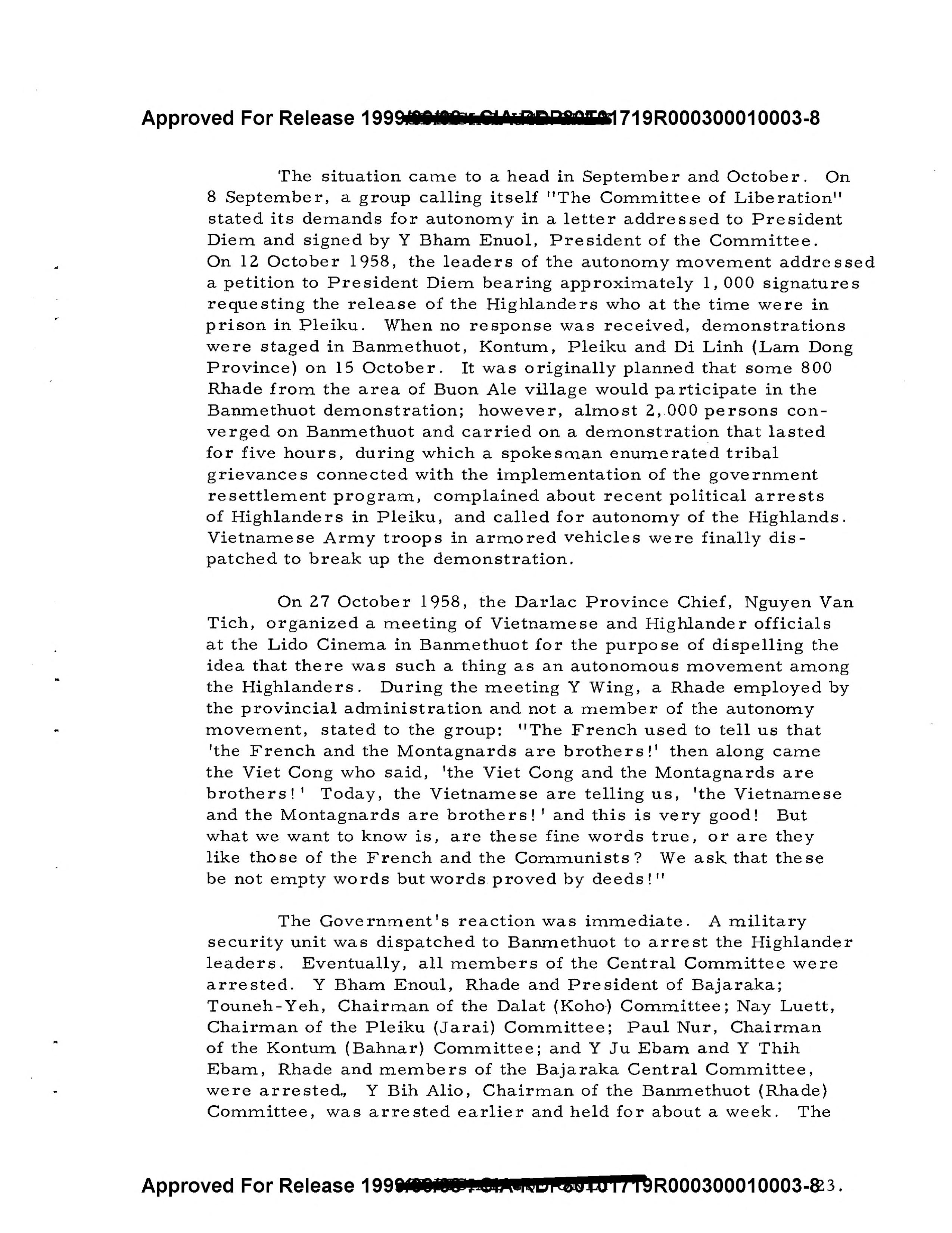
Then the letters that cost him his liberty. “On 8 September, a group calling itself ‘The Committee of Liberation’ stated its demands for autonomy in a letter addressed to President Diem and signed by Y Bham Enuol, President of the Committee. On 12 October 1958, the leaders of the autonomy movement addressed a petition to President Diem bearing approximately 1,000 signatures requesting the release of the Highlanders who at the time were in prison in Pleiku.” When no answer came, the demonstrations of October 15 followed, at Ban Me Thuot, Kontum, Pleiku and Di Linh, and after them the arrests. The study’s own one-line summary of the movement’s purpose is worth keeping: BAJARAKA’s “declared purpose was to fight ‘to the bitter end’ to achieve autonomy for the Highlanders.”
1964: the letters from the border
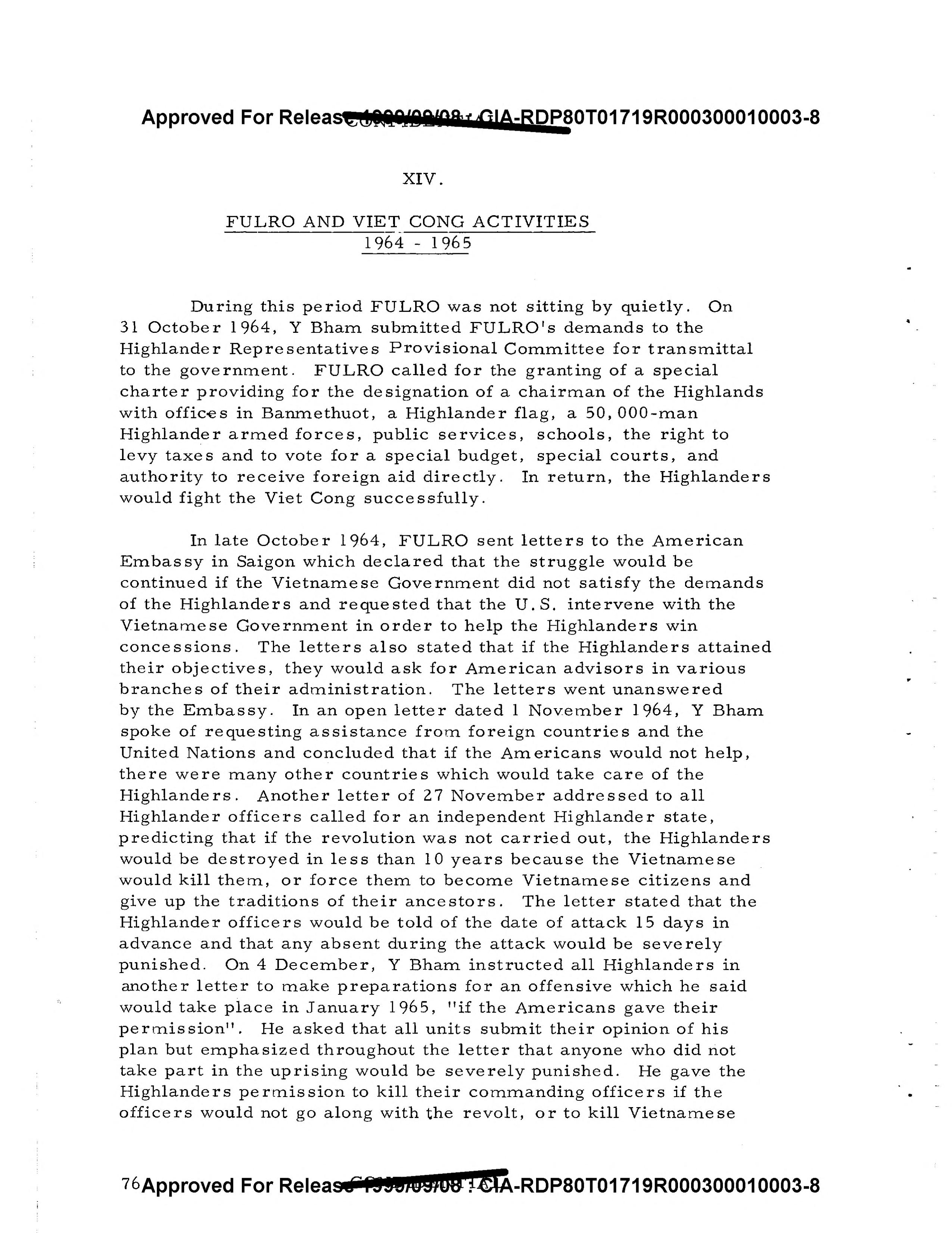
From the border, in the months after the September revolt, he wrote a series of letters that American intelligence logged and summarized. They are the high-water mark of what he asked for.
That last line is worth handling carefully. It comes from an American intelligence summary of letters we have not read, made by a service with its own interest in a movement that waited on American approval. If the letters say what the summary says, they show a man preparing an offensive and waiting for permission to launch it, and that is the sharpest thing anyone has said about him. If you hold any of these letters, or heard him speak about that winter, tell us.
1965: the name, and the history
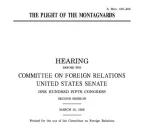
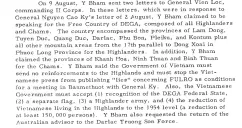
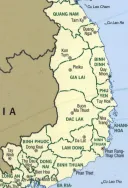
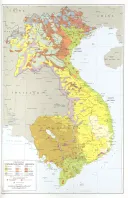
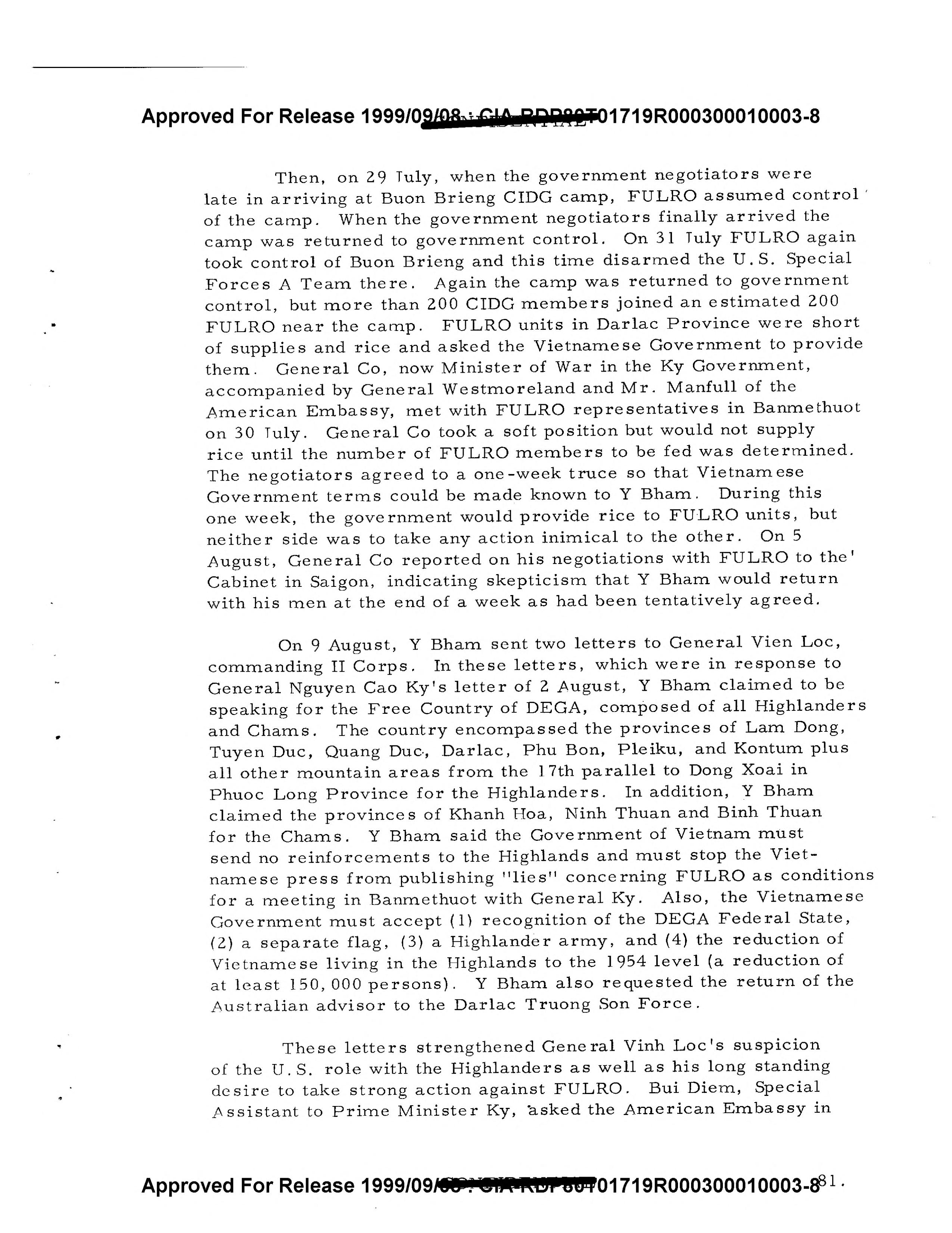
On August 9, 1965, in reply to a letter from Nguyen Cao Ky, he sent two letters to General Vinh Loc, commanding II Corps. In them, the CIA study records, he “claimed to be speaking for the Free Country of DEGA, composed of all Highlanders and Chams. The country encompassed the provinces of Lam Dong, Tuyen Duc, Quang Duc, Darlac, Phu Bon, Pleiku, and Kontum plus all other mountain areas from the 17th parallel to Dong Xoai in Phuoc Long Province for the Highlanders. In addition, Y Bham claimed the provinces of Khanh Hoa, Ninh Thuan and Binh Thuan for the Chams.” The conditions for a meeting with Ky were that the government must accept “(1) recognition of the DEGA Federal State, (2) a separate flag, (3) a Highlander army, and (4) the reduction of Vietnamese living in the Highlands to the 1954 level (a reduction of at least 150,000 persons).” This is the first appearance of our own name for ourselves in an official record, and the page that carries it is reproduced below. What the name means, and where it comes from, is on Names and words.
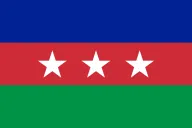
Six weeks later the demands had shrunk. In a letter to his negotiating team at Ban Me Thuot on September 23, 1965, he listed eight points: a special policy for the highlanders; a commissariat general of highlander affairs at Ban Me Thuot under a Rhade, with Vietnamese, American and highlander advisers; a Rhade military force with Vietnamese and American advisers; all highlander civil servants serving outside the highlands to be reassigned home; special programs, especially foreign aid; a highlander flag to be flown alongside the Vietnamese flag; the right to send highlander representatives to Geneva to discuss the unification of Vietnam; and, the eighth, “he withdrew his demand for Highland territory.” The study’s comment: “It appeared that the Vietnamese Government would agree only to the unconditional return of Y Bham and the disbanding of FULRO.”
On November 1, 1965, from what the paper calls the Zone d’Organisation, he wrote a short history, Extraits de l’Histoire des Hauts-Plateaux du Centre Viet Nam, Pays Montagnards du Sud — “Extracts from the history of the Central Highlands of Vietnam, country of the southern mountain people” — mimeographed, and circulated. Hickey, who used it, summarizes what it cited: “inequalities in the civil administration, in the army, and in public health facilities: Salaries for highland civil servants were lower than those for their Vietnamese equivalents, Highlanders were not readily promoted in the military and were not accepted for officer training, and Vietnamese nurses ignored highland patients. Y Bham Enuol also noted the lack of schools and of scholarships available to highland students, and he concluded by saying that none of the promises made by President Diem in Ban Me Thuot during a 1955 Oath Ceremony had been fulfilled.” We have not been able to read a copy, and would like to: if you hold one, please tell us.
1966: what FULRO kept asking, and what came back
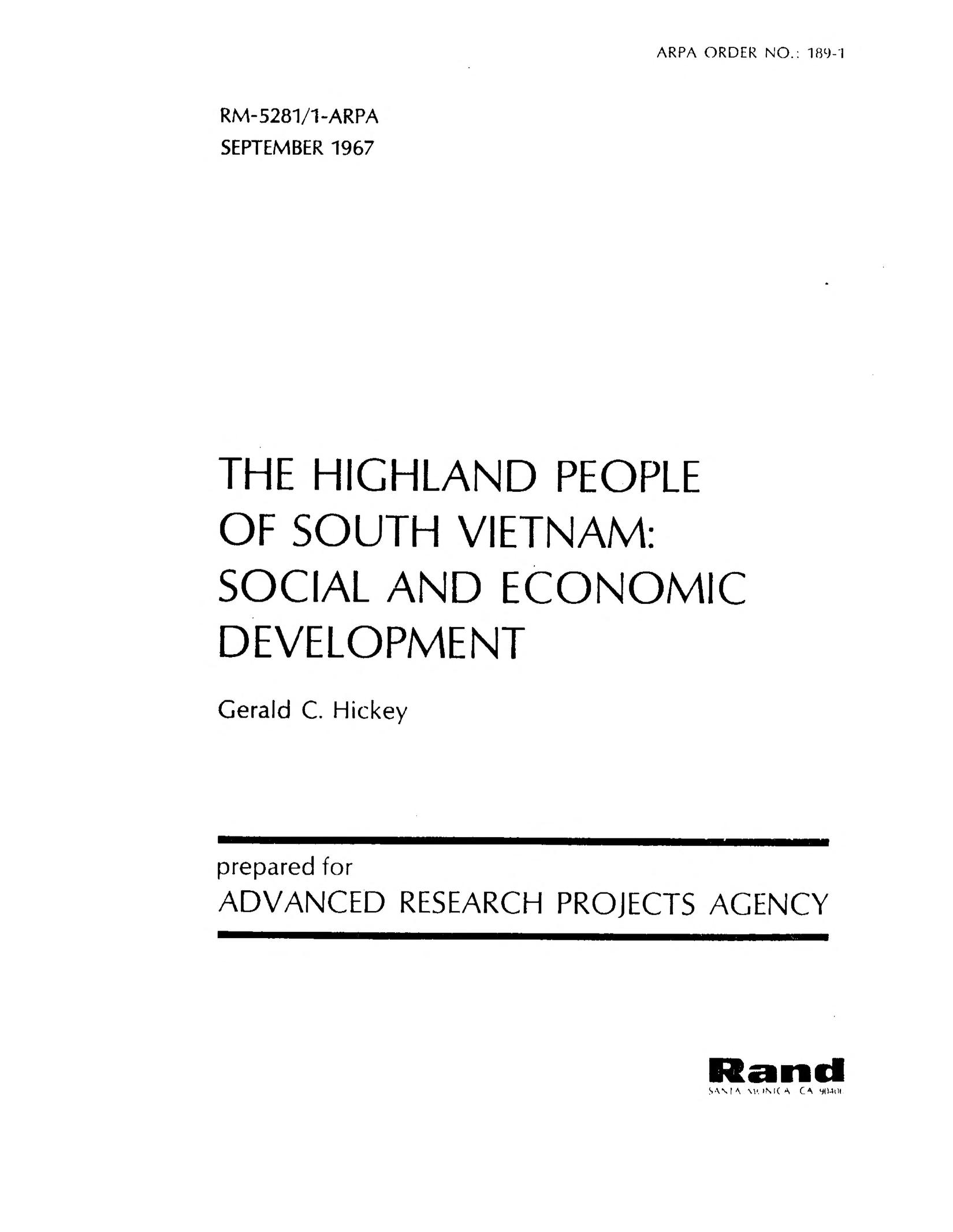
Hickey, in 1967, set down what the movement had asked for since 1964 in its notes and at its meetings with the government: “They wanted greater participation in political life. Explicitly, they asked for a highland leader (or leaders) to be placed high in the GVN hierarchy. They also suggested having a body of representatives from all highland ethnic groups meet periodically in Ban Me Thuot to discuss the needs of the population, and they requested that more of the administration in the highlands be placed in the hands of the indigenous people.” They asked that the land claims of the highlanders be resolved and that foreign aid come directly to the highlands; they proposed “formation of a highland army or ‘military force’ under the command of indigenous officers”; and “finally, they wanted a highland flag to be flown under the national flag.” Two earlier demands, for representation abroad and for the removal of the land development centers from the highlands, “soon were deleted from the list.”
Something did come back. The appointment of Paul Nur as Commissioner for Highland Affairs in 1966, the CIA study noted, “had met one of the eight demands of FULRO.” In December 1966 the commissariat drafted a bill of rights for the highlanders and sent it to him. Hickey records his answer: he “has let it be known that, even if he finds the document acceptable, he will require very firm guarantees that the GVN would honor its commitment to it before he will consider returning to Vietnam.” He had, by then, one broken oath ceremony behind him and five years in prison to show for the first set of letters.
1967: the eight points
Our own records give the eight points he put formally to the Saigon government on May 4, 1967:
- A special statute, with a constitution of our own.
- A Montagnard capital at Ban Me Thuot, with a Montagnard commission sitting there.
- Our own armed forces.
- The return of Montagnard civil servants and soldiers to the highlands.
- Aid from the United States and other countries received directly, not through Saigon.
- Our flag flown at the same height as the flag of the Republic of Vietnam.
- The boundaries of the highlands marked.
- A Montagnard place at any new Geneva conference.
Set them beside the eight points of September 1965 and the resemblance is exact, down to Geneva. Days earlier, at Ban Me Thuot, he had met the government’s representatives, and the American ambassador reported it to the President in his first weekly telegram from Saigon, on May 3: “The rebel Montagnard leader, Y Bham, finally came to Banmethuot to meet with GVN representatives, and a preliminary agreement was reached.” The Statut Particulier for the highlands was drafted that summer by a congress of highland representatives under General Vinh Loc, “in order to meet some of the aspirations and concerns of the FULRO, most of whom are now in Cambodia,” as the embassy put it in August, hoping it would help bring back “the approximately 2,000 to 3,000 FULRO now in Cambodia.” President Thieu signed the decree on August 29, 1967. It was made without him.
1968: what was actually signed
In December 1968 he came to Ban Me Thuot himself for the talks, then “returned to consult with his staff at the Cambodian headquarters while his deputies Y Dhe Adrong and Y Bling Buon Krong Pang continued discussions with Minister Paul Nur and the Prime Minister’s staff.” The agreement they signed on December 19, 1968 “concerned a flag for the Highlanders, an important role for Y Bham, an increased number of Highlander administrators, and integration of FULRO military units into the Regional Forces.” Human Rights Watch adds that the highlanders could form their own political party, and that he “dropped some of his earlier demands, such as the right of highlanders to directly receive foreign aid.” He never signed it. What happened instead is on the Phnom Penh page. Of the eight points of 1967, two were granted in a form: the flag, and a voice in the administration.
1973 and 1974: the last signatures
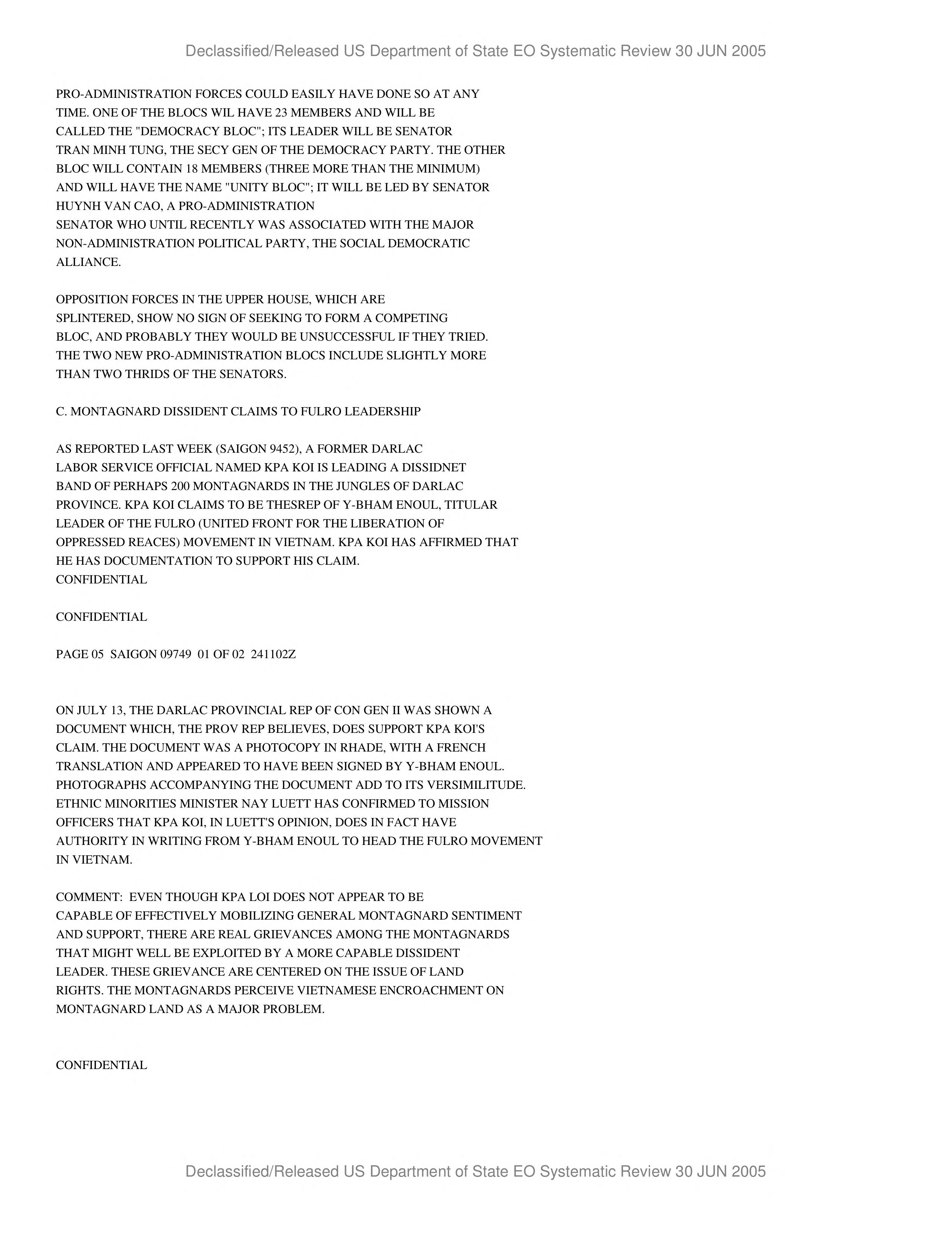
From the house in Phnom Penh he was still issuing authority. On October 20, 1973 he named Kpa Koi vice-president of the movement; the date is our own record. In July 1974 he signed a document in Rhade, with a French translation, appointing Kpa Koi to head FULRO in Vietnam. The American consulate’s representative in Darlac was shown it on July 13, and the embassy reported to Washington that it “appeared to have been signed by Y-Bham Enoul. Photographs accompanying the document add to its verisimilitude. Ethnic Minorities Minister Nay Luett has confirmed to mission officers that Kpa Koi, in Luett’s opinion, does in fact have authority in writing from Y-Bham Enoul to head the FULRO movement in Vietnam.” Nay Luett knew his hand; they had been taken in the same sweep of arrests in 1958. An academic account of Kok Ksor’s life says he made Kok Ksor chief of staff in the same year.
What we have not been able to find
- The letter of July 7, 1958, and the copies with forty-five signatures.
- The text of the FULRO declaration of September 1964, and the two letters in his name that the CIA says were passed around the camps.
- The text of his address to the Conference of Indochinese Peoples, March 1965.
- A copy of Extraits de l’Histoire des Hauts-Plateaux du Centre Viet Nam.
- The document of July 1974 in Rhade, and the photographs that went with it.
- Any letter from him to an American president, though Human Rights Watch says he wrote to President Johnson and to the Secretary-General.
- Any interview with him in the international press between 1969 and 1975.
Sources
- CIA, The Highlanders of South Vietnam: A Review of Political Developments and Forces (June 1966), DCHO library, also on the Internet Archive — the 1958 grievances and petitions, the 1964 letters, the letters of August and September 1965, and the comment on Paul Nur’s appointment
- Gerald C. Hickey, The Highland People of South Vietnam: Social and Economic Development, RAND RM-5281 (1967), DCHO library — the 1965 history, the FULRO demands, and the bill of rights of December 1966
- Gerald C. Hickey, Accommodation and Coalition in South Vietnam, RAND P-4213 (1970), DCHO library — the terms of December 19, 1968
- Ambassador Bunker to President Johnson, May 3, 1967, Foreign Relations of the United States, 1964–1968, vol. V, doc. 158, and doc. 264, August 1967 — the preliminary agreement and the Statut Particulier
- Human Rights Watch, Repression of Montagnards (2002), the historical chapter — the terms of the December 1968 agreement and the letters to Washington
- US Embassy Saigon, Mission Weekly, July 18–24, 1974 (cable Saigon 9749), DCHO library, also on the Internet Archive — the signed authority carried by Kpa Koi
- Joe P. Dunn, “Kok Ksor and the Struggle for Cultural Survival, Human Rights, and Religious Freedom for the Montagnards of the Central Highlands,” Athens Journal of History 10:1 (2024) — Kok Ksor as chief of staff, 1974
- Our own records — the eight points of May 4, 1967, and the appointment of October 20, 1973
Compiled September 2026. Where a document has not been read by us, the page says so.