
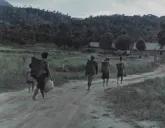
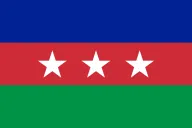
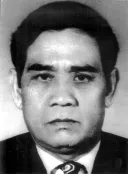
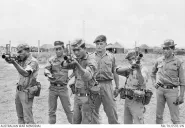
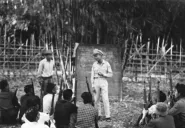
Seven pictures are gathered here, all of them from our own archive: the studio portrait, two portraits in uniform, the flag at Camp le Rolland, a photograph beside an aircraft, one of him armed in the field, and the family group. None of them has a photographer’s name attached, and only one has a date written on it. We say about each exactly what we know, and we put beside the portrait the copy that the rest of the world uses.
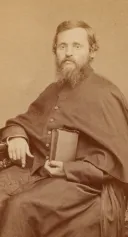
The studio portrait
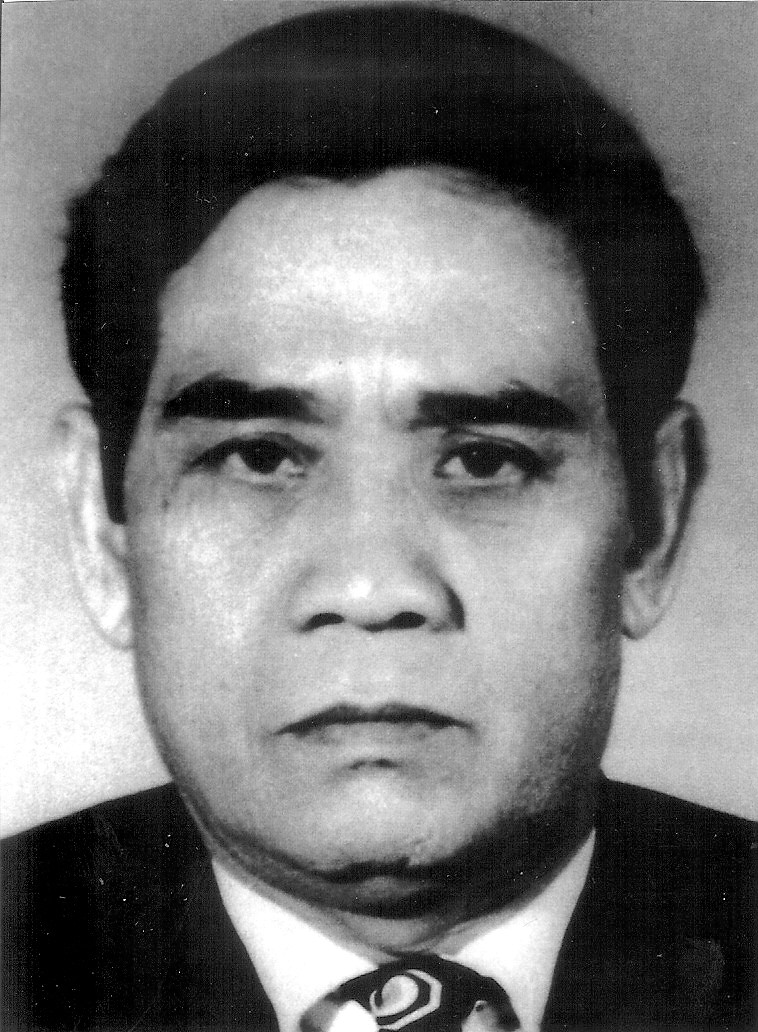
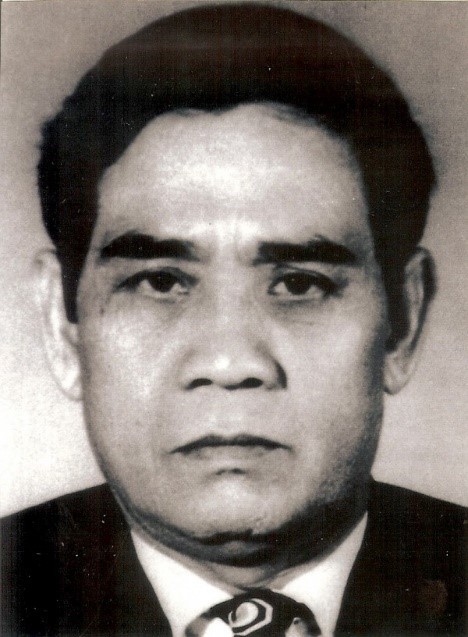
If 1958 is right, it was taken within months of his arrest. The same picture is on Wikimedia Commons, marked there as a public-domain photograph of the Republic of Vietnam, dated to the 1950s; the entry names no photographer and gives no first publication, so that marking is a judgment rather than a record. We have put the Commons copy below ours so that anyone can see they are one photograph.

In uniform
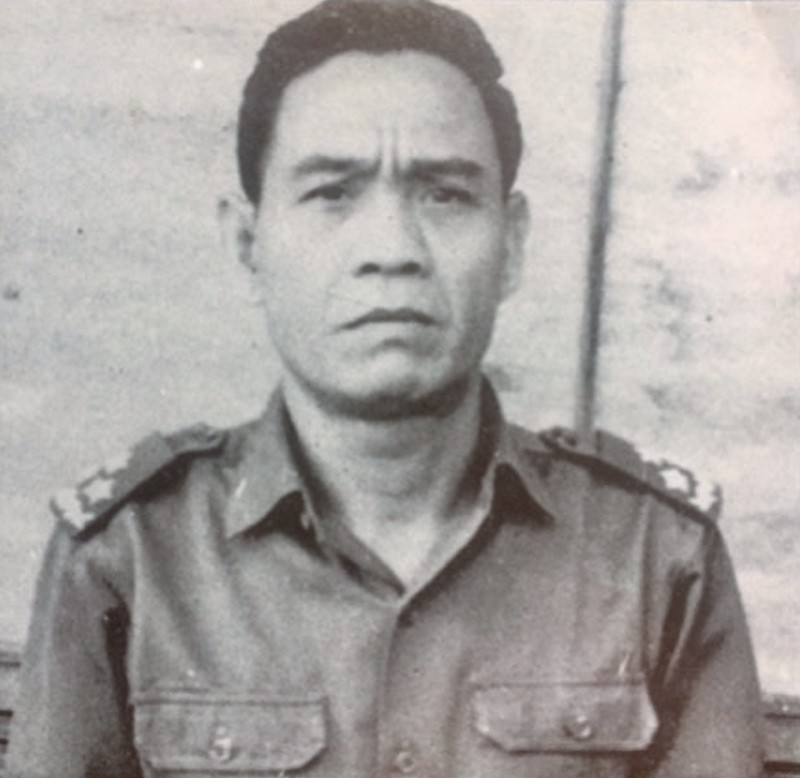
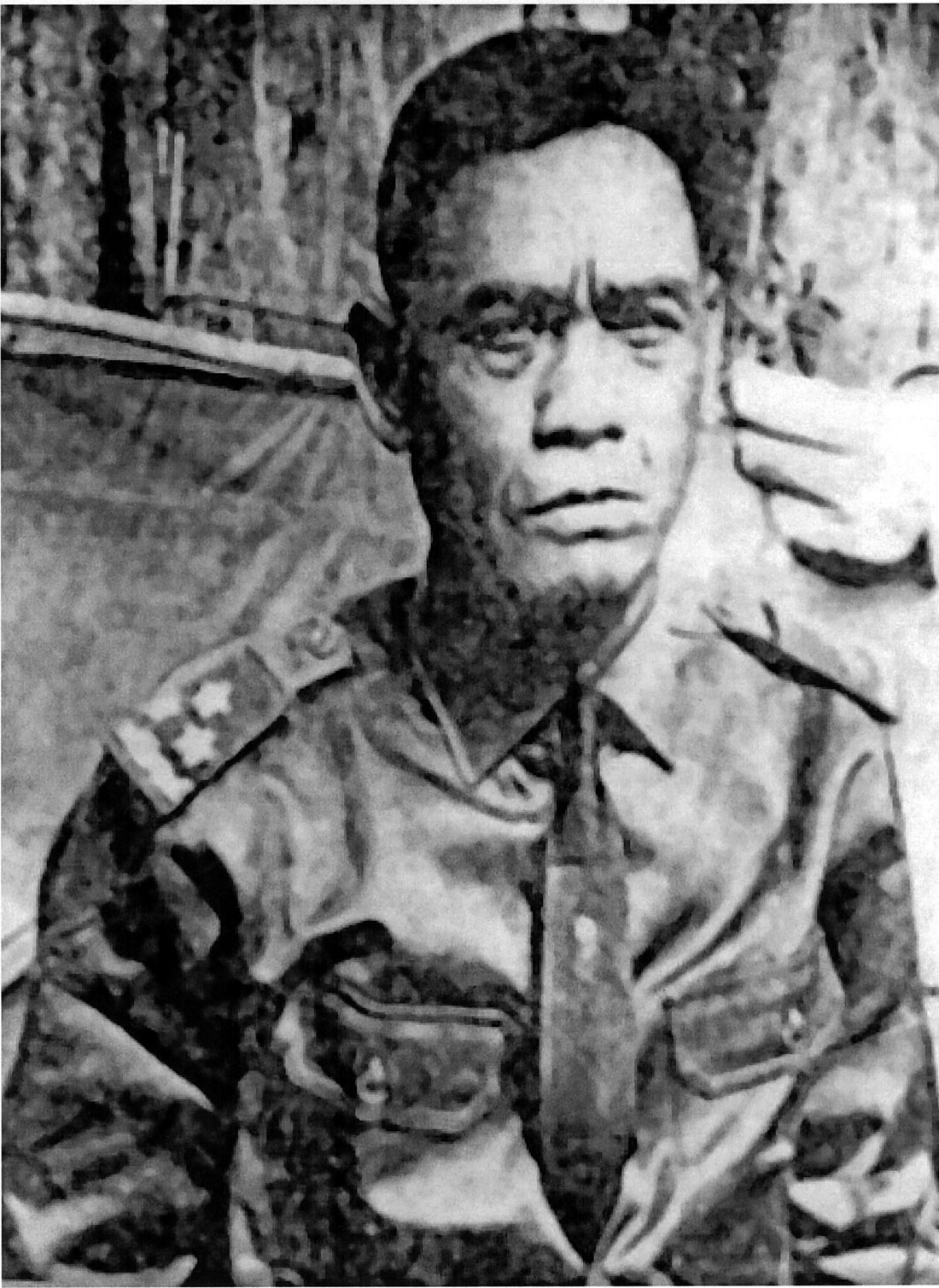
Between them these two show the change the record describes: the provincial official of 1958 is, by the middle of the decade, the president and commanding general of a movement in the field. He is in uniform in both, and in neither is he carrying a weapon.
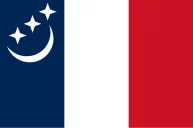
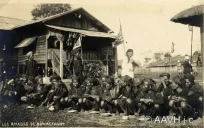
Camp le Rolland, 1965
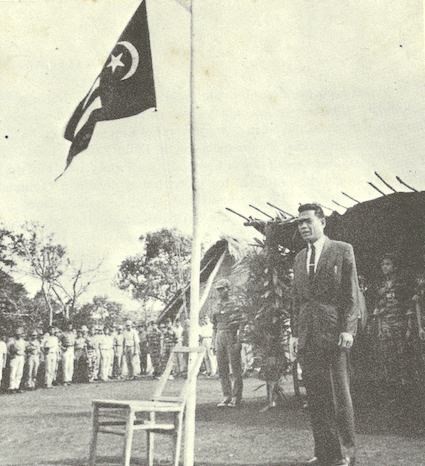
This is the most valuable of them, because it is the only one that shows him at work: the president of a movement, in front of his own soldiers, at the place he ran it from. Human Rights Watch places the headquarters “near Camp Le Rolland (present-day Dak Dam) in Mondolkiri,” where he and about two thousand followers had gone after September 1964. The flag is the one the 1968 agreement would later concede in writing. The printed caption on the published copy indicates it was scanned from a book, most probably Po Dharma’s history of FULRO, which used the movement’s own archive.
Beside an aircraft
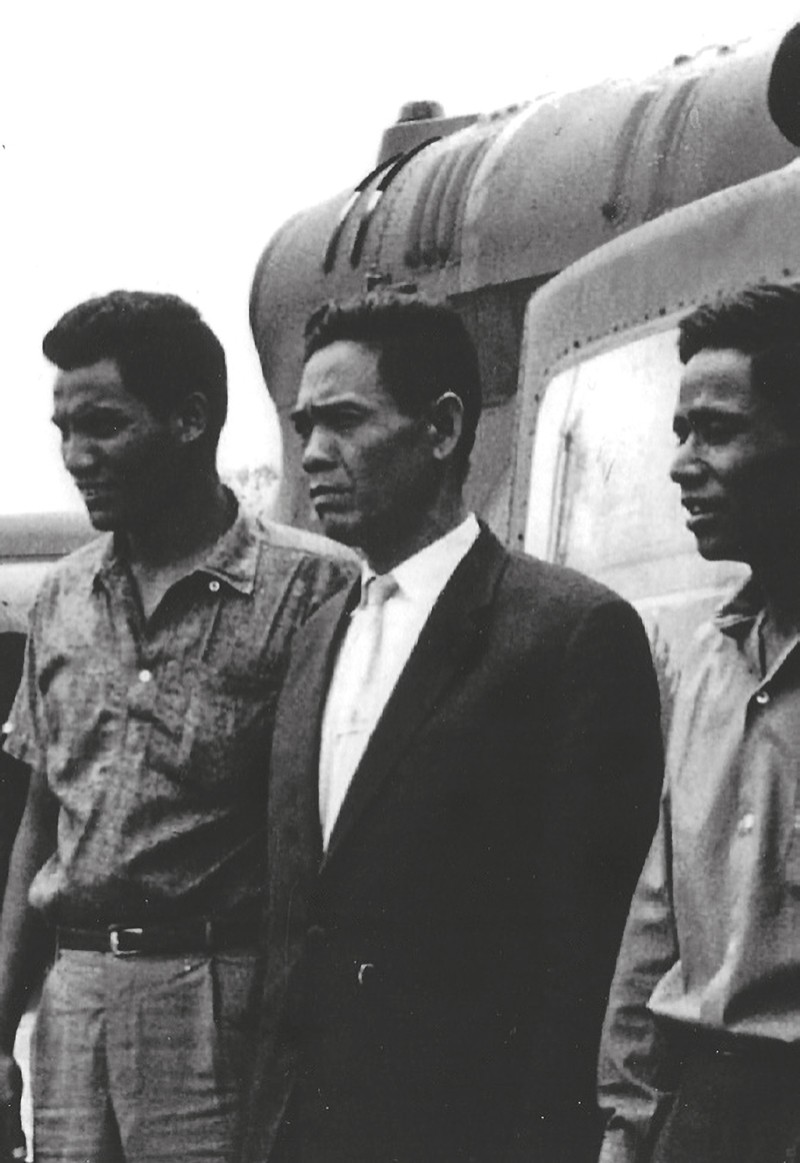
He was flown in and out of meetings more than once. The CIA study records one such flight exactly: in February 1963 General Khanh, then commanding at Pleiku, “had Y Bham brought from Banmethuot jail by Combined Studies Division aircraft to attend the meeting.” There were flights to Ban Me Thuot for the talks of 1965, 1967 and 1968, and in and out of Phnom Penh after that. Any of those journeys would fit this picture, and we are not going to pretend we know which. If you recognize the aircraft, the uniform of the men with him, or the airfield, tell us.
The family
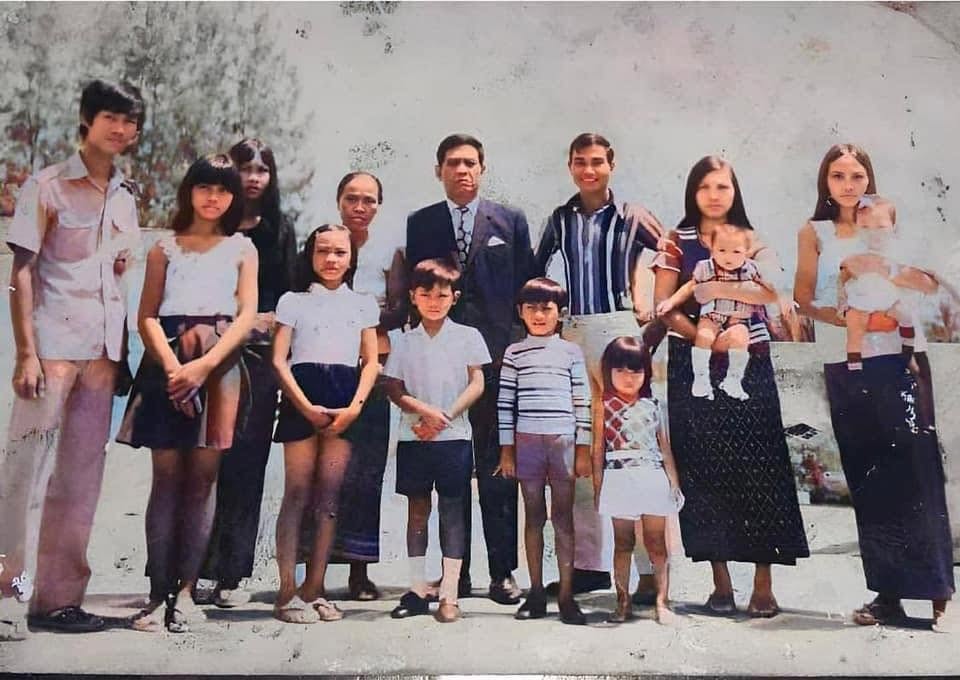
This is the only picture we have of him with his family, and it is the only evidence in this library of the household that was with him in Phnom Penh. Hickey’s one sentence on the seizure of his headquarters is that “Y Bham and his family were sent to Phnom Penh.” Every published source says his wife and children died with him, and not one of them gives a name. Our own records do: his wife H’Bem Êban, their eight children and a son-in-law are named on the Phnom Penh page.
If you can say which of them is which in this photograph, or where and when it was taken, please write to us. Putting the names to these faces would be the most valuable addition anyone could make to this section.
In the field
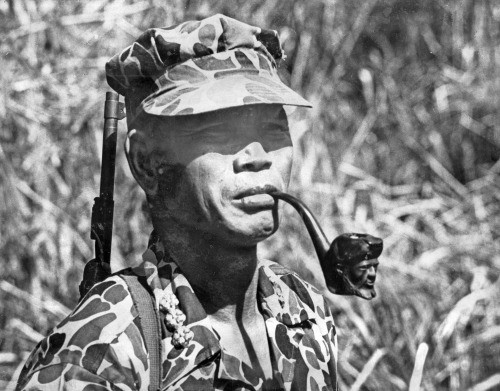
This is the only photograph we have of him armed and in the field, and it is the one that answers the portraits: the official in the suit and the president in the flag ceremony are the same man who carried a rifle through the grass on the border. It circulates on Montagnard community pages as well, under his name. We publish it on the identification of our own organization, and if anyone can date it or say where it was taken, tell us.
The photograph in our own gallery
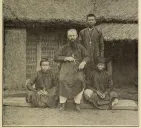
The DCHO gallery holds a picture, long labeled as the president, showing four men in uniform with a tall Western man in a white shirt. We are not able to confirm that Y Bham Enuol is in it, or when it was taken; the composition has as much in common with photographs of the last FULRO unit meeting foreign visitors in the 1990s as with anything from his lifetime. Until we can establish what it shows, we describe it as Dega officers with a foreign visitor, and we do not present it as a picture of him.
The photograph guide explains how we handle pictures whose subjects are uncertain.
The photographs that existed and are lost
There is one set of pictures of him whose existence is on the record and whose whereabouts is not. In July 1974 the American consulate’s representative in Darlac was shown the document, in Rhade with a French translation, by which Y Bham Enuol appointed Kpa Koi to lead FULRO in Vietnam. The embassy’s report to Washington says: “Photographs accompanying the document add to its verisimilitude.” Photographs of him, then, taken in Phnom Penh during the years under guard, were in the highlands in the summer of 1974, in the hands of Kpa Koi’s group. They are the only pictures from the last six years of his life that anyone has mentioned. If they survived the year that followed, somebody’s family has them.
What is not to be found
- No photograph of him at the Conference of Indochinese Peoples in Phnom Penh, March 1965, has surfaced in any archive we searched.
- Nothing in the United States National Archives catalog or the Library of Congress shows him by name.
- The American press agencies hold Montagnard pictures from 1964 and 1965, but none we found is captioned with his name; their licenses would not let us republish them in any case.
- No film of him is known to us. If any exists it is most likely in Cambodian or French television archives of 1965 to 1970.
- Nothing at all from April 1975.
If you hold a picture of him
Families in North Carolina, in Cambodia and in France hold photographs that have never been copied. A photograph of Y Bham Enuol — at home, at a meeting, in the camp, with his family — belongs in the record of our people. We will copy it, credit it as you ask, and return the original. How to record an elder explains how we take copies, and this page says how to reach us.
Sources
- The DCHO archive — all seven pictures on this page, and our own records for the datings of 1958 and 1964
- champa.one — the Camp le Rolland photograph, credited to FULRO
- Wikimedia Commons — the studio portrait, marked public domain
- Human Rights Watch, Repression of Montagnards (2002), the historical chapter — Camp Le Rolland
- CIA, The Highlanders of South Vietnam (June 1966), DCHO library — the flight of February 1963; Gerald C. Hickey, Accommodation and Coalition in South Vietnam (1970), DCHO library — the family sent to Phnom Penh
- US Embassy Saigon, Mission Weekly, July 18–24, 1974, DCHO library — the photographs that accompanied the document of 1974
Compiled September 2026. Where a photograph’s photographer or first publication is unknown to us, this page says so rather than inventing a credit. If you are the photographer or the rights holder of any picture here, write to us and we will credit it properly or take it down.