






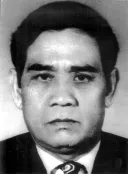
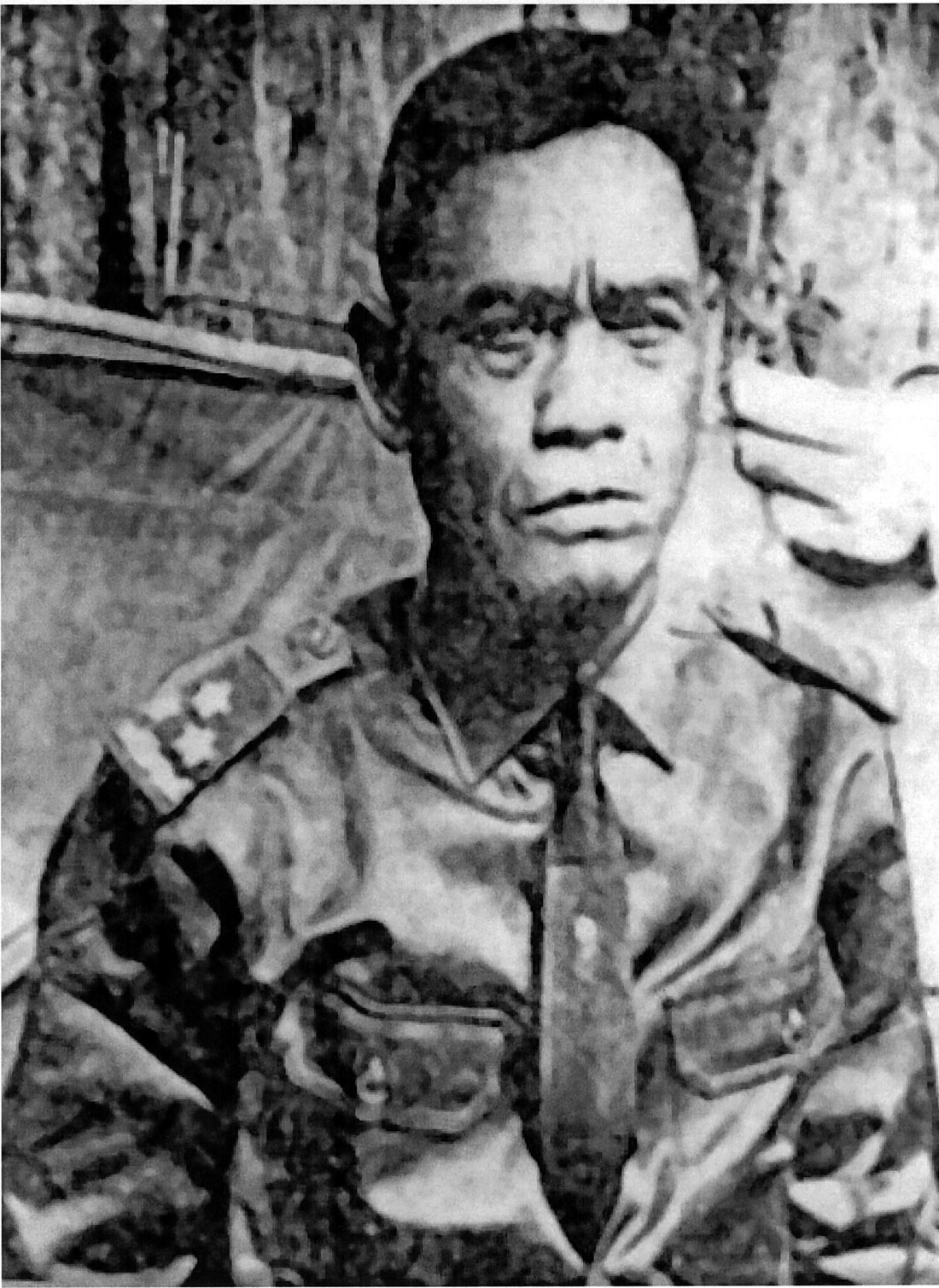
He was president of FULRO for four years and three months, and in that time he fought two battles and held perhaps forty meetings. The record of those four years is not mainly a record of fighting. It is a record of letters carried across a border by couriers, of delegations kept waiting in Buon Ma Thuot, of demands that got smaller every year, and of a government that answered almost none of them. In October 1964 he asked for a charter, a flag, an army of fifty thousand, the right to levy taxes and the right to receive foreign aid directly. In December 1968 his deputies signed for a flag, some more highland administrators, and the absorption of his soldiers into the Regional Forces. He never signed it himself. Eleven days after it was signed, his own headquarters was taken from him.
The morning at the radio station
Everything about him turns on what he was doing between dawn and noon on September 20, 1964, and there are five accounts, and they do not agree.
The fullest contemporaneous one is the Central Intelligence Agency’s study of highland politics, written in June 1966, eighteen months after the event. It says he was at the radio station trying to stop it.
“Y Bham, who may not have been aware that an armed revolt was planned, was with the Darlac Province chief during the morning of 20 September at the Banmethuot radio station attempting to talk the CIDG troops into returning to their camp.”
“About noon on 20 September, two or three jeeps of CIDG troops from Buon Sarpa entered Banmethuot and took Y Bham away to the rebel headquarters south of Banmethuot. This was the last time Y Bham has been seen by either Vietnamese or American officials. Whether he left willingly or under duress is not known, but he apparently believed that his place was with the people and that possibly under his influence, he could avoid further bloodshed and at the same time gain advantages for the Highlanders.”
The same study will not let him off, and the paragraph in which it refuses is worth reading closely, with one thing kept in mind: the agency writing it had armed, paid and trained the men who rose, and Saigon was already saying out loud that Americans had put them up to it. Whether Y Bham led the revolt was not a neutral question for the people answering it.
“But if Buon Enao did not take part in the actual revolt and Y Bham did not realize an armed revolt was to occur (which is hard to believe), both Buon Enao personnel and Y Bham knew a strong movement was afoot. Buon Enao apparently served as the operational planning base and liaison point for the revolt and Y Bham held a meeting there on the evening of 19 September, whether for the purpose of final coordination of plans or to talk the Buon Enao forces out of supporting the revolt, is not known. … If Y Bham did not plot the revolt, and his previous history and recent remarks show he strongly supported autonomy for the Highlanders, he certainly did not stop the revolt. Either he did not exercise the control over the Rhade he was said to exercise, or he was sitting back planning to capitalize on what he may have assumed would only be a strong but peaceful demonstration to obtain improvements for the Highlanders from the Vietnamese. What might have been Y Bham’s plans no longer mattered for the young militants had gained at least temporary control of the Autonomy Movement, an armed and bloody revolt had begun, and Y Bham had joined the rebels.”
A study prepared for the Department of Defense the following year would not go even that far: “The role that Y Bham played in the rebellion has still not been determined.” It adds that in the early morning of September 20 he told an American embassy officer he wanted a highland prime minister, an army of fifty thousand and direct American aid — and that he “was involved in the revolt but did not agree to the anti-American wording of the September 20 declaration by the high committee of FULRO.” Copies of that declaration, and of another dated August 20, were found in at least two of the camps, and both carried his signature.
Here are the five accounts side by side, with the year each was written.
| Source, and when written | What he did that morning |
|---|---|
| Central Intelligence Agency, June 1966 | At the radio station with the province chief, trying to talk the troops back to their camps. Taken away about noon by jeeps from Buon Sar Pa. May not have known an armed revolt was planned; certainly did not stop it. Whether he went willingly is not known |
| A Department of Defense review, May 1967 | “Has still not been determined.” Involved in the revolt, but did not agree to the wording of the declaration issued in his name |
| Gerald C. Hickey, RAND, January 1970 | The revolt was plotted by Y Dhe Adrong with the Cham and Khmer fronts. “When the revolt began, Y Bham Enuol joined them” |
| Two former ARVN generals, writing for the US Army in 1980 | At the seized radio station he “denounced the Vietnamese for committing genocide and demanded autonomy for the Montagnards” |
| Our own submission to the United Nations, July 1993 | He “rose up again and directed the struggle” |
| Later accounts resting on Po Dharma’s 2006 study | He was abducted from his house on the morning of the 21st and deported to Cambodia |
Note where that leaves us. The claim that he led an armed revolt has been made by his enemies and by his own people, for opposite reasons. The two contemporaneous American sources — an intelligence service and a defense study, neither of them on our side — both decline to say he led it, and one says he was trying to stop it. Our own 1993 submission says he rose up and directed it, written by people who had lived through those years. Saigon said he led it in order to convict him. Three accounts, three positions in the world, and we have not been able to settle it.
What he was taken into
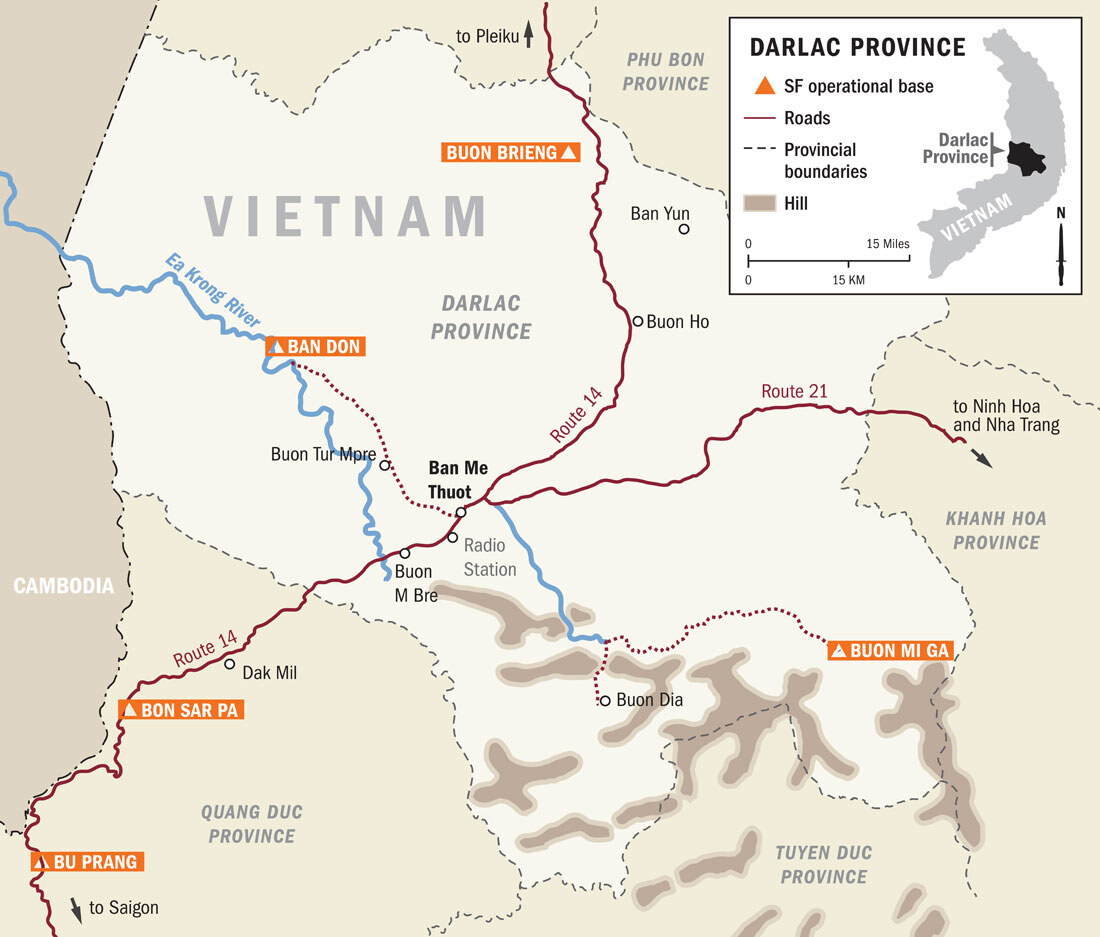
On the night of September 19 the camps at Bu Prang and Buon Sar Pa in Quang Duc and at Ban Don and Buon Mi Ga in Darlac rose and marched on Ban Me Thuot with about two thousand men. Seventy-three Vietnamese were killed, including Vietnamese Special Forces men at Buon Sar Pa and Buon Mi Ga; sixty-one were taken hostage at Dak Mil. Buon Brieng and Buon Enao were supposed to come in and did not. By morning the rebels held the radio station and were marching on the ammunition dump of the 23rd Division.
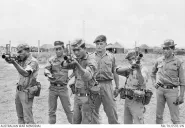
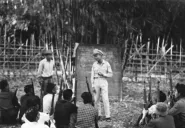
At Buon Brieng the American captain Vernon Gillespie kept his camp by telling the strikers that the Vietnamese Special Forces men were under American protection and that they would have to kill him first; he and the battalion commander Y Jhon Nie had gone through the copper bracelet ceremony together. See The bracelet. At the radio station two American majors, Frederick Patton and Edwin Brooks, walked into the compound and ordered the strikers out, and they went. The rising lasted eight days. Buon Sar Pa was occupied on September 27, and, in the CIA’s phrase, “the revolt had been put down without ARVN firing a shot, but the Highlanders’ grievances continued.”
The demands put that evening to the II Corps commander by leaders from the Buon Enao training camp were modest and specific: highland representation at the various levels of government; highland soldiers to serve in the highlands only; equality in government service; Vietnamese Special Forces withdrawn from the CIDG program and replaced by trained highland officers; better schools, and our languages taught in them. The Defense Department review calls these “the most specific demands presented to the Vietnamese throughout the rebellion” and adds, honestly, that it was not clear whether they were made on behalf of the rebel leadership or independently of it.
The general commanding II Corps had a different reading of the whole affair, and the CIA wrote it down. Nguyen Huu Co told the Americans in Ban Me Thuot on the night of September 20:
“I told the Montagnards that the CIDG is not controlled by me. They are armed by America, trained and paid by Americans. Their grievances should be directed against their camp commanders not the Vietnamese Government.”
And the camps were closed. Buon Sar Pa immediately; Bu Prang in the first week of January 1965, its men sent to An Khe; Ban Don soon after, its men sent to Pleiku. General Co decided the well-coordinated Rhade units had to be broken up, and they were. A hundred and sixty-six men deserted with forty-seven weapons. See Mike Force and SOG.
Camp le Rolland
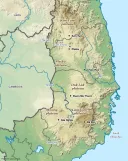
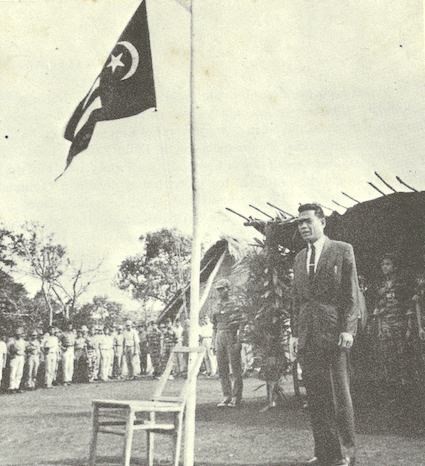
FULRO’s headquarters for the next four years stood in Mondulkiri, in Cambodia, and almost everything written about the place descends from a single careful sentence by Hickey that later writers dropped a word out of. What he wrote was that FULRO established its headquarters “near the old French Camp Le Rolland across the border in Cambodia.” Near. Not at.
The post itself was French, established in February 1933 at Dak Dam in Ou Reang district as one of a chain of fortified posts along the Piste Richomme, and named for a lieutenant who died of malaria there. The Bunong rose against it in February 1934 and were quickly put down. By 1938 the protectorate had added a dispensary, a school and a boarding house. American accounts of 1970 put the place within about ten to fifteen kilometers of Bu Prang, with a concrete villa and an abandoned airstrip of some 3,800 feet; a retired American officer who watched it from an observation post in March 1970 saw aircraft landing and taking off every twenty or thirty minutes for four or five hours in the middle of the night, and noted that the North Vietnamese logistical Base Area 740 lay just to the north of the runway.
Who allowed it, and who paid for it, the CIA answers directly, and the distinction it draws is the important one:
“A Cham courier for Y Bham reported in May 1965 that Y Bham had met with Prince Norodom Sihanouk, who had not given FULRO money and supplies but had agreed to permit FULRO to operate on Cambodian soil. The courier thought FULRO was receiving assistance from the French. Les Kosem, the Cambodian Army Major heading the Cham Front, was reported to be closely working with Y Bham.”
Permission, not money — though the same study records that supplies from the Cambodian government were arriving anyway. See FULRO and Mondulkiri, 1992.
How many men were there is a question we cannot answer with any confidence, and we would rather give the range than pick a number.
| Date | Figure | Source |
|---|---|---|
| September 1964 | About 2,000 marched on Ban Me Thuot | CIA, June 1966 |
| September 1965 | FULRO “has only 2,000 members”; four battalions in the field | Newsweek; The New York Times |
| January 1967 | 1,000 to 2,000 armed members due to rally on January 25 | CIA, The Situation in Vietnam |
| August 1967 | “Approximately 2,000 to 3,000 FULRO now in Cambodia” | Ambassador Bunker to President Johnson |
| About 1969 | “Several thousand troops, some of whom were organized in units and others in local militia” | Hickey, RAND |
| January 1969 | More than 1,300 soldiers and their families left Mondulkiri | Human Rights Watch |
| February 1, 1969 | 700 troops welcomed back at Ban Me Thuot | Hickey, RAND |
1964: the high-water mark
FULRO proclaimed itself on August 1, 1964, in the name of fourteen or fifteen peoples — the Cham, Rhade, Jarai, Churu, Raglai, Chauma, Bih, Hrue, Bahnar, Sedang, Hre, Kabuan, Hadrung, Mnong, Stieng and Khmer Krom — and of the accompanying declaration the sentence that survives is: “A systematic policy of genocide is keen on destroying our civilizations, our cultures, our religions, our nationality, and our languages.”
Two things in the founding document are worth pausing on. In it he is a vice-president, not the president: the proclamation is signed by President Chau Dara, Vice-President Po Nagar — that is, Les Kosem — and Vice-President Y Bham Enuol. And the CIA, reading the same event two years later, added the corrective that matters: “The Vietnamese Government believes Y Bham organized FULRO on 1 August 1964 but it appears that FULRO was in fact a reorganization of the Bajaraka.” See The BAJARAKA movement.
After the rising the Saigon government called a congress of highland leaders at Pleiku from October 15 to 17, 1964, and General Khanh addressed the closing session and signed a document. Its promises were large: that we would choose our own representatives in the National Assembly, in the provincial people’s councils and in the village councils; that we would hold posts in the central government and in local administration; that our courts would be reconstituted; that men who met the educational requirements would go to officer and NCO schools and command units. The CIA’s verdict on all of it, in the same study:
“The 17 October 1964 decrees signed by General Nguyen Khanh had not been implemented. Subsequent governments, although reaffirming in principle the commitments of the Khanh government to the Highlanders, had neither budgeted for nor implemented the provincial programs and the Highlanders knew it.”
On the same day the congress closed, October 17, FULRO announced from Cambodia a Provisional Government for the High Plateau with twenty-eight named ministers, of whom the Americans could identify very few. Y Bham Enuol was its prime minister. His own statement celebrated the victory of September and closed: “In case the Vietnamese government does not give us satisfaction in the immediate future, we will take up arms again.”
And then, on October 31, 1964, the maximum demand — the high-water mark of everything, and the thing against which every later list should be measured:
“On 31 October 1964, Y Bham submitted FULRO’s demands to the Highlander Representatives Provisional Committee for transmittal to the government. FULRO called for the granting of a special charter providing for the designation of a chairman of the Highlands with offices in Banmethuot, a Highlander flag, a 50,000-man Highlander armed forces, public services, schools, the right to levy taxes and to vote for a special budget, special courts, and authority to receive foreign aid directly. In return, the Highlanders would fight the Viet Cong successfully.”
The letters of that autumn went to the American embassy in Saigon, and the embassy did not reply to them. An open letter of November 1 said that if the Americans would not help, there were many other countries that would take care of the highlanders. One of November 27 to highland officers called for an independent state and predicted that without a revolution we would be destroyed within ten years, because the Vietnamese would kill us or make us Vietnamese and take our ancestors’ traditions from us. And on December 4 he told all highlanders to prepare for an offensive in January 1965 — in the CIA’s transcription of his own words, “if the Americans gave their permission.”
Five words that contain the whole position. He was ordering an uprising and asking the Americans first. See Y Bham Enuol in his own words.
What other highland leaders thought of him at that moment is in the same study. In late November 1964 Paul Nur, then deputy province chief for Kon Tum, who said he had had no contact with FULRO before or after the revolt, “defended Y Bham as anti-Communist, as had most other Highlander leaders, but he did not believe that Y Bham would return to the government until his demands were met.” See Paul Nur and Nay Luett.
1965: the year of talks
This is the year the page exists to describe, and it can almost be set out as a calendar.
February and March. He went to Phnom Penh for the Conference of Indochinese Peoples, which opened in late February and ran into March. Our own 1993 submission to the United Nations says it opened on February 25 with twenty-four nations present and that they recognized our struggle as legitimate. In September of the same year he was elected vice-president of the administrative committee of an association of the “Austrien” peoples — peoples of Khmer, Mon and Polynesian stock.
Late April. The Americans answered at last. The ambassador, through his first secretary and with Saigon’s knowledge and approval, sent a reply encouraging him to join forces with the Vietnamese government against the Viet Cong.
May 21, Ban Don. A FULRO delegation met the Darlac province chief. They asked for a safe return for Y Bham Enuol and a hundred of his followers, and for a guarantee that they could keep their flag.
June 5, Ban Don. A second delegation, headed by Y Dhun, met a new province chief, with American officers from the embassy and from the military command present. The CIA noticed where the highlanders were looking: “The FULRO representatives addressed their remarks as much to the Americans as to the Vietnamese.” Y Dhun reviewed the letters FULRO had sent to American officials, said FULRO had expected rifles, carbines and food, and concluded that if the United States supplied what the highlanders needed, FULRO would come back at once. From the Vietnamese he demanded autonomy, an army of fifty thousand, the closing of the Vietnamese land development centers, and the right to fly the FULRO flag. The province chief said he was not authorized to approve or disapprove anything. And the American embassy officer
“‘felt obliged’ to explain to the FULRO representatives ‘in rather strong, blunt terms’ that the United States Government supported and aided the Vietnamese Government and that the only way the Highlanders and FULRO could obtain aid was through the Vietnamese Government.”
July 19 to 21. FULRO approached an Australian adviser attached to the Truong Son Force at Buon Enao, said they had about a thousand men five miles from Ban Me Thuot, and asked to talk to the Americans about supporting them. The Australian told them it was a matter for the Vietnamese. A meeting was arranged with General Lan of the 23rd Division. On the evening of July 20 the American advisers met with Lieutenant Colonel Ya Ba of the Directorate of Highlander Affairs, his deputy, and Nay Luett, and the group drew up four requests for FULRO to put to General Lan: a separate operations area for FULRO units, liaison officers on both sides, a communications link, and a limited rice supply. The senior American adviser handed them over.
The explosion was immediate. General Lan complained to General Vinh Loc of American interference. No Americans were present at the second meeting. And General Vinh Loc asked that the Australian and three or four American advisers, including the senior military adviser to the 23rd Division, be posted out of the highlands.
July 29 and 31. FULRO took the Buon Brieng camp when the government negotiators were late arriving, gave it back when they came, took it again two days later and disarmed the American A-team. The camp was returned again, and more than two hundred CIDG men walked out to join about two hundred FULRO nearby.
July 30. General Nguyen Huu Co, now Minister of War, came to Ban Me Thuot with General Westmoreland and an embassy officer to meet FULRO. Co would not supply rice until he knew how many men he was feeding. They agreed a one-week truce, and the government would feed FULRO during it. Westmoreland and the embassy’s political chief urged that Y Bham Enuol be asked to come back with his followers and be given an area of military responsibility.
August 2. Two statements were handed over, one Vietnamese, one American. The American statement said that the United States was assisting the Vietnamese government and that any help given to the highlanders must be at the request of, and through, that government. The meeting went well, except that a FULRO battalion which had at first refused to leave the Buon Brieng camp marched out of it taking about four hundred of the camp’s highland strikers with it.
August 9. He replied to the prime minister’s letter of August 2 with two letters of his own, and it is in these that the word this library is named for enters the American record:
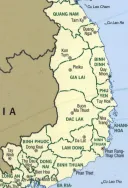
“Y Bham claimed to be speaking for the Free Country of DEGA, composed of all Highlanders and Chams. The country encompassed the provinces of Lam Dong, Tuyen Duc, Quang Duc, Darlac, Phu Bon, Pleiku, and Kontum plus all other mountain areas from the 17th parallel to Dong Xoai in Phuoc Long Province for the Highlanders. In addition, Y Bham claimed the provinces of Khanh Hoa, Ninh Thuan and Binh Thuan for the Chams.”
The conditions were four: recognition of the Dega federal state, a separate flag, a highland army, and the reduction of the Vietnamese population of the highlands to its 1954 level — a removal of at least a hundred and fifty thousand people. And at the end of a letter claiming ten provinces, he asked for one Australian officer to be sent back. See Who are Dega.
August 20. General Vinh Loc said Y Bham Enuol was not acting in good faith, and gave every FULRO unit until September 5 to come under ARVN control or be treated as Viet Cong.
August 25 to 27. A large Vietnamese delegation met three FULRO men at Ban Me Thuot. In the CIA’s words: “Bickering went on for three days. The demands were unacceptable to the Vietnamese Government.”
August 28. Six demands were put that were “quite different in tone and character from the original FULRO demands”: a final and decisive meeting, a special status for the highlanders, a special administration and military force, a highland representative to advise the government, the return of highland civil servants to the highlands, and an economic and health service. An official said he would take them to Saigon.
And then, this. The single most damaging sentence in the whole American file on the negotiations, and it is about the Vietnamese side, not ours:
“The government made no reply. Lt. Colonel Le Van Thanh, Darlac province chief, who was the sole Vietnamese official designated to negotiate with the FULRO delegation, admitted in early September that he had resorted to subtle bribery and delaying tactics in his dealings with the delegation. Thanh had in a sense attempted to buy off the delegates by furnishing their quarters comfortably and providing them with large supplies of whiskey, cigarettes, food, and money in the hope that they would not break off negotiations because of reluctance to return to an uncomfortable life. Thanh was also attempting to prolong the discussions indefinitely by pretending, each time the delegation returned to Banmethuot, that he had submitted the FULRO demands to Saigon for consideration, then tentatively agreeing to some of the demands, and imposing new Vietnamese demands so that the delegation would be forced to return to Cambodia before reaching complete agreement.”
Whiskey, cigarettes and a comfortable room, so that men who had walked in from the forest would not want to walk back out. The sole official authorized to negotiate with us admitted in September 1965 that the negotiation was a method of running out the clock. Everything the highlands did afterward, including the things done by people who had no patience left, has to be read against that paragraph.
September 7 to 12. ARVN entered Buon Brieng and disarmed the highlanders. Two Vietnamese Marine battalions and three groups of National Police surrounded the FULRO 28th Battalion, about 485 men, in Buon Ho district; its commander decided to come in with his men and weapons — four mortars, six light machine guns, a bazooka and 282 individual arms.
What was then done to that battalion is why nobody in the highlands believed a promise afterward. They had been told they would get new clothing and equipment, train as a highland battalion, keep their FULRO ranks and do a four-week refresher course. At Duc My no preparations had been made. For two weeks they sat idle. They got no clothing, no equipment and no pay, and they were broken up into three Regional Force companies. On October 1 they rebelled. The training that should have ended in November ran to December and then further, and in late January 1966 General Vinh Loc split the group into six units and sent them to six coastal provinces. The CIA’s own comment: “Once again, by breaking past promises, the Vietnamese were providing proof of bad faith in dealing with the Highlanders, further alienating the moderate elements and strengthening the extremists.” An American aid report of October 6 lists what the men at Duc My needed: blankets, cots, cooking pots, plates, bowls, knives, spoons, forks, mosquito nets, canteens and warm clothing.
September 12 and 13. The Saigon government demanded the departure of three American officials over contacts with FULRO, among them the diplomat William Y. Beachner. The Minister of Defense said he had found an English-language document that “had been written by employes of the Central Intelligence Agency to show Fulro leaders how to negotiate.”
September 20. Newsweek published the one piece of contemporaneous journalism we have found that states this article’s argument while it was happening:
“Though FULRO aims at full autonomy, its leaders realize the war makes this unrealistic at present and have scaled down their demands in recent talks with the South Vietnamese government. But whatever concessions FULRO believes it has made, there are ominous signs that Saigon’s patience is exhausted. Last week, Prime Minister Nguyen Cao Ky publicly warned the montagnards: ‘The government cannot accept the unreasonable demands of FULRO. FULRO leaders will be sorry if they continue their past activities.’”
The same article quotes an American colonel newly arrived: “If they ain’t with us, they’re against us.” And a worried one: “They can take over any camp they want to without firing a shot.”
September 23. The pivot. In a letter to his negotiators he set out eight points: a special policy for the highlanders; a commissariat general of highlander affairs at Ban Me Thuot under a Rhade with Vietnamese, American and highland advisers; a Rhade military force with Vietnamese and American advisers; all highland civil servants serving outside the highlands to be reassigned home; special programs, especially foreign aid; a highland flag to fly alongside the Vietnamese flag; the right to send representatives to Geneva to discuss the future unification of Vietnam; and — point eight — he withdrew his demand for highland territory.
Six weeks. On August 9 he claimed ten provinces. On September 23 he gave up the claim to territory altogether. The government, having been told this, did nothing that showed it had accepted anything, and the CIA’s reading of Saigon’s actual position is one sentence long: “It appeared that the Vietnamese Government would agree only to the unconditional return of Y Bham and the disbanding of FULRO.”
Late November. A departing volunteer was asked to carry envelopes to the American ambassador; not knowing that the United States did not accept communications from FULRO, he did, and the embassy handed them to the Vietnamese government. They were addressed to the presidents of France and the United States and to the United Nations Security Council, and they explained the creation of a “Federal State of the Highlander-Cham Peoples” and asked that the highlands be placed under a temporary United Nations trusteeship administered jointly by France and the United States until the highlanders were ready for full independence. A provisional constitution was enclosed. Somewhere in the American files there is a constitution for our country, written in 1965. We have not found it.
December 17 and 18. The second rising. Arrests in Pleiku and Ban Me Thuot on the 16th and 17th; risings that night in Pleiku, Phu Bon, Darlac and Quang Duc; Phu Thien district town taken on the morning of the 18th by the mutinous 296th Regional Force company, with the district chief among thirty-two Vietnamese killed, and retaken by three in the afternoon; Gia Nghia, the capital of Quang Duc, taken by a FULRO unit under an ARVN captain and retaken with two FULRO captains and a hundred and twenty men captured. The CIA thought the militant faction had planned it and added: “there is some doubt that Y Bham either approved or was aware of the plan.”
The reprisals were quick. The commander of the 296th company and his three platoon leaders were tried and executed on December 27. Of ninety-two arrested in Pleiku, three were given twenty years’ hard labor — Ksor Kham, a ranger sergeant named Y Ba Ya, and Nay Bhon, the former vice principal of the boys’ school. On February 10, 1966 twelve more were sentenced at Ban Me Thuot, among them Y Thih Eban, a member of the BAJARAKA central committee who had been imprisoned in 1958. A priest in Ban Me Thuot reported that unrest among the Rhade was acute, and between the 18th and the 20th of December the Viet Cong were reported to have carried off almost a thousand highlanders in Darlac.
And one sentence, from the deputy province chief of Pleiku, that the CIA recorded with the gesture attached: “We must give the Highlanders equality … But if they are against us, I will kill them. Like that!” — pounding his fist on the table. When three hundred refugees reached a camp in Pleiku that August, the province chief took responsibility for the hundred and fifty Vietnamese and refused it for the hundred and fifty highlanders.
1966: the inquiry, and the offer of a desk
His delegation repudiated the December rising the day after it began, calling it the work of inexperienced, hot-headed FULRO youths who had become impatient with Vietnamese vacillation. On December 28 the delegation leader, Y Dhe, wrote to General Vinh Loc asking him to excuse the impetuous, to release the civil servants and soldiers arrested in Pleiku and Quang Duc, and to decide quickly on the eight points — “in order to restore Vietnam’s anti-Communist potential in the Highlands.”
In early January Y Bham Enuol held a conference at his headquarters in Cambodia to find out who had given the orders. A FULRO major named Y Nam, a former ARVN second lieutenant, was found guilty. He deserted before he could be arrested.
The talks did not resume. Vinh Loc told the Darlac province chief on January 7 to make no further contact with the FULRO representatives, on the ground that men who claimed not to have known about the uprising could not truly represent FULRO. In late January he ordered the delegation back to Cambodia. On February 3 they wrote to ask whether the government sincerely wanted the highlanders as citizens and allies against the Viet Cong, “or must the delegation return to FULRO empty handed?” In March six of them were still sitting in Ban Me Thuot.
Then, in the spring, three of the eight points were met or half met. Paul Nur was appointed Commissioner of Highlander Affairs, which was one of them. The government announced a program for the highlands, which was part of a second. And it seemed likely to approve a pennant for highland military units, which was part of a third.
And Y Bham Enuol was offered a job: Director-General of Highlander Affairs for II Corps. The people offering it wrote down, four months in advance, exactly why he would not be able to take it:
“It is not known how much authority Y Bham will be permitted if he does accept the position as Director-General of Highlander Affairs for II Corps. He will be subordinate to both Vinh Loc and Paul Nur. … Y Bham is committed to autonomy for the Highlanders while Paul Nur appears to believe the only course is assimilation within the Vietnamese society. Some autonomy might be obtained through the special statute proposed for the Highlands but if Y Bham uses his position to continue to press for autonomy then he will probably run into opposition from Paul Nur and will definitely be opposed by Vietnamese authorities.”
That is the answer to the question people still ask about him — why did he not simply come in? — and it was written by the Americans, in 1966, before he was asked.
At a meeting he chaired at headquarters in mid-May, FULRO decided that its demands must be agreed and respected by any successor government of South Vietnam, and recognized and guaranteed by the United States government or at least by the embassy in Saigon. It also asked for the release of political prisoners and the return of the 468 men sent to Duc My. Nobody was going to guarantee anything.
One measure of what was at stake, from the same study: in the spring of 1966 about three quarters of the estimated seven hundred thousand highlanders were outside Vietnamese government control, and perhaps three hundred and fifty thousand were under some form of Viet Cong control, while about two hundred and eighty thousand Vietnamese were living in the seven provinces between Kon Tum and Lam Dong.
1967: asylum, and an agreement at last
By January 1967 he had asked to leave. The CIA’s daily situation report of January 22 records that the II Corps commander and the prime minister both thought an affirmative answer should be given to “FULRO leader Y Bham Enuol’s request to go into voluntary exile in Thailand” — and, in the next paragraph, that one to two thousand armed FULRO were due to rally on January 25.
A meeting was arranged for January 28 with American and Vietnamese representatives to discuss the asylum, and he did not come. The report of January 30:
“It is not yet clear whether Y Bham deliberately passed up the meeting, or whether his couriers failed to reach him in time to confirm the time and date of the meeting. US officials estimate that it could be a week or ten days before an explanation becomes available because of poor communications with Y Bham.”
A week or ten days to find out why a man missed a meeting. He was negotiating the future of half a million people through couriers walking across a border.
The same report notes that news of the prospective meeting “caused a highly favorable reaction among FULRO supporters and other montagnards in the Ban Me Thuot area.” People wanted it to end.
May 2, 1967. He came in. He met General Vinh Loc at Ban Me Thuot, and the meeting produced a communiqué. FULRO forces would return to the national ranks after the government promulgated a special statute on the rights of the mountain peoples, to be drafted by a congress of highland leaders; he swore “to cease completely” all acts against the national interest; the government undertook to go on improving the material and spiritual life of the highlanders. And, in the CIA’s phrase, the two hard questions — a separate armed force, and the right to receive American aid directly — “appear to have been side-stepped for the moment.”
The American observer added a detail that says everything about the temperature of the room: the meeting was largely without rancor, “although Vinh Loc’s demeanor toward the montagnards was observed to be haughty and hardly designed to engender good will.” And that there was no mention of the exile in Thailand. He went back to Cambodia.
The next morning the American ambassador reported the whole thing to the President of the United States in one sentence: “The rebel Montagnard leader, Y Bham, finally came to Banmethuot to meet with GVN representatives, and a preliminary agreement was reached.”
Our own record of that spring gives eight points he put to Saigon on May 4, 1967: a special statute and constitution for our people; a special commission for highland affairs at Buon Ma Thuot; recruitment and organization of highland armed forces; the return of all our civil servants and soldiers serving outside the highlands; the right to receive aid directly from the United States or other nations; the raising of our flag to the same height as the Vietnamese flag; the clear marking of the borders of the highlands; and our participation in another Geneva conference or other international conferences. Set that beside the eight points of September 1965 and it is substantially the same list, put again nineteen months later. The only movement is the flag: in 1965 it was to fly alongside the Vietnamese flag, and in 1967 to the same height.
In late June a conference at Ban Me Thuot brought 250 FULRO fighters back from Cambodia, and Saigon offered a Commissariat of Montagnard Affairs under Paul Nur in exchange for FULRO turning against the National Liberation Front. On July 7 the Provisional Government of Champa rejected the offer.
On August 29, 1967 President Thieu signed the Statut Particulier, drafted by a congress of highland representatives under General Vinh Loc’s chairmanship. Three weeks earlier the American ambassador had written to the President that it should be “helpful in stimulating the return of the approximately 2,000 to 3,000 FULRO now in Cambodia.” The same telegram records the government’s June announcement that the statute would be promulgated and a ministry created, and adds: “but no action has been taken.”
1968: the last negotiation, and the last word
In the summer of 1968 he wound FULRO up. Our own sources differ by a month — our 1993 United Nations submission says July 15, two American accounts say August 15 — but they agree on what he did and why: he dissolved the front and went back to the highland movement alone, separating it from the Cham and Khmer fronts that had been folded into it in 1964.
The reason those fronts had been there in the first place was a bargain. Two Cambodian army intelligence colonels, Les Kosem for the Cham front and Um Savath for the Khmer Krom front, had promised Cambodian sanctuary, arms and supplies if their movements were included. The sanctuary was real. So was the price. See FULRO.
August 1968. Government representatives met a FULRO delegation led by Y Bham Enuol, with some Cham and Khmer members present. The government delegation made it clear that it would deal only with the highlanders; one of the FULRO delegation was a Khmer Krom lieutenant colonel who put in a set of demands closely resembling FULRO’s, and it was withdrawn and never resubmitted. A meeting was then arranged with Prime Minister Tran Van Huong in Saigon. He was granted immunity and came to Ban Me Thuot in total secrecy.
Hickey, who was in Vietnam and writing within a year, recorded a detail about that August meeting which shows how small the world of highland politics was: five of the fourteen highlanders in the room belonged to a single kin network — the one that included Paul Nur and Toplui K’briu and a good many of the administrators the government had appointed.
What FULRO asked for in 1968, in Hickey’s summary, was this: greater participation in political affairs, and explicitly a highland leader placed high in the central government; a body of representatives from all our peoples to meet periodically in Ban Me Thuot; more of the administration of the highlands in our own hands; measures to resolve our land claims; a highland army or military force under our own officers, taking guidance from Vietnamese and foreign advisers; and a highland flag to be flown under the national flag.
Alongside in 1965. To the same height in 1967. Under it in 1968. If you want the four years in one word, it is a preposition.
December 19, 1968. He went back to consult his staff in Cambodia while his deputies Y Dhe Adrong and Y Bling Buon Krong Pang continued the discussions with Minister Paul Nur and the prime minister’s staff. Having his authority to negotiate, they signed. The agreement covered a flag for the highlanders, an important role for Y Bham himself, an increased number of highland administrators, and the integration of FULRO’s military units into the Regional Forces. Human Rights Watch adds that it allowed us to form our own political party and fly our own flag.
Some accounts date the agreement to December 11. We keep December 19. It rests on one writer: Hickey is the only one who names the men who signed, he was in the country, and he was working from FULRO’s own sources within a year. That is one chain, and we say so. December 11 appears in later accounts with no signatories named.
Here is the whole of it, set against October 31, 1964.
| Asked, October 31, 1964 | Signed, December 19, 1968 |
|---|---|
| A special charter for the highlands, with a chairman of the highlands at Ban Me Thuot | “An important role for Y Bham” |
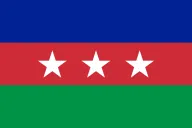
| A highlander flag | A flag |
| A highlander armed force of 50,000 men | FULRO’s units integrated into the Regional Forces |
| Public services, schools, special courts | An increased number of highland administrators |
| The right to levy taxes and to vote a special budget | — |
| Authority to receive foreign aid directly | — |
Two of the six are blank. One has become a job for one man. One has become the dissolution of the army that was asked for. What survived four years intact was the flag.
December 1968: the headquarters taken
He did not sign. Before he could, his own headquarters was taken from him, and the accounts of how have hardened over time in a way worth watching.
Hickey, writing first and most cautiously:
“Just before his departure to sign the agreements, a force of FULRO dissidents, some of whom were active in the 1965 revolt, accompanied by a group of Cambodian-Cham, including a few officers of the Royal Khmer Army, captured Y Bham’s headquarters. Y Bham and his family were sent to Phnom Penh, and since then they have remained in Cambodia as have the FULRO dissidents.”
Note what he says: FULRO dissidents did it, accompanied by Cambodian Cham including a few Khmer Army officers. He names nobody, gives no date, and does not say the Cambodian army was the moving force.
Human Rights Watch, writing in 2002: in January 1969 more than 1,300 FULRO soldiers and their families rallied to the South Vietnamese government and left Mondulkiri; Y Bham Enuol did not go with them; several Cambodian army battalions surrounded the headquarters and escorted him to Phnom Penh. Later accounts, resting on Po Dharma’s study of the Cham and FULRO archives, name Les Kosem personally, at the head of several battalions of the Royal Cambodian Army, on December 30, 1968, with a group from the militant wing of FULRO; and put him afterward under house arrest in Phnom Penh at the residence of a Cambodian colonel.
The motive, in the account given by an American who knew the movement, is the July or August dissolution: excluding the Cham and Khmer fronts from the revived highland movement angered Les Kosem, who sent troops to arrest him. If that is right, then the alliance that gave him a sanctuary for four years is the alliance that took him prisoner when he tried to leave it.
We give the date as December 30, 1968, which is what our community remembers and what the published accounts carry. No contemporaneous document we have read fixes it — Hickey, writing first and closest, gives no date at all — and we would be glad to see one. What happened afterward is on Y Bham Enuol in Phnom Penh.
What was left
The government treated the agreements as valid without his signature. On February 1, 1969 President Thieu and senior officials presided over a ceremony at Ban Me Thuot welcoming the FULRO leaders and seven hundred troops back into the fold. The leaders arrived without him. In the recollection of two ARVN generals: “at the last minute the FULRO group appeared without Y’ Bham. Reportedly he had been detained in Cambodia by FULRO dissidents.”
On February 11 a delegation of former FULRO leaders met Thieu to discuss implementing the December agreements, and declared that they would form a political party to replace FULRO. It was called the Movement for Unity of the Southern Highland Ethnic Minorities, and its chairman was Y Bling Buon Krong Pang, one of the two men who had signed in December. In May the movement became part of the People’s Alliance for Social Revolution, and the Alliance shortly afterward joined President Thieu’s National Social Democratic Front.
That is the end of the argument this page is making. The organization that in October 1964 declared a provisional government with twenty-eight ministers ended, in May 1969, as a component of a component of the president’s own political front. And the man who had been its president was under guard in Phnom Penh, and had signed nothing.
What the Americans made of him
They had used him before any of it. In 1963, while he was in the Ban Me Thuot jail, the Americans worked through him to reach Y Bih Aleo, who had gone over to the other side; he wrote letters from his cell urging Y Bih to surrender, and in February 1963 he was let out briefly to meet General Khanh and then put back in. See Y Bham Enuol in prison.
Through the FULRO years the American assessment is consistent and unheroic. He is “the generally supposed leader of FULRO.” He “may not have been aware that an armed revolt was planned.” He leads the faction that “advocated moderation and struggle through political rather than military means, and sincerely desired to cooperate with the Vietnamese Government,” against a second faction under Y Dhon Adrong that advocated force. He “is committed to autonomy for the Highlanders.”
Against him: General Co believed Y Dhon, not Y Bham, was the real force among the rebels. General Vinh Loc said he was not acting in good faith. An official in the prime minister’s office thought in November 1965 that “Y Bham actually wished to return to Vietnam from Cambodia,” laid much of the blame on Les Kosem, and was of the opinion “that Y Bham had lost control of FULRO.”
And the Americans were embarrassed by him throughout. The embassy refused his letters as a matter of policy; four delivered about three weeks before the December 1965 rising were photographed and handed to the Vietnamese prime minister’s office, and embassy officers stated that the United States had no interest in FULRO. Three American officials were sent out of the country over contacts with him. The CIA’s own summary of the damage: by September 1965 the suspicion held by senior Vietnamese officials, “who irrationally and without foundation considered U.S. officials to have supported or even fomented FULRO,” had made it hard for the Americans to press Saigon to do anything for the highlanders at all.
One line about him is quoted more than any other: “No one has ever stood higher in the esteem of his people. He was rumored to have supernatural powers.” It is worth knowing what it is. It is not an official assessment. It was written in February 2025 by Jim Morris, a Special Forces veteran and writer, in a review of a book about FULRO, describing a man who by then had been dead half a century. A soldier who was there, writing sixty years later, is worth quoting; a reader is entitled to know that is what he is reading.
The one contemporaneous judgment of his standing we can verify is the CIA’s, and it is in the sentence describing the moment the jeeps came for him: “he apparently believed that his place was with the people.”
What we do not know
Whether he knew in advance of the rising of September 19 and 20, 1964. The CIA thought it hard to believe he did not, and could not say what the meeting at Buon Enao on the evening of the 19th was for.
Whether he left the radio station willingly. The best source says plainly that it is not known. Everyone who has written since has simply chosen.
Whether he spoke at the radio station at all. Only the two ARVN generals, writing sixteen years later, say he did.
The text of the declaration of September 20, 1964 and of the handbill in French and Rhade. Copies were found in at least two camps and photographed, and the declaration was printed in Phnom Penh and broadcast from there.
The provisional constitution enclosed with the letters of November 1965. It reached the American embassy and was handed to the Saigon government. It is a constitution for our country and we have never read it.
The date and circumstances of the seizure of Camp le Rolland. December 30, 1968 is what our people remember, and no paper we have read fixes it either way.
And the FULRO Historique, printed in Phnom Penh in 1965 — the front’s own account of its founding, in French, containing the August 1, 1964 proclamation and his statement of October 17 — which survives only in the passages a scholar quoted from it in 2013. See What we do not know.
Sources
- Central Intelligence Agency, Vietnamese Affairs Staff, The Highlanders of South Vietnam: A Review of Political Developments and Forces, June 1966, CREST document CIA-RDP80T01719R000300010003-8, pp. 60–105 — by a long way the richest source for this page, and effectively a month-by-month record of the negotiations of 1964 to 1966. We read the declassified text in full. Note that a second CREST copy of the same study, CIA-RDP78-02646R000400310001-9, is partial and contains no FULRO material at all
- Center for Research in Social Systems, A Review of United States Military Counterinsurgency Activities with Selected Minority Groups in South Vietnam, May 1967 (DTIC AD0381804), pp. 23–36 — “the role that Y Bham played in the rebellion has still not been determined”; the signed declarations found in the camps; the five demands of September 20; the American statement of August 2, 1965; the state of the rallied battalion at Duc My
- Gerald C. Hickey, Accommodation and Coalition in South Vietnam, RAND P-4213 (January 1970), pp. 24–31 — “when the revolt began, Y Bham Enuol joined them”; the headquarters “near the old French Camp Le Rolland”; the August 1968 meetings and what FULRO asked for; the agreement of December 19, 1968 and the men who signed it; the seizure; February 1 and 11, 1969 and the Movement for Unity
- Nguyen Duy Hinh and Tran Dinh Tho, The South Vietnamese Society, Indochina Monographs, US Army Center of Military History, 1980, pp. 104–107 — the manifesto of August 1, 1964 and its fifteen peoples; the speech at the radio station, which no other source records; the secret journey of August 1968; the ceremony he did not attend
- Central Intelligence Agency, The Situation in Vietnam — January 22, 1967 (the request for exile in Thailand), January 30, 1967 (the meeting he missed), and May 3, 1967 (the meeting with Vinh Loc, the communiqué and “to cease completely”)
- Foreign Relations of the United States, 1964–1968, volume V — document 158, Ambassador Bunker to President Johnson, May 3, 1967; and document 264, August 3, 1967, for the Statut Particulier, the 2,000 to 3,000 in Cambodia, and the note that the American file on efforts to involve him lies unpublished in the State Department’s central files under POL 30 VIET S
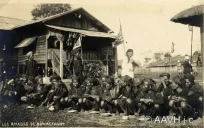
- Robert W. Jones Jr., “A Team Effort: The Montagnard Uprising of September 1964,” Veritas: Journal of Army Special Operations History 3, no. 2 (2007), published by the US Army Special Operations Command History Office — Buon Brieng, the bracelet ceremony, the two majors who cleared the radio station, and the photographs on this page
- Merton Perry, “Thunder in the Mountains,” Newsweek, September 20, 1965, and Charles Mohr, “Saigon Said to Oust 3 Aides of U.S. Over Tie to Tribes,” The New York Times, September 13, 1965 — both preserved as clippings in the CIA’s declassified files
- William B. Noseworthy, “Lowland Participation in the Irredentist ‘Highlands Liberation Movement’ in Vietnam, 1955–1975,” ASEAS — Austrian Journal of South-East Asian Studies 6, no. 1 (2013), 7–28 — which quotes the FULRO Historique (Phnom Penh, 1965) at pp. 17–19 for the founding proclamation, the declaration, and his statement of October 17, 1964
- Human Rights Violations — The People of the DEGA Republic, presented to the United Nations workshop on the rights of indigenous peoples, Geneva, July 1993 — our own account, which says he rose up and directed the struggle, and which dates the Phnom Penh conference to February 25, 1965 and the dissolution of FULRO to July 15, 1968
- Michael D. Benge, “The Montagnard Political Movements and FULRO,” The Sentinel (Special Forces Association Chapter 78), September 2018 — the bargain with the Cham and Khmer fronts, and the motive for the seizure; and Jim Morris in The Sentinel, February 2025, for “no one has ever stood higher in the esteem of his people”
- Human Rights Watch, Repression of Montagnards, April 2002, historical chapter — the December 1968 agreement on a party and a flag, and the January 1969 departure from Mondulkiri
- Tom Burke, “The Mystery at Camp Le Rolland, Cambodia,” Dispatches, August 2021 — the only first-hand American description of the place we have found, from a Pleiku Mike Force patrol in March 1970
- Named but not read: Gerald C. Hickey, Free in the Forest (Yale University Press, 1982), and Window on a War (Texas Tech University Press, 2002), pp. 153 and 175; and Po Dharma, Du FLM au FULRO: une lutte des minorités du sud indochinois, 1955–1975 (Les Indes savantes, 2006), which is the source behind the December 30, 1968 account and the only book built on the Cham and FULRO archives. Everything attributed to those three books on this page reaches us through works that cite them
Compiled September 2026. The four years are documented overwhelmingly from American sources — an intelligence study, a defense review, a RAND paper, embassy telegrams and two American magazines — because those are the records that survive and are open. They are the papers of a government that was not on our side and said so, and they should be read that way; what makes them usable is that they are contemporaneous, that they disagree with each other, and that they record Vietnamese and American conduct as unsparingly as ours. Where our own accounts differ from theirs, both are given. Two dates on this page rest on our own memory and on later publication rather than on a contemporaneous paper, and are marked where they occur: the December 11 alternative for the agreement, and December 30, 1968 for the seizure of the headquarters. Y Dhe Adrong and Y Dhon Adrong are two different men: Y Dhe led the delegation at Ban Me Thuot and signed in December 1968; Y Dhon was the military leader of the 1964 revolt and headed the militant faction.