












He was arrested in the autumn of 1958 for writing letters, and he was not free again until February 1964. The sources disagree about the sentence, the prisons and even the number of years — four, five, six or seven, depending on who is counting. What they agree on is that the Republic of Vietnam jailed the man who had asked it for schools, kept him for most of six years, took him out of his cell when it needed him in front of a crowd, and put him back.
The letters that led to the arrests
Nothing was done in secret. On July 7, 1958 he wrote to the American ambassador. On July 31 a delegation carried a petition asking for a United Nations investigation, signed by forty-five leading highlanders; copies went to the British and French ambassadors too. On September 8 a body calling itself the Committee of Liberation set out its demand for autonomy in a letter addressed to President Ngô Đình Diệm. That summer the movement claimed to speak for some 200,000 highlanders. The whole sequence is on Y Bham Enuol: the early years and BAJARAKA.
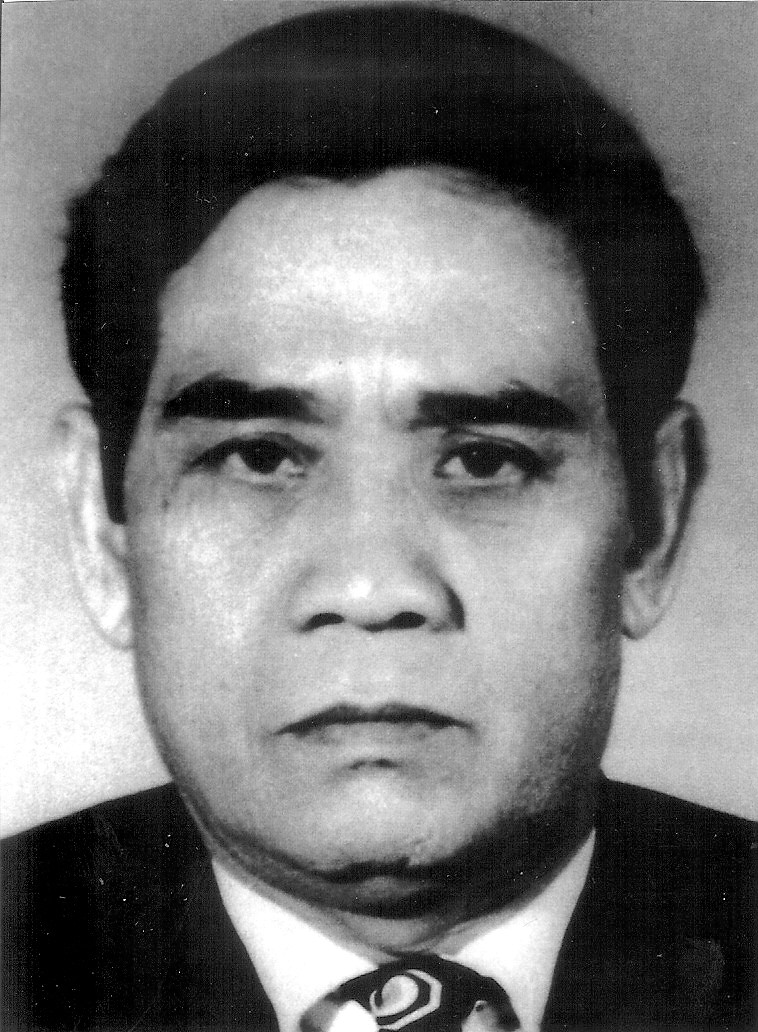
In September two BAJARAKA members were arrested north of Kon Tum. Y Bham Enuol wrote to Diệm again, to try to get them out. The answer was to arrest him.
The CIA’s own review of the period lists who went: Y Bham Enuol, president of BAJARAKA; Touneh Yoh, chairman of the Dalat committee; Nay Luett, chairman of the Pleiku committee; Paul Nur, chairman of the Kon Tum committee; and Y Ju Eban and Y Thih Eban of the central committee. In the end, it records, every member of the central committee was arrested. That is the entire political leadership of the Central Highlands, in one season, for petitioning.
Our people did not accept it quietly. On October 12 a petition demanding the release of the arrested men went in with roughly a thousand signatures, and on October 15 there were demonstrations at Buon Ma Thuot, Kon Tum, Pleiku and Di Linh. The arrests had produced, in six weeks, exactly the mass movement they were meant to prevent.
Dalat, and then Ban Me Thuot
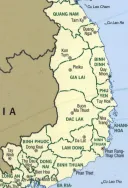
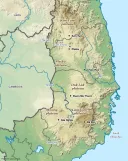
The leaders were put first into underground solitary cells at Da Lat and held there for three months. Y Bham Enuol was later taken to the police headquarters at Buon Ma Thuot, where, by the account Human Rights Watch carries, he was tortured with electric shocks. The CIA study still has him in the Buon Ma Thuot jail as late as 1963.
Whether he was ever at Huế we have not been able to settle, and both accounts of it are ours. A Mnong man interviewed in 2001 remembered that our leader was jailed at Huế for seven years. A Cham account says Diệm had him moved to the detention camp there. The two may not be independent of one another, and we would like to know whether they are.
What we will not do is rank them below the foreign record because no filing cabinet holds them. Diệm’s government did not publish the roll of men it took out of the highlands, and no government since has published it either. The missing paper is a fact about the state, not about the man remembering. A Mnong man who carried for forty years the knowledge of where the president of BAJARAKA was held is not a rumor waiting for an archive to license him. He is the record, and keeping that record is what this library is for.
Then read the next section and hold the two to the same standard. Every outside account of these years runs back through one book by one American. That is a single chain too.
Four years, five, six, seven
Every serious account of these years traces back through Human Rights Watch to one book, Gerald Hickey’s Free in the Forest. There is no second, independent chain. That is why the count will not settle.
| Source | The sentence, or the time served |
|---|---|
| CIA (1966) | “The other six leaders were sentenced to four years in prison but some were not released until 1964.” The wording implies a seventh man treated differently, and the study does not say who. An unconfirmed report in the same study has Y Bham released in June 1960, returning to his village of Buon Ta, meeting Y Bih Aleo and the local committees, and re-arrested when the police learned of the meetings. |
| Hickey, RAND (1967) | Five years in jail. |
| Human Rights Watch, following Hickey (2002) | Released in 1959 with Paul Nur; re-arrested as soon as he resumed the campaign; held until early 1964. |
| Our own records | Six years, with five other leaders. |
| Mnong testimony to Human Rights Watch (2001) | Seven years, at Huế. |
The sharpest conflict is the middle one, and it is not a detail. If he was released in 1959, or in June 1960, then the prison years are two stretches with a few weeks or months of liberty between them, and in that gap he went straight back to organizing and was taken again for it. If he was not released, they are one unbroken run. We do not know which, and no one has ever produced the charge, the court or the sentence in a document.
What he did from inside
He did not stop, and the government did not leave him alone.
- He kept leading. An American review of 1967 records that he continued to lead the Rhade movement from his cell.
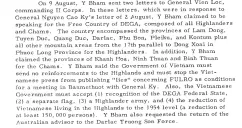
- He was taken out when he was useful. In February 1963 he was brought from jail to meet General Nguyễn Khánh, then commanding II Corps. On February 14 an American aircraft flew him to a meeting at Pleiku, and the CIA noted that his presence there had an excellent effect on the highlanders. At the end of the month he was returned to his cell.
- He was asked to write. As a prisoner he wrote letters urging Y Bih Aleo, the Rhade leader who had gone over to the other side, to give himself up. The government that would not answer his petitions was glad of his signature. Y Bih Aleo’s own road is on Highlanders on the other side.
Read those three together and the shape of it is plain. He was not a man the state had finished with. He was a man it kept in a drawer.
How he got out
The one date fixed in a document is the end. He walked out on February 10, 1964, a fortnight after Nguyễn Khánh’s coup, released by order of the Minister of the Interior. He was the last of the leaders let out. Two American reference works put it earlier still, after the fall of Diệm in November 1963.
How it was obtained is a thread worth following. A Cham account says he was freed because of a letter written on February 1, 1964 by Les Kosem, the Cham officer in the Cambodian army, to Prime Minister Nguyễn Khánh. Independently, a scholar of the Cham movements records that Les Kosem petitioned the new generals in power and secured the release in 1964. If that letter survives in Cambodian or French papers, it is the document that ends the prison years, and nobody has gone to look for it.
The record that was never made
We went looking for our leader in the published diplomatic record of the years he was in prison. The Foreign Relations of the United States volume for Vietnam, 1958–1960, has a long despatch from Ambassador Durbrow in March 1960 discussing highlanders at length — Viet Cong influence, villages withdrawing, Civil Guard posts. It does not mention the autonomy movement, the arrests, or Y Bham Enuol. The volume’s list of persons has no entry for him, and none for any highland leader at all.
The entire political leadership of the Central Highlands was jailed for writing letters, and the government whose ambassador had received one of those letters left no trace of it in the record it later published. That absence is not a gap in our research. It is the finding.
Out, and into a desk
Khánh’s government made him deputy province chief for highlander affairs in Darlac. It was the shape of a concession: a highlander at the second desk in the province where the trouble was, with the province chief above him and no power of his own. The result took the CIA one sentence — the new highland appointees were dissatisfied with their jobs.
Seven months later he was on the Cambodian border with an armed movement. What happened in those seven months, and how far he was part of it, is on President of FULRO, 1964 to 1968.
What we do not know
- The charge, the court and the sentence, in a document. No one has ever produced one.
- Whether the release of 1959 or June 1960 happened at all, and if it did, for how long.
- Whether he was held at Huế at any point, and if so in which prison.
- What was done to him at the Buon Ma Thuot police headquarters, beyond the one reported account of electric shocks. He never described it in anything we have found.
- Who the seventh man was, in the CIA’s “other six leaders.”
- Whether the Les Kosem letter of February 1, 1964 survives.
If your family kept a letter from him from these years, or remembers a visit to him in any of these prisons, that is the record that was never made. See How to record an elder.
Sources
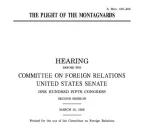
- Human Rights Watch, Repression of Montagnards, the historical chapter (2002) — the September 1958 arrests, the underground cells at Đà Lạt, Buôn Ma Thuột and the electric shocks, the 1959 release, and the Mnong testimony about Huế
- CIA, The Highlanders of South Vietnam: A Review of Political Developments and Forces (June 1966) — the roster of those arrested, the four-year sentence and the “other six leaders,” the unconfirmed June 1960 release and re-arrest, the 1963 Pleiku flight, the letters to Y Bih Aleo, the February 10, 1964 release, and the dissatisfaction of the new appointees
- Gerald C. Hickey, The Highland People of South Vietnam, RAND RM-5281 (1967) — five years, and the last to be released
- Kurt Bloch, A Review of United States Military Counterinsurgency Activities in South Vietnam, CRESS (1967) — leading the movement from his cell, and a release after November 1963
- Department of the Army, Area Handbook for South Vietnam, Pamphlet 550-55 (1967) — release after the fall of Diệm
- “Y Bham Enoul,” champa.one, article 198 — the transfer to Huế and the Les Kosem letter of February 1, 1964. A Cham diaspora account, citing no sources; we treat both claims as unconfirmed
- W. B. Noseworthy, “Lowland Participation in the Irredentist ‘Highlands Liberation Movement’ in Vietnam, 1955–1975,” ASEAS 6(1) (2013) — Les Kosem petitioning the generals and securing the 1964 release
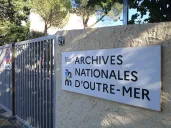
- Foreign Relations of the United States, 1958–1960, Volume I, Vietnam — searched for our leaders and for the arrests; neither is in it
- Gerald C. Hickey, Free in the Forest: Ethnohistory of the Vietnamese Central Highlands, 1954–1976 (Yale University Press, 1982) — the underlying source for nearly everything above, cited through others; we have not been able to consult a copy
Compiled September 2026. The sentence and its length are not settled, and every version we have found is in the table above.