
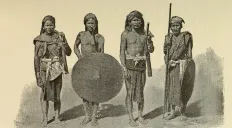
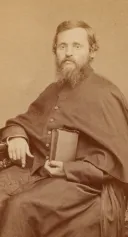

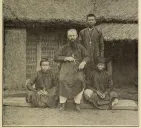
















For twenty-one years, from the burning of a French post in May 1912 to the arrival of the army’s road in 1933, the Mnong of the Plateau des Herbes, the grass hills where Cambodia, Cochinchina and Annam met, held the French out of their country. Their leader was Pa Trang Loeung, whom the Vietnamese write N’Trang Lơng: a koragn, a village mediator and war leader, not a king. His people killed the explorer Henri Maître and a French administrator, destroyed the posts, drove out the militia, and governed themselves until aircraft, trucks and a road built as a military column broke them in 1935. It was the longest armed resistance in the history of the highlands, and this page tells it from the archives that the historian Mathieu Guérin read and from the Mnong who told him what their grandparents remembered.

The country and the man
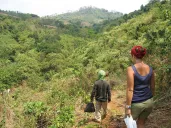
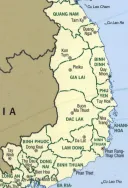
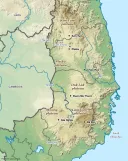
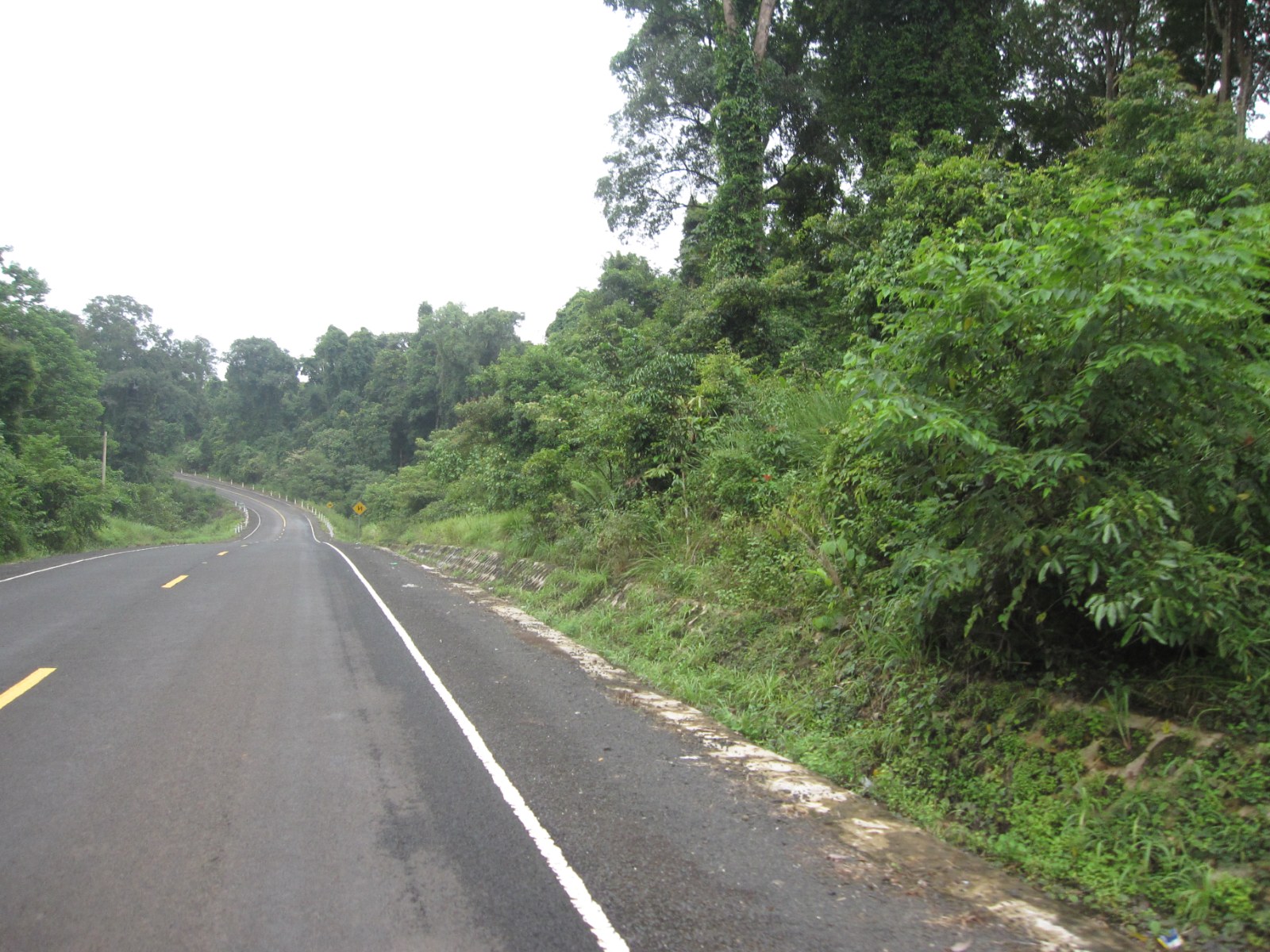
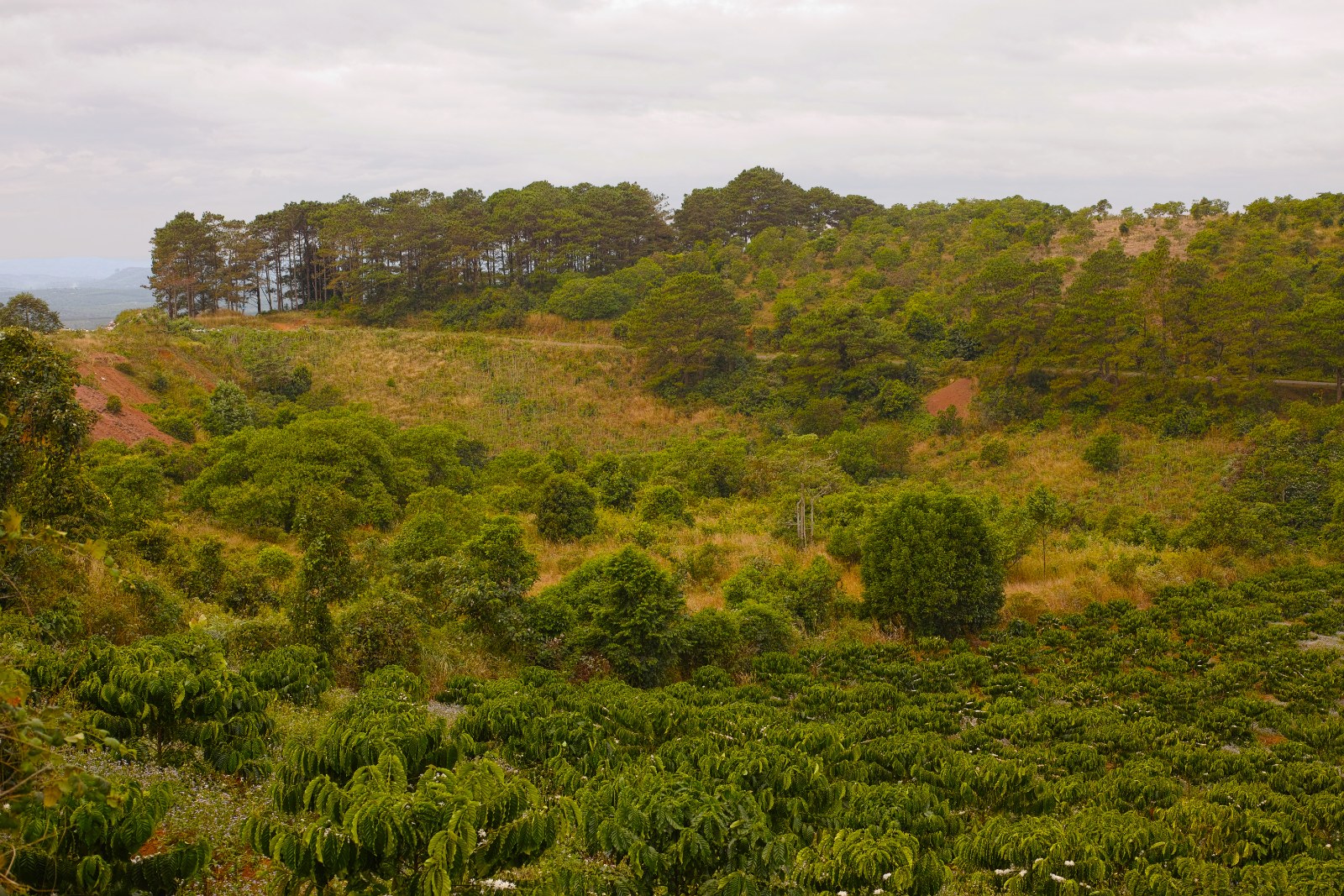
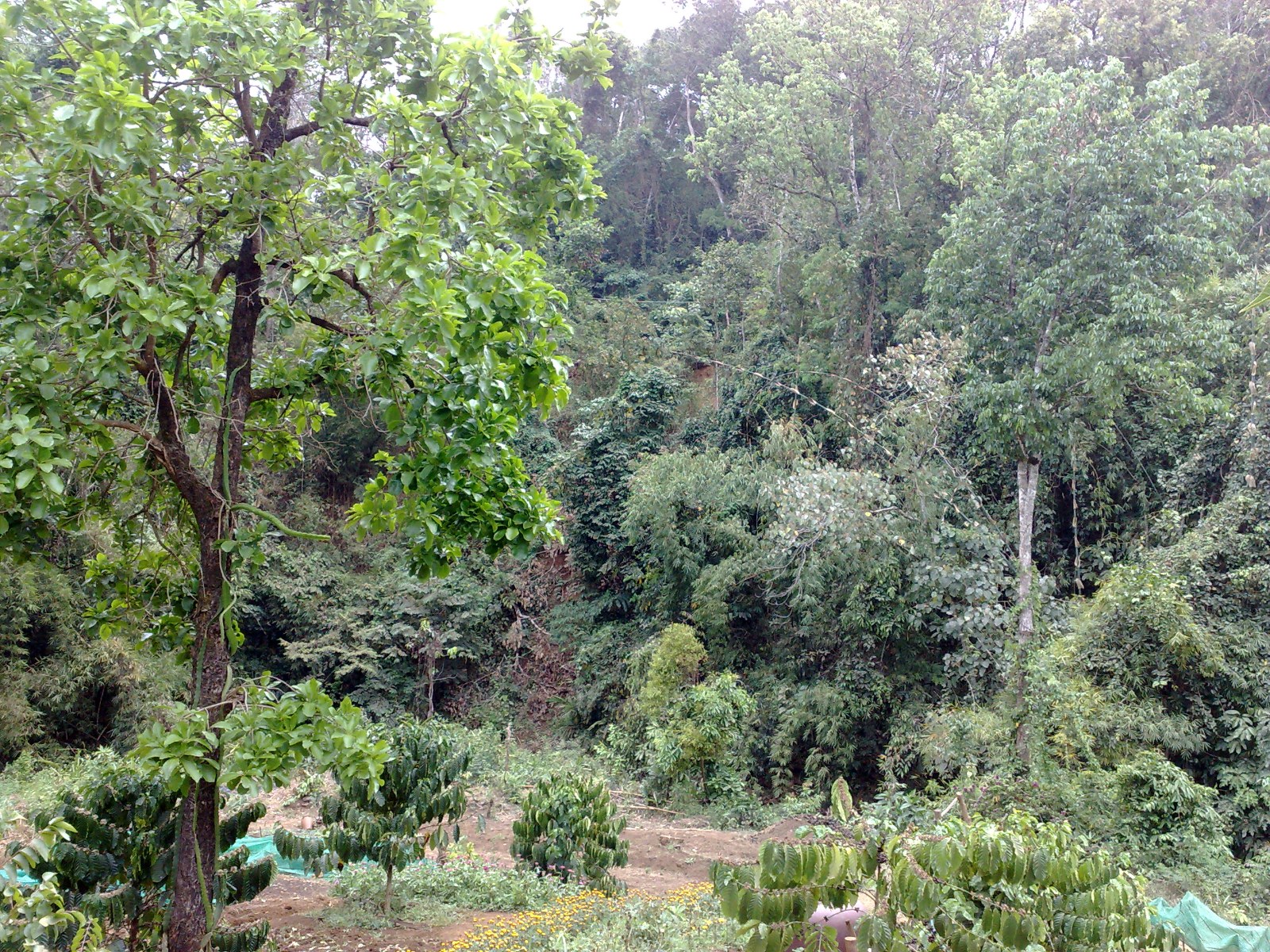
The Yok Laych, which the French called the Plateau des Herbes, is a mass of grass-covered hills and wooded valleys rising above a thousand meters between the Srepok and the Chhlong, the watershed from which the Dak Deur runs west to the Mekong and the Song Be and the Dong Nai run south to Saigon; it takes two meters of rain a year. The Mnong say the sea once covered it and that the hills are the waves, left frozen forever. Maître, who walked it in 1909, described the tall thatch grass everywhere, the stands of silk-cotton trees with their short spines, and along the streams the great oil trees “straight as a mast.” The people of its western edge called themselves Biat, or simply bu Gler and bu La, the people of those two villages; the Khmer called all of them Phnong, and the French wrote Mnong for what they call themselves, bu Nong, bu meaning the people, the community, the village. Bu Gler takes its name from the flat basalt slabs in the riverbeds, which the Mnong say are the petrified bodies of serpent spirits that once made a road for Mnong warriors going to fight the Khmer. Bu La, Bu Gler, Bu Yok and Bu Teugne together formed a political unit small enough, Guérin writes, to work as a kind of direct democracy, led by a koragn “who needs the participation and the assent of the other members of the group.” The koragn is first of all a mediator who settles quarrels inside the community and speaks for it outside; he may also be a feared war chief; and he has an interest in keeping on good terms with the healer, the bu n’hüm, who has access to the spirits. In April 2001, while Guérin was there, the koragn of Bu Gler was still being called fifteen kilometers to Bu Trom to settle a succession.

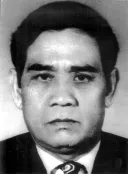
Pa Trang Loeung was a koragn of that kind, of a village on the Dak Hoyt to the south. He appears in the French files as Pa Trang Loeung, Patrang Lenang, Pou Tran Lung and Pa-Trang-Loeng, “chief of the region of Ban Dak Huch”; he was probably of the Rehong group of the Mnong; he had a wife of Bu Gler and later one of Bu Dak Hoyt; his grandson Trak Nhok was alive to talk to Guérin in 2001; and the villages call him ta, grandfather. We do not know when he was born or exactly where. Guérin’s description is the one we accept: “He remains a peasant of the forest, a swidden farmer who cultivates his plot in the valley of the Dak Hoyt, but whose exploits as a warrior are known and respected. Pa Trang Loeung is one of the koragn who direct the revolt, and the one who is most listened to, perhaps thanks to his magical powers.” He was not the absolute chief of the country, “a sort of king of the Mnong.” He was the man the villages chose to follow (see The Mnong).
Maître and the post at Bu Sra
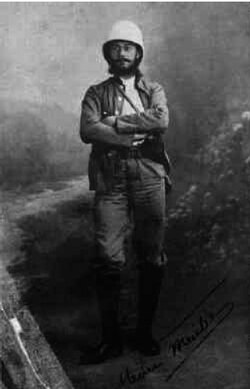
Henri Maître was born at Thonon-les-Bains on July 12, 1883, learned Chinese and then Russian, came out to Indochina as a young clerk of the civil service in 1905, and between 1905 and 1911 walked something like six thousand kilometers of the plateau, from the Darlac to the Dong Nai and from Kratie to the coast, mapping as he went. His two books, Les Régions moï du Sud Indo-Chinois in 1909 and Les Jungles Moï in 1912, each won a prize from the Geographical Society of Paris, and the historian Oscar Salemink calls their detail unsurpassed; Guérin, who read the files, calls him and Odend’hal “the adventurers par excellence” and warns that his writing carries the racism and the ranking of human groups of his time. On May 22, 1909, he passed through Bu Gler with seventeen Cambodian guards, five Rhade and Vietnamese guards from the Darlac and six elephants, “an imposing cohort,” and all that year reinforcements went through the village to him: fifteen Cambodian militiamen with Lebel rifles in May, elephants in July and October. In April 1909, on an old swidden thirty-five kilometers east of Bu Gler, he began building a post among the Mnong of Bu Sra, “transforming, on his own initiative, a mission of exploration into a mission of penetration.” Bu Sra is where he wrote the scene that explains everything that followed. He had asked the chief, an old man, white-haired and wrinkled, for a base in his village, and the old man, squatting on the long bamboo bed, methodically filling his pipe, said no: his village was poor, it had no grass, no paddy, no rice, no chickens, no pigs, and besides he did not wish to submit; he would show the road to travelers, but he would not let anyone settle in his village. Maître wrote:
Mais une solution s’impose : il est impossible de débuter chez les Mnong par un échec […] il est inadmissible qu’à huit jours de Kratiè, à quatre du Darlac, l’on rencontre encore des populations qui nous ignorent, se soustrayant tranquillement à notre domination comme si la région moï ne faisait pas partie intégrante de nos possessions indochinoises. Il faut donc en finir et dans l’après-midi, je fais venir le chef ; docile, il se rend à mon appel ; une douzaine de ses gens l’accompagnent, tous sans armes d’ailleurs ; brièvement, je le somme d’avoir à se soumettre : même placide refus. En un clin d’œil, les miliciens, préalablement stylés, sont debout […] Ndjrak-Ot et ses gens sont prisonniers. Je leur explique alors qu’ils resteront ainsi jusqu’à soumission complète.
It is inadmissible, eight days from Kratie and four from the Darlac, still to meet populations who ignore us, quietly evading our domination as if the Moï region were not an integral part of our Indochinese possessions. It is therefore necessary to finish with it. He called the chief back in the afternoon; the chief came, docile, with a dozen unarmed men; the militiamen, drilled beforehand, sprang up, the Darlac men with bayonets at the main door and the Cambodians at the back, the mahouts with spears at the side doors, and Ndjrak-Ot and his people were prisoners until complete submission. The palisade was finished in May, the fort in November, and the post was inaugurated on December 4, 1910, with the Résident of Kratie, the Cambodian governors of Kratie and Thbaung Khmum, and the chiefs of the neighboring villages, who were given salt and trinkets and rice wine. In November 1910 a column of twenty ox carts loaded with equipment, furniture and the militiamen’s wives and children had crossed the Biat country to reach it, followed by a second caravan with the Résident himself; never, Guérin writes, had the sound of boots so echoed in the ears of the people around Bu Gler, and “the aim, moreover, is to make them understand that things are changing.” The governor-general made the post official by an order of September 3, 1910, whose author explained that it was needed “as much to continue the work of peaceful penetration and civilization undertaken by M. Maître’s mission as to develop the exploitation of the economic riches of the region, where Cambodian traders have moreover been venturing for some years and where they would not fail to come in greater numbers as soon as the security of this hinterland is assured them by the presence of our administration.” Maître was made delegate, with a Cambodian balat, the oknha Mau, beside him, and then went off exploring again and on leave to France from March 1911 to November 1912. Mau stayed. In a little over a year he put three hundred and seven Mnong of twelve villages, Bu La among them, on the tax rolls, and the Mnong testimonies that Guérin collected all speak of a considerable increase in the weight of the tax.

Bu Rlam, 1912
What decided Pa Trang Loeung to rise was not the tax. The balat Mau sent two militiamen to requisition elephants in the villages around Bu Sra, a common practice, the owners being normally paid, though Maître himself accused Mau of not always paying. The two militiamen came to Bu Rlam with a Khmer trader named Suon and a Lao married to a Mnong woman and demanded Pa Trang Loeung’s elephant; Suon demanded at the same time that the koragn pay debts he said were owed to him. Pa Trang Loeung sacrificed a pig and asked the militiamen to leave him his elephant; they ate the pig and asked for the elephant again. That night Suon and the militiamen raped Pa Trang Loeung’s daughter-in-law. The Mnong of Bu Nor, telling it in 1940 to a French schoolmaster who came looking for Maître’s grave, said it was his wife and his daughter; we give both, since the Mnong who told it had reason to know, and the file was written by the other side. On May 6, 1912, the Mnong of Bu Rlam executed the two militiamen, the Cambodian trader and the Lao. Then ten warriors under the chief of the village went on to Bu Sra, killed a militiaman, a woman and a child, carried off two women and a child, and burned the post Maître had built. “The survivors fled, terrified.” The event echoed through the whole country; some villages joined the insurgents; Bu La and Bu Gler stayed still, but the attack became, Guérin says, the main subject of conversation and of worry among Mnong waiting for the French reaction. Columns under the Cambodian governor of Kratie, Kahom, arrived quickly and hunted the insurgents for months without result; at the height of the rains he had to give up. Mau was later suspended for his exactions, which the Mnong said included beheading a man of Kabal Damrey; the Cambodian council that examined him decided that he could not be blamed for the conduct of his subordinates toward the people of Pa Trang Loeung’s village, and recalled that he had obtained the submission of more than three hundred highlanders. The Résident supérieur of Cambodia, Outrey, chose to see the burning of Bu Sra as an act of brigandage.
The myth begins, 1912–1914
Maître came back in November 1912 and tried to take him. The insurgents, by French estimate, numbered four hundred warriors; the troops quartered the country in every direction; there were skirmishes, “often to the advantage of the insurgents.” The worst incident was the insurgents’ attack on the village of Mdai Dop, twenty kilometers south of Bu Gler, which Pa Trang Loeung accused of having helped the French and the Khmer: four men killed, the chief among them, eleven people carried off to be sold as slaves, the village looted and burned. Bu La had to take in a provisional post of fifteen militiamen in July 1912, and lived with Cambodian guards for a year and a half, in what Maître called “a foul and unhealthy hole.” In 1913 Mau was suspended, Maître was in hospital for a month, and the plateau had a respite. In the dry season of 1913–14 Maître returned “with the intention of finishing with Pa Trang Loeung.” In February 1914 a column under the Résident of Kompong Cham crossed the region looking for a site for a post to replace Bu Sra and chose Méra, three days southeast of Bu Gler, among the Bu Nong, “despite the more or less apparent hostility of the hamlets of the sector”; the post of Sré Khtum, under the new balat Neang, was moved to Bu Gler itself, so that the rebel zone lay between two forts. Between the burning of Bu Sra and July 1914 the insurgents fought some fifteen engagements, in which eight militiamen, seven Cambodian civilians and at least nineteen tributary highlanders were killed or wounded and thirty-four people carried off; Maître’s militiamen claimed one rebel killed and two prisoners, one of them the son of a rebel chief, kept as a hostage. That was the whole result. “The successive failures of the regular troops, even if they remain very relative, mark the beginning of the myth of Pa Trang Loeung. Elusive, striking by surprise in a country of hills and forests that he knows well, Pa Trang Loeung makes himself talked of and frightens.” A Mnong told Guérin in 2001 what the villages said then: “To go and kill grandfather Pa Trang Loeung was impossible, to kill his wife was impossible. If in those days one meant to gather forces, to go and shoot, to kill grandfather Pa Trang Loeung, and one met him by chance, if it was day, one could see him, until perhaps four or five o’clock. From then on, one looks but one does not see him, just forest, forest like that.” It was said that bullets bounced off his body, that the French and the Khmer could not kill him, that nobody could. On July 7, 1914, Maître reported to the Résident of Kompong Cham that “the political situation is as good as possible.”
Bu Gler and Méra, July–August 1914
The balat Neang, who had arrived in January 1914, was building his post at Bu Gler with the men of the village, requisitioned as prestataires, forced labor under the corvée; their consent had not been asked, since they were considered submitted. At noon on July 22, 1914, the hundred laborers on the site rose. Neang’s cook, a Khmer boy of seventeen from Sré Khtum named Choeu, saw it and, having escaped later, told the governor of Kratie: Pagnouk, the koragn of Bu Gler, led the attack, rushed at Neang and slapped him; the balat got hold of his rifle before men of Bu Kès ran him through with bamboo spears; four militiamen were killed the same way; the bodies were thrown into a hole in the ground and three days later a sacrifice and libations celebrated the event. The booty was three Lebel rifles, a case of cartridges, a seven-shot rifle with its ammunition and a female elephant. The rising bound every village around into the same act, and fifty men under Pagnouk went to the valley of the Hoyt, where Pa Trang Loeung received them. Maître was at Djiring, in the Cochinchina highlands, and came back at the end of July to inspect the works at Méra and Bu Gler, not knowing what had happened at Bu Gler. In the first days of August, Pagnouk and his fifty, with ten of Pa Trang Loeung’s warriors, came to Méra, and Maître, who took Pagnouk for the chief of a docile village and a man who could lead him to the rebels, received him. Pagnouk offered to take him with the militiamen to arrest Pa Trang Loeung, who had murdered the balat; Maître thanked him, told him to come and report whenever he learned anything, and set out at once with the militia. A day’s march brought them to the village of Pa Ang Leang, who came out to meet him and begged him to stop first in his village so that he could provide rice wine and hold a ceremony of offering to the spirits according to Mnong custom. Maître agreed. In the morning, Choeu’s deposition goes on, the Mnong killed a pig and brought a jar, and asked him to gather all the rifles and lean them against the jar of wine, and invited him to drink. “Accepting their invitation M. Maître bent down to drink by sucking the straw and during this time the man named Pagnouk leapt on him and stabbed him in the back. M. Maître fell on his belly and died.” Guérin explains the rite: the militiamen were persuaded to lay down their carbines and Maître his revolver to be anointed with rice beer and the blood of the sacrificed pig, a ceremony to conciliate the yang and make the weapons more effective, and it was then easy to kill the disarmed men with knives and bamboo spears. In a few hours the delegate of Méra, twenty-three Rhade, Khmer and Vietnamese militiamen, Maître’s houseboy and four mahouts were dead; three men escaped, Maître’s Rhade interpreter, a militiaman who had been apart and a wounded mahout. Maître was beheaded and buried where he fell, the Mnong of Bu Nor putting a kapok cushion from his baggage under his head; the others went into a common grave. The Mnong of Bu Nor, in 1940, said it was Pa Trang Loeung himself who drove the knife into his back; Choeu, who heard Pagnouk tell it to Pa Trang Loeung a few days later, said Pagnouk; and Pagnouk, telling it, left out that Pa Ang Leang, in whose village it happened, had also struck. Guérin’s judgment is that Pa Trang Loeung did not take part in person, as the stories of the great koragn’s exploits have it, but was one of the chief instigators of the trap, and that when the booty was shared, Pagnouk gave him a rifle and cartridges “because he is reputed the principal chief.” Biat and Nong had allied to drive out the French and had recognized his authority in doing it. Some twenty firearms with their ammunition, cloth and five elephants were divided with the villagers of Bu Andel; a buffalo was sacrificed to thank the divinities, with rice beer and gongs; the joy, Guérin writes, seems to have been immense, in proportion to the exploit and its symbolic reach: “the French protectorate and the Khmer monarchy had been defeated.” Choeu, learning that he was to be killed at the greater sacrifices to come, escaped. The date is given as July 30 by some and August 2 by others; the file says the first days of August. The place appears as Phum Pou Antel, Bu Andel, Ban Poutop and Bu Nor, which are one neighborhood on the Annam side of the three frontiers, in what is now Tuy Đức district of Đắk Nông.

What the French did next
The news of Maître’s death caused “a real earthquake” at Kratie, at Kompong Cham, in the Darlac, at Djiring and at the Résidence supérieure in Phnom Penh, and the authorities were completely overwhelmed. Phnom Penh decided to wait for the end of the rains. The Résident supérieur in Annam had to forbid his delegate in the Darlac, Léopold Sabatier, Maître’s great friend, to go into the dissident zone with a column of reprisal. Between September and November several units were sent to get a foothold on the plateau again, with calamitous results: a detachment under the garde principal Marchand, sent to reoccupy Bu Gler and install a new balat, never got past the foothills and fell back on Sré Sdé for want of food, drinking water and medicine, its men exhausted, decimated by malaria and terrified by the traps and raids of the rebels in the dense forest and mud of the slopes; seven militiamen deserted. The delegate of Kratie was replaced by a more energetic man, Truffot, who at the start of the dry season led a column of nearly sixty rifles into the Mnong and Thmonn country around Sré Chi, burning every abandoned house and every store of paddy and everything found hidden in the forest, and beating a wounded farmer, in his interpreter’s words, until he bled from the nose and mouth and told the truth “only under threats of cutting off his head.” On the morning of January 11, 1915, after eleven days of patrol, Truffot’s camp, which he had not thought it necessary to fortify, was attacked; he was killed with four militiamen, most of them in their sleep. The Résident supérieur then strictly forbade his subordinates to enter the highlands of Kratie at all. Only a defensive line of posts was kept, laid out from January 1915 by an inspector of the Garde indigène to reassure the Khmer villages and prevent an exodus; on the night of January 27, panic seized Stung Treng on a rumor of a Mnong attack and the French women and children were locked in the Résidence. In September 1914 the Mnong who had stayed submitted were exempted from the corvée, to counter the popularity of the revolt.
The French explained it to themselves in a way we should record. The Résident supérieur Baudouin wrote: “I consider as you do that the revolts of the Phnong tribes were not inspired by the desire to escape our domination, these tribes being devoid of any political ideal.” Guérin notes what the sentence was for: an interpretation that denies the Mnong revolt could be a movement of liberation or resistance “makes it possible to avoid questioning the legitimacy of France’s action in the highlands, and by extension in Indochina.” Once the militia’s exactions were proved, the Mnong were officially good people led astray by the faults of Chinese and Khmer traders and Cambodian notables; only the chiefs, the murderers of Maître and Truffot, were bandits to be reduced. On the basis of inquiries made between 1914 and 1916 by Sabatier in the Darlac, by Gatille at Bu Dop and by the delegates of Kratie, a list of seven rebel chiefs was drawn up, held responsible for the killings of the Khmer and French officials, and Pa Trang Loeung stood at its head, “even though he had taken no direct part in the murder of Maître, or of Truffot, or of Neang, and the administration knows it, but it continues to present him as an assassin in order to be able legitimately to behead the insurrectionary movement when the moment comes.” After him came Pa Ang Leang, Pagnouk, An Srieu, the chumtups Muoi and Suos, and An Chang. No magistrate ever made the journey to investigate the deaths.

Twenty years free
“After the death of Truffot,” Guérin writes, “the Franco-Cambodian troops no longer dared venture into the interior. The hinterland was left to the aborigines.” In the two years after Maître’s death, between August 1914 and August 1916, the insurgents attacked more than sixty villages, killed at least a hundred and eight Cambodians, three of them provincial and communal officials and eight militiamen, and highlanders who had refused to join, and carried more than a hundred and twenty people off into slavery on the plateau; Chinese, Khmer and Vietnamese traders who fell into their hands were killed and their goods taken. The war had an ethnic character from the start. “By the terror they spread, the Mnong guarantee their own tranquility,” and the memory of it was still alive among the Khmer and Kuoy east of Kratie at the beginning of this century. Pa Trang Loeung, “a far-sighted war chief,” kept most of the captured ammunition against future columns instead of letting it be wasted on hunting. He had united the Mnong between the Srepok, the Chhlong and the Mekong, Rehong, Biat, Nong and Bu Nor, with some Stieng; some Maa of the middle and upper Dong Nai were allied too, and in 1929 the orientalist Marcel Ner found rifles from Maître’s expedition in a Maa village. The alliance did not long survive village particularism: from 1917 most of the villages that had formerly been under the Khmer monarchy left it, and his aura no longer extended beyond the plateau; but not until 1925 could the Résident of Kratie write of “complete dissensions among the former allies and the complete disorganization of the old alliance made against us.” The First World War had taken Indochina’s best troops, and the risings were simply contained; the customary courts sat again in the villages; and Colonial Route 14, the road that was to join Saigon to the Darlac and Huế across the plateau, stopped at the foot of the hills. “An important revolt of the Mnong, still very present in memories,” Guérin said when his book appeared, “allowed them to free themselves for twenty years from colonial tutelage.” Bu Gler, in his account, held the central place in the movement, and the experience of collective mobilization beyond the limits of one people “left traces in the construction of identity of the inhabitants of the Yok Laych and the surrounding plains in the twentieth century.”

The road, 1926–1934
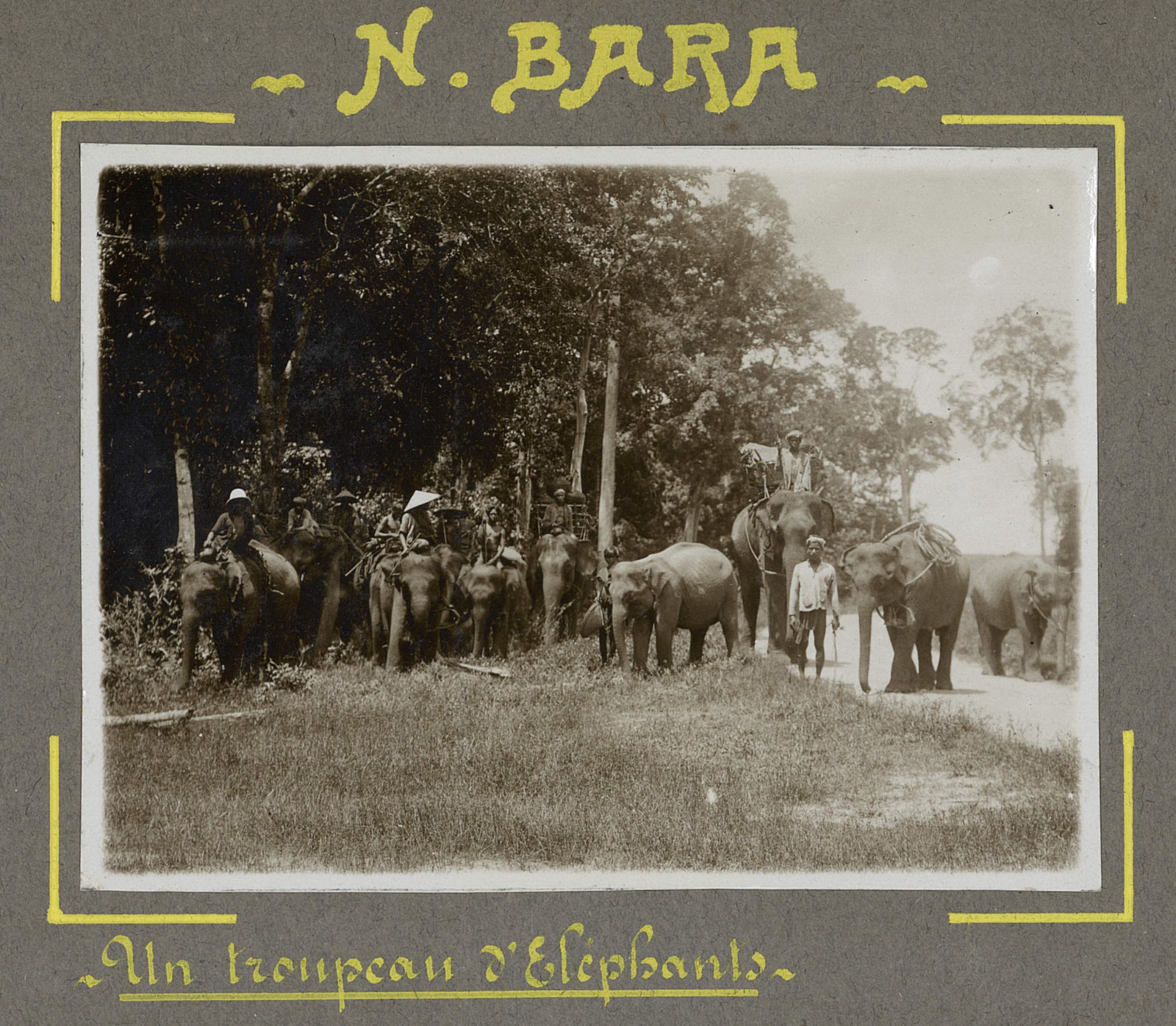
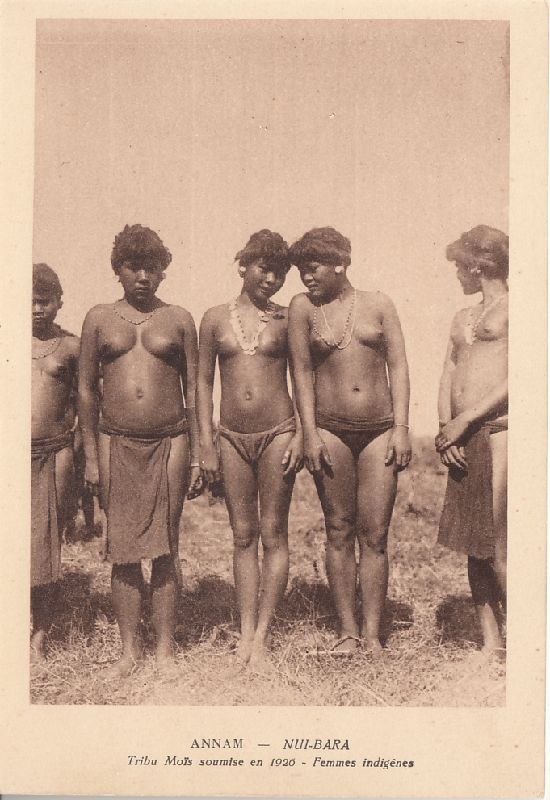
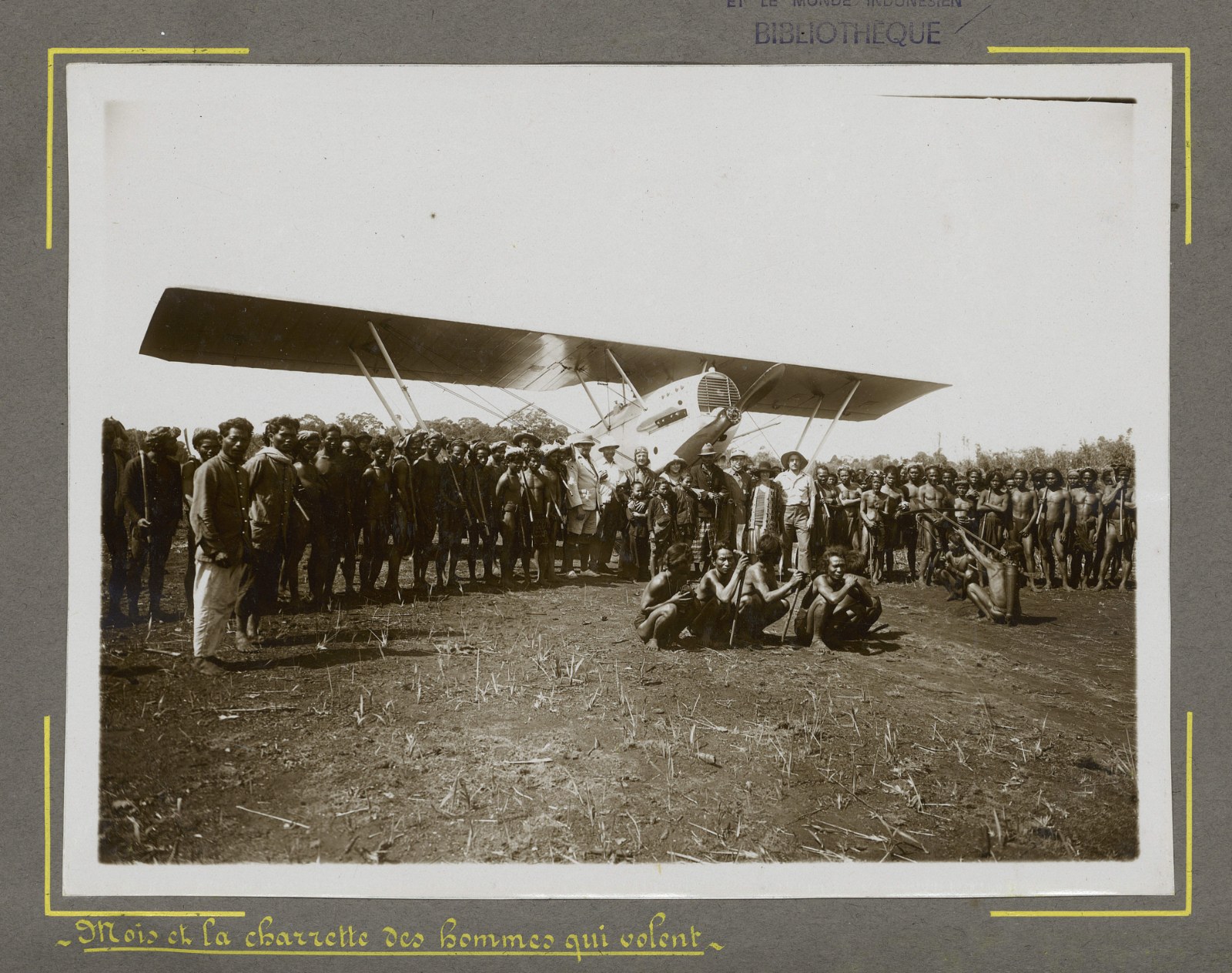
In March 1926, twelve years after they had driven out the French and the Cambodians, the Mnong saw four Europeans arrive with some forty militiamen, elephants and pack horses: the Résident of Kratie, an officer of the Garde indigène, a gendarme, and the engineer Rigal of Public Works, whose task was to find the line of a future road of penetration. The convoy moved fast, never stayed more than a night in one place, and was on the plateau only seven days; at Bu Par, fifteen kilometers from Bu Gler, the villagers tried to persuade them that no track went further east, which a quick reconnaissance showed to be false. A few months later a military aircraft flew over the southwestern flank of the plateau to continue the survey, and from then on the line of the road was regularly reconnoitered from the air. The road was Colonial Route 14, and every effort of the administration went into it. On May 26, 1931, as the track reached the foothills, the delegate Gatille was killed in an ambush by Mnong of Bu Than, who explained when they were arrested in November that they had hoped the death of the white man would make the French fall back and stop the works, as it had in 1914. This time it did not. A month later a column attacked the villages the killers came from, secured the works and recovered the delegate’s car; two Mnong were killed; a hundred militiamen were stationed at Sré Khtum, and in February 1932 the militia guarding the works were replaced by regular troops. Bombers were used for the first time over the Yok Laych in 1931, after Gatille’s death, and the Mnong of Bu Than answered them with arrows. A Cambodian report of 1931 recorded that the unsubmitted Phnong of Pou Than, having watched two aircraft circle for an hour or two over their villages and go away, vowed to offer a white buffalo, a white pig and a jar of rice wine to their god if the administration would really drop its bombs on them, so that they could pick them up and use them as cartridges for their rifles. The Résident of the Darlac had asked in 1931 for the army and the regular troops at Ban Me Thuot to end the dissidence in his province, and General Billotte, with the governor-general Pasquier and the heads of Cochinchina, Annam and Cambodia, drew up a program on a large scale to retake the Mnong and Stieng territories, judging that “militarily, such operations are perfectly feasible”: the road, with parallel efforts from the east of Kratie and from Cochinchina and Annam to the south; posts under French command with roads, carrier pigeons, telephones and radios; aircraft to reconnoiter the zones to be penetrated; two military delegations, at Sré Khtum in Cambodia and at Buon Djen Drom in Annam; a Stieng province in Cochinchina; three companies of troops; and no “murderous operations,” since a peaceful action was thought possible and in keeping with the traditions of the colonial army. The gendarme Morère, “considered an excellent delegate of Nui Bara,” was kept at his post. The Rhade tirailleurs of Ban Me Thuot were to have a training march; the hierarchy quickly saw in the operation a chance to open a new zone of the highlands to recruitment while testing the martial capacities of the Rhade. Lavit, the officer in charge early in 1932, put the purpose in a sentence: “to demonstrate to the Phnong that the times are past when the murder of a European brought on our part withdrawals and abandonments.”

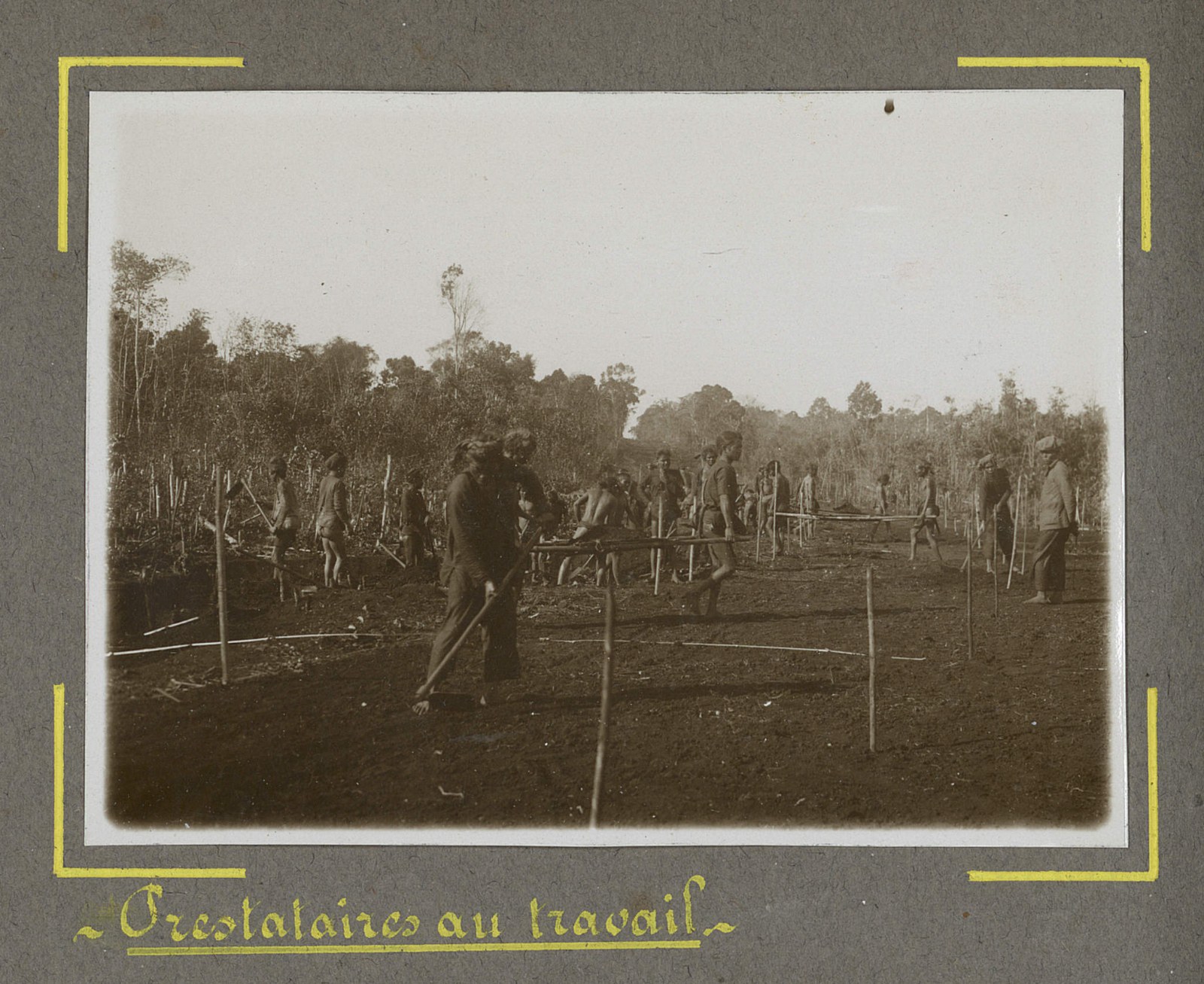
The road was built as a military column. The distance between the earth-movers and the clearing parties was never to exceed five or six hundred meters; everything, workers, food and materials, was brought up from the rear; a hundred and fifty convicts dug it from February 1933, and from April 1934 the Mnong themselves under corvée. In August 1932 the head of works was at kilometer 26 from Sré Khtum; in September a post stood at kilometer 41 on the Plateau des Herbes; in February 1933 a permanent camp was built at kilometer 71 and named Le Rolland after a lieutenant who had died of malaria; a second post on the track was named Gatille, fifteen kilometers from the center of Bu Gler; a third, on the Annam side near the Three Frontiers, opened in April 1933 under Captain Huard and was named Poste Maître; a fourth, at Bu Plok in the west, was Poste Truffot. “The enemy is the mosquito,” Captain Brunet, delegate of the Haut-Chhlong in 1933, wrote bitterly; between 1932 and 1935 every officer who commanded Poste Gatille died of malaria or was evacuated, and in November 1935 ninety-one percent of the prisoners had it. In March 1934 the section joining the Cambodian and Annam roads was finished. “Colonial Route 14, the road of penetration into the highlands of the Mnong, had become a reality without their having been able to react.” It was a dirt track on which trucks could make thirty kilometers an hour, and the truck was the French army’s “precious auxiliary”: it moved detachments, brought reinforcements from Phnom Penh or Saigon and made distant objectives reachable in a day. Around Le Rolland the French built for the long term: bamboo and plank buildings, a cowshed, a piggery, a vegetable garden, forty tons of stores, a palisade, barbed wire and a corner tower, and beside it a Cambodian village of shops and a pagoda grew up under the post’s protection. A delegation of the Haut-Chhlong was created and divided into two provinces, the eastern under the captain at Le Rolland with the Mnong chief Bedeugne, the western, which included Bu Gler, under the chief of Poste Gatille with Than, the koragn who had handed over the killers of Gatille; a council of village chiefs sat in each. In June 1933 Bedeugne was made a balat, a provincial official of the kingdom of Cambodia, and the Résident supérieur flew in to give him his insignia before all the submitted chiefs of the delegation, those of Bu Gler among them. The Yok Laych, as the Haut-Chhlong, thus became part of the Khmer kingdom in fact, exempt from tax but liable from April 1934 to fifteen days a year of corvée on the tracks, “a corvée acknowledging their submission, quickly detested” (see Roads, taxes and forced labor).
“No submission, no work on the track”
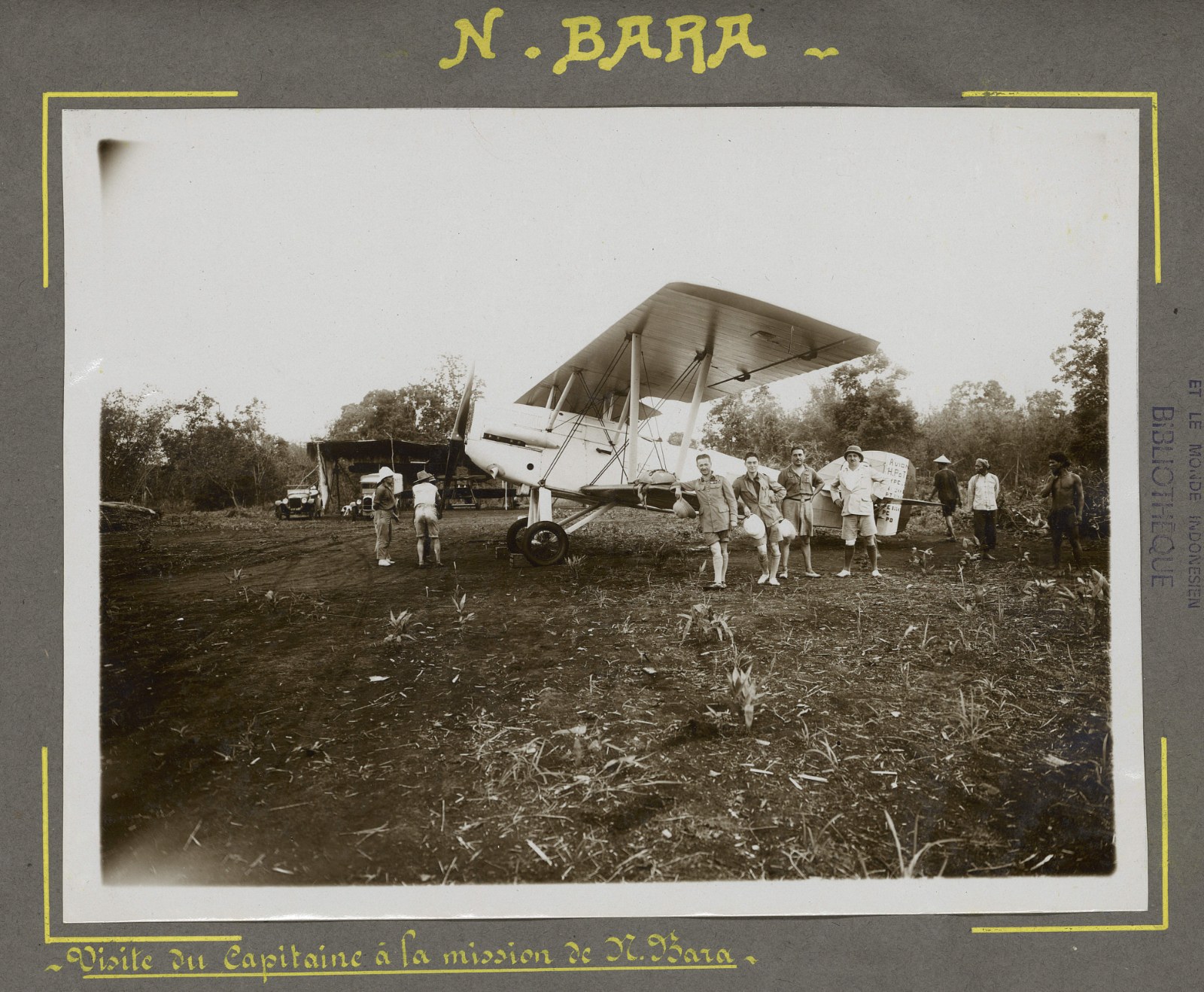
The Mnong understood what the road meant when the French columns from Cambodia, Cochinchina and Annam tried to meet across the plateau in December 1932 and failed. In the first days of January 1933 the people of the plateau sent word to Captain Brunet: “They want to stay free. They cannot prevent the reconnaissances from passing. But if the track advances, they will fight to prevent its construction.” The works went on; the villages held their palavers; when the harvest was in, those with access to the spirits were asked to intercede, and the warriors anointed their bodies with an ointment of bark and animal dung, left to steep for a week, to keep the French bullets out of their flesh. On January 6, 1933, the advanced post of the works at kilometer 65 was cut off and attacked by two hundred and fifty to three hundred warriors who had made their sacrifices in front of the surrounded detachment and tried to burn it; they were driven off by light machine guns and grenades at the end of the afternoon when reinforcements arrived, and the French counted two lightly wounded. To the south, in the dry season of 1933–34, a great part of the valleys of the Hoyt and the Song Be, in Cochinchina, rose openly, and in October 1933 the Stieng killed Morère, the gendarme who administered Nui Bara and had built the air force an airstrip there (see The Stieng). The villages of the Yok Laych, hearing of it, planned with their allies of the Hoyt to attack camp Le Rolland and kill the captain, but the plan was betrayed and abandoned when French reinforcements intercepted the men under arms; in May 1934 two Mnong who had been recruited by the captain as partisans and informers were executed by men of Bu N’Dreang on the orders of the balat Bedeugne, “in whom the French had thought to find an ally.” Two campaigns had to be run by Major Nyo, one after Morère’s death, mostly against Stieng, and one after what came next.
The conspiracy of 1935 rested on two things, Guérin writes: the Mnong’s sense of their independence, carried in a watchword that ran through the hamlets, “No submission, no work on the track, we want to be free on our lands”; and fear. Everyone knew that several Frenchmen, chiefs, had been killed, and more than a hundred Khmer and Rhade, and that nearly every village had taken part; it was inconceivable that the French, the Khmer or the Rhade would not seek vengeance or justice, and the behavior of the French officers, who said the affair was closed, that they forgave, that only Pa Trang Loeung interested them, was disconcerting, because under customary law the affair had never been settled. Almost every village of the Dak Deur joined, then those of the Dak Hoyt to the south, forty-five to fifty villages in all; the two northernmost hamlets of Bu Gler sent a contingent of warriors. Leaders emerged: N’Deur, Tching and Bling, the koragn of Bu Dole, who went from village to village; Mang and Touich of Bu Mési; B’Tcheu and N’Glae of Bu Drou, who brought in the Hoyt villages through their kin, among them Bu Chop under Iong; Kleuk of Bu Rnet, a man of Méra; and M’Broye of Bu Dak Hoyt. Pa Trang Loeung, “too old to fight,” was represented by his son and his son-in-law, and lent the movement his name. Before the attack the villages buried their gongs, jars and animals or hid them in the forest against a reverse, and everyone gathered at Bu Dole, two days’ march from the target, for sacrifices at which the men swore to fight to the death.
Le Rolland, Gatille, and the bombs, March–May 1935
A hundred and fifty men from many villages reached camp Le Rolland in the night of March 4 to 5, 1935. Scouts cut a way through the wire with bush knives; in the dark the men mixed their blood in a bamboo, the old rite of sworn friendship; and at four in the morning four groups under N’Deur, Kleuk, Tching and Bling attacked. A sentry who gave the alarm was riddled with spears and sabers; one group went to loot the shop of a Vietnamese trader outside the post; in less than five minutes the attackers held the prison, freed the four Mnong prisoners in it, and fought the garrison among the buildings. “They fire at shadows, but they fight above all with the knife and the bayonet. To excite themselves the Phnong give their war cry and strike gongs.” The Mnong used a magic mixture squirted from a piston to blind the enemy. It was not enough: the Cambodian tirailleurs and their French cadres rallied and drove them out. The attack came the day before a visit of the Résident supérieur to which all the neighboring chiefs had been invited. The post lost three dead, among them the delegation’s young secretary-interpreter Roth Chan, who had been singled out, and five seriously wounded of whom three died, with a dozen lightly wounded including Captain Boucher de Crèvecœur, the delegate, whose ribs turned a spear. The Mnong left no man on the ground, but at least four died later of their wounds, and, in Guérin’s judgment, they had been put to flight, had lost part of their weapons, and, above all, the French soldiers had held and were still there, ready to begin a campaign of repression. The month after, the leaders met again around Pa Trang Loeung and decided to keep to the plan and attack Poste Gatille, thought more vulnerable. After two failed night approaches, on the night of April 28 to 29 about a hundred men gathered, but only seven climbed the palisade and got into the fort, the others hesitating to follow; three were shot at once by the tirailleurs, among them the leaders Mang of Bu Mési and Iong of Bu Chop, a fourth was taken, and the survivors fled. That fiasco, read as a sign of the spirits’ displeasure, “marks the disintegration of the sacred understanding between the villages resolved to resist Franco-Khmer penetration.”
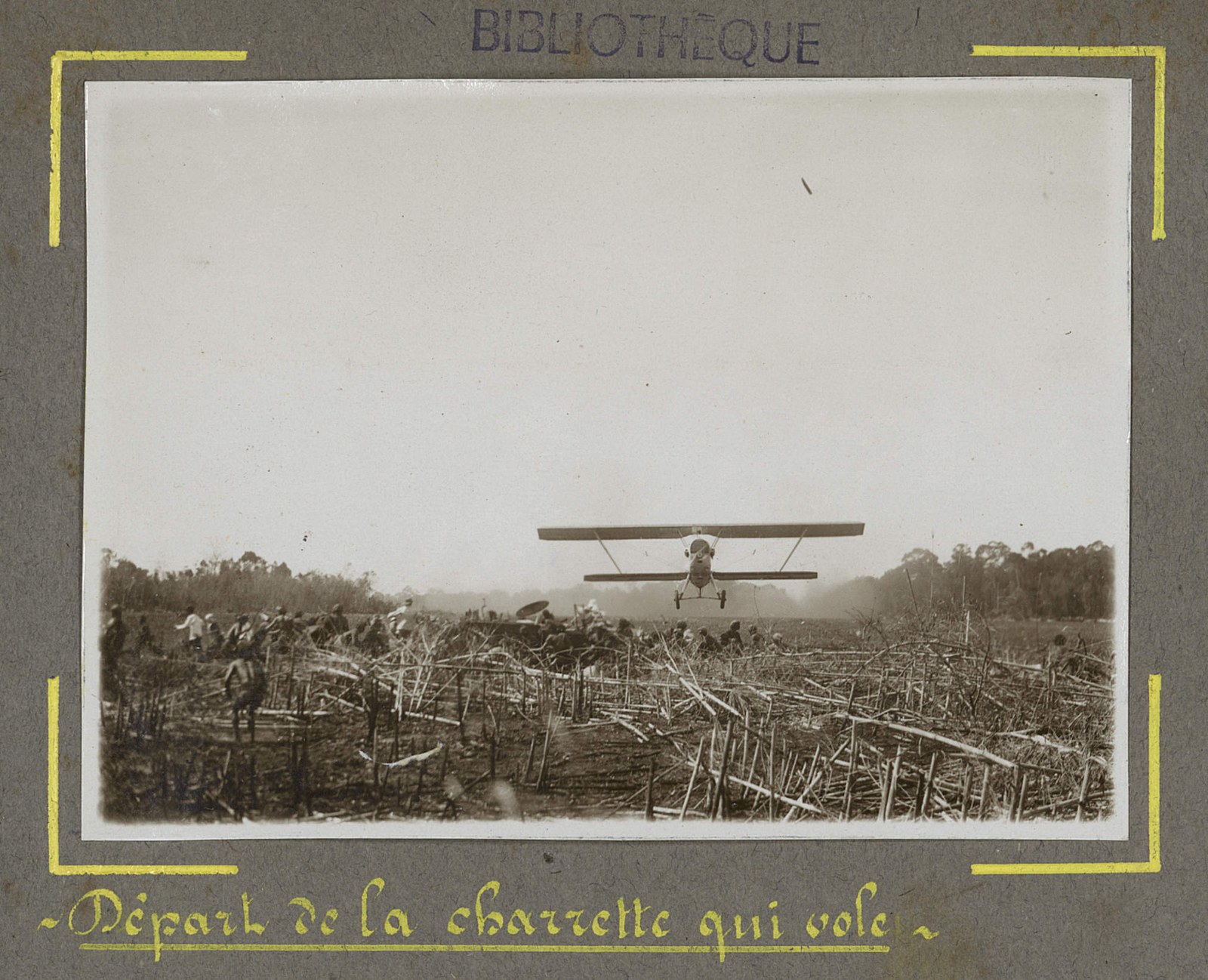
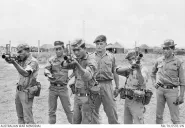
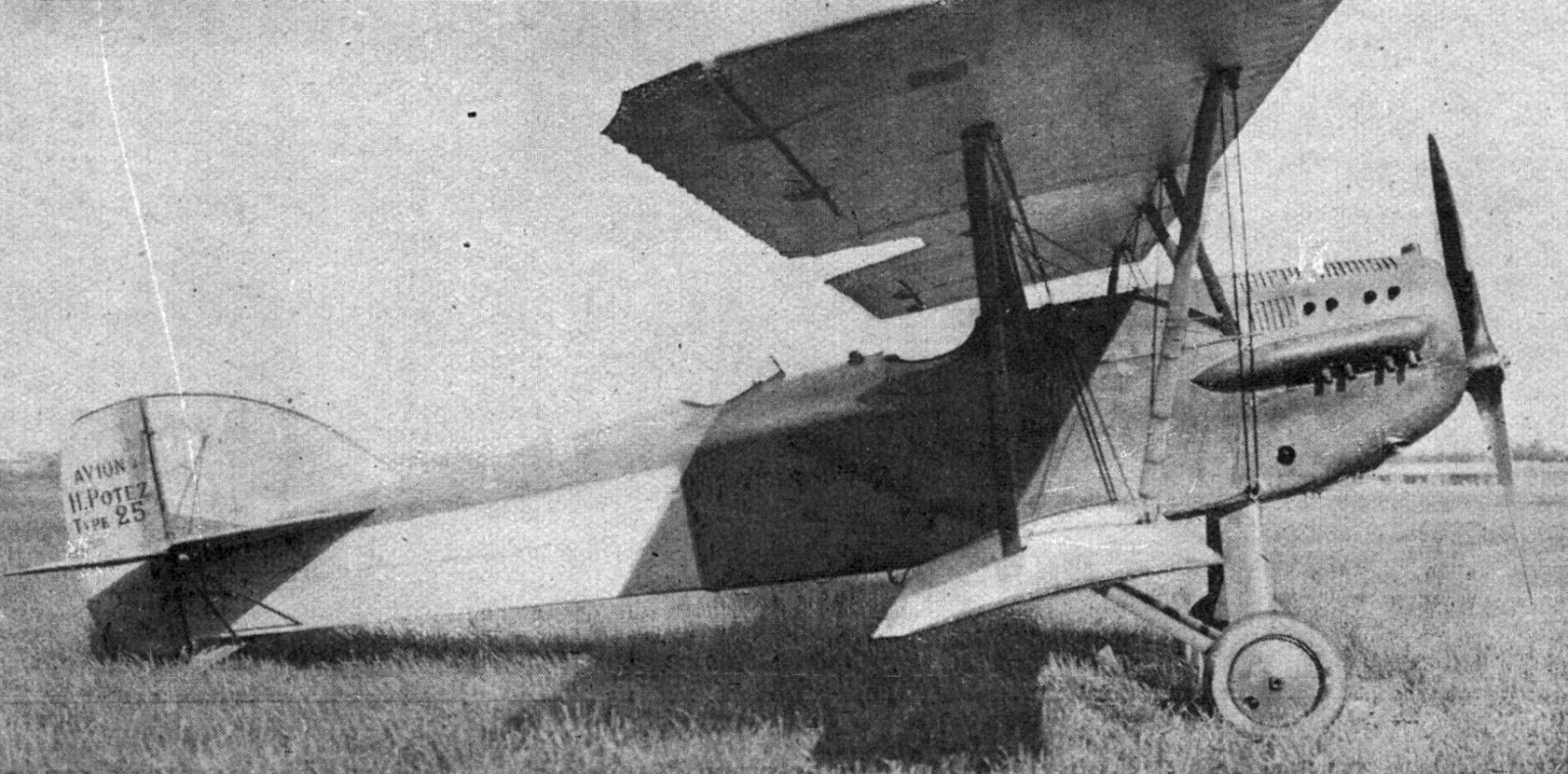
Meanwhile the French answered from the air and by truck. On March 11, 1935, a reconnaissance aircraft carrying Crèvecœur and Major Fieux, commanding the Cochinchina squadrons, guided two bombers of the Escadrille n°2 de Cochinchine, Potez 25 biplanes of a design close to the aircraft of the First World War, each able to carry three hundred and twenty kilograms of bombs, onto Bu Chveng, Bu Dole, Bu Drou and Bu Rmot in the upper Dak Deur, where the houses still standing were bombed with ten-kilo bombs and the cattle machine-gunned. Bu Gler was spared, because the officers were not yet sure it had taken part. The bombs killed few people. The squadron commander wrote in his report on his return: “The rebels do not seem to have been hit either by the bombs or by the bullets, for it was impossible to discover in the whole region overflown and bombed a single Moï.” Guérin adds: “The forest remains the best refuge of the aborigines.” On the ground the column of Captain de Chassey, brought up by truck, struck Bu Dole and Bu Chveng; on the 8th it released the women it had taken prisoner so that they should beg the men to surrender, without result; it then took as hostages the two sons of the koragn Amphé of Bu Toung, the only chief in the region who had not directly taken part, and made him lead the soldiers to the insurgents. The Mnong of the upper Dak Deur, blocked to the east and south by the patrols, fled northwest down the valley to Bu Mési and Bu Toung, where Amphé, who stayed in touch with them, advised them to settle. Every abandoned village was raided, the animals killed, cattle included, the food stores and everything of value destroyed. In five days the detachments covered five hundred kilometers, two hundred and fifty hours of marching; Bu Gler was crossed four times in March and April, and a detachment under Lieutenant Lebel stood in front of the village on March 14, but it escaped the worst. The army settled in the west at the post of Chong Phlas and at Poste Truffot at Bu Plok, and it was from there, in May, that the end came.
May 22, 1935
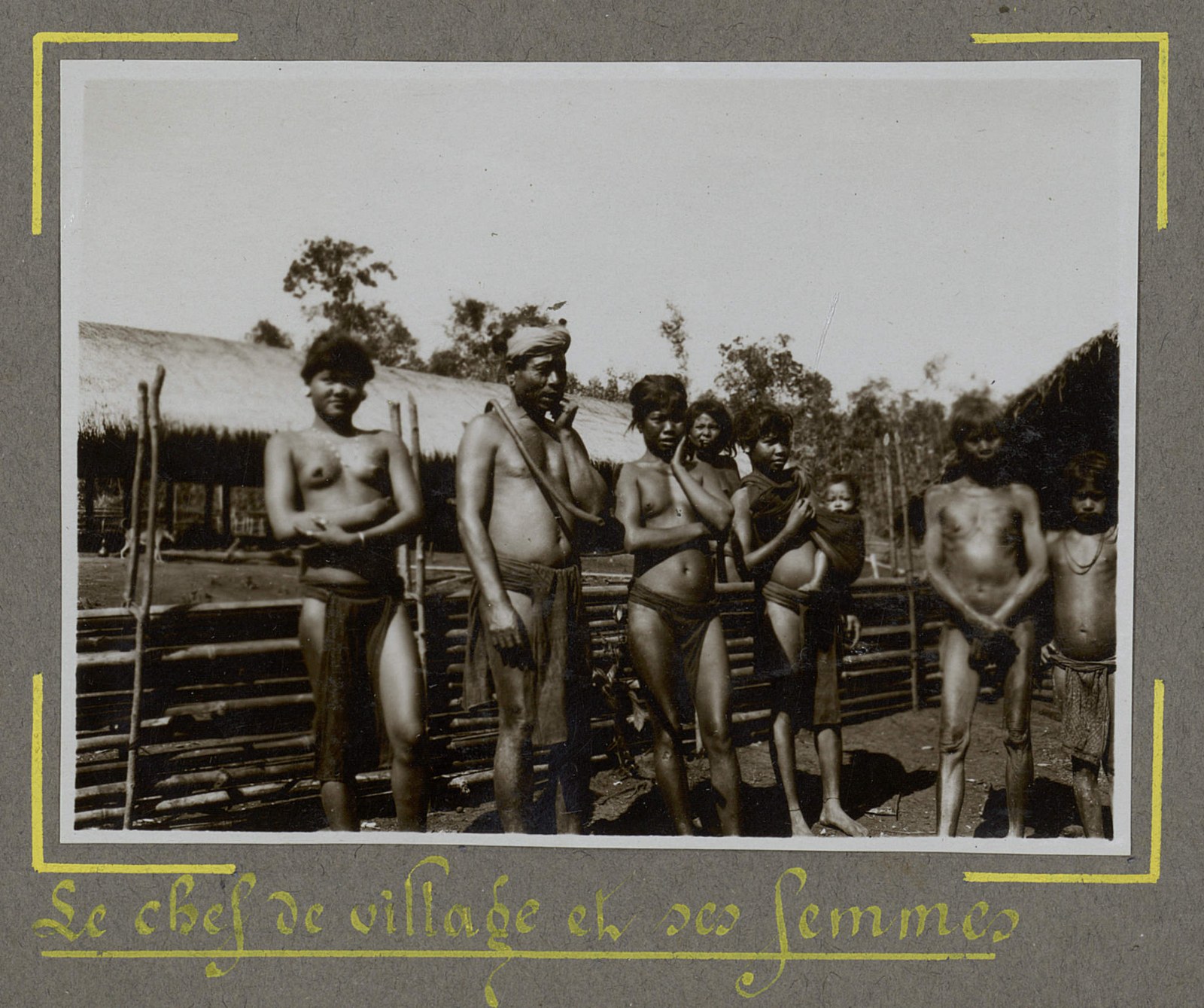
Pa Trang Loeung had been living for several years in the forest between Bu Gur and Bu Par, less than nine kilometers from Poste Truffot, in a house in the middle of his swidden, and nobody had denounced him. On May 21, 1935, for a medal and five hundred piastres, the koragn Amphé of Bu Toung agreed to lead a detachment of thirty militiamen under the garde principal Berret and Lieutenant Lebel to it. The assault was made at dawn on the 22nd. Pa Trang Loeung and his son-in-law were wounded, his wife was killed, and three children between one and nine years old were carried off. In the house the militiamen found three elephant packsaddles, which the dying old koragn bequeathed to the administration, a carbine and a Cambodian rifle, both perfectly kept, and ammunition. He died of an internal hemorrhage caused by a blow from a rifle butt. His son-in-law’s body was found in the forest a few days later. The children were sent to Kratie, adopted by militiamen and brought up as little Khmers. The villages, to explain how a man whose supernatural gift for hiding they had sung could have died so, say that when he saw his wife dead he chose to let himself be killed out of despair. Chhot Plous of Bu Loung, who was about ten, and Trak Nhok, his grandson, told Guérin in 2001 that a great sadness fell on the whole Yok Laych when the news spread. In the following weeks dozens of resisters offered their submission; by the end of the summer the army was master of the ground. Most of the villages of the Dak Hoyt and the upper Dak Deur, except Bu Gler and Bu Taeng, had been destroyed, but the dead were few, thirty or forty Mnong in all on the officers’ own reports, Bu Dole having lost some fifteen men; among them were most of the leaders, Pa Trang Loeung, his son and his son-in-law, Iong of Bu Chop, Mang and Touich of Bu Mési, N’Glae and Nquir of Bu Drou, and the brother of the ex-balat Bedeugne. The Résident supérieur wrote in June 1935 that “the repression was firm, but measured and equitable, and most of the principal culprits, the chiefs, have been reached,” and the general commanding the Cochinchina-Cambodia division wrote of the Biat that “this race comprises the most savage, the bravest and the most irreducible of the Moï.” Guérin’s summary of why it ended so fast and with so few dead is that the swidden farmers of the Yok Laych, with their spears and their few captured rifles, faced “automatic weapons, bombs, aircraft, motor vehicles, regular troops, military intelligence,” a modern army that preferred to show its strength by striking precise blows rather than by a war of annihilation. For the festivities of July 14, 1935, two months after his death, the chief of Bu Gler went with Captain de Crèvecœur, fourteen other rallied Mnong chiefs and ten partisans, by truck, to Phnom Penh, where they were lodged in the barracks of the Garde indigène, watched the military parade and swore an oath to King Monivong.
After
The conquest of the Haut-Chhlong had a paradox in it that Guérin draws out and that we should know, because it has been repeated since. “One notices that it is those who most resisted the integrationist movement who obtain the most concessions from power.” The Stieng of Memot and Snoul, more submissive, closer to the Khmer centers and to the plantations, were dispossessed of their land for rubber, made Cambodians for tax purposes and taxed accordingly, and sent to schools where their language was not taught; the Mnong of the Haut-Chhlong, the Jarai, the Brao and the Tampuan of Stung Treng “see their culture protected by the French, the possession of their land guaranteed by the refusal of immigration from the plains, and obtain an extremely enviable fiscal status compared to that of the other inhabitants of Cambodia.” Crèvecœur’s standing order to his post commanders was that they should concern themselves above all with the scourges that decimated the race and with infant mortality. The captains at Le Rolland and Poste Maître spent their evenings interrogating villagers about 1914, and Captain Huard held R’Ding of Bu Méra for several days to make him talk of Maître’s death; they also wrote the first ethnography of the Mnong, and Lieutenant Maurice, who helped Huard, became one of its principal scholars. The colonial border had cut the Mnong in two without consulting them, the western villages to Cambodia and the eastern to Vietnam, and the road that broke them is the road that still divides them (see Kin across the border and Rubber).
The Python God came to the Mnong side two years later. At the end of 1937 people of Bu Gler were among those caught up in the movement born among the Jarai of the Darlac, whose prophet Sam Bram announced a catastrophe that would bury the world except for the highlanders who had performed his rites; between the Srepok and the Mekong his prophecy was carried by a Mnong woman, Médreng, and she was arrested with him on a charge of fraud. Two men who had killed the secretary-interpreter at Le Rolland, N’Chong and Vong, and two healers, one of them the very influential Be Dak Nglong, tried to turn the emotion into a rising and to attack a post near Gatille in January 1938, Gatille being weak now that it was held only by “black legs,” militiamen who were mostly Biat; some sixty villages were said to have adhered. Vong was killed by other Mnong; Be Dak Nglong, described by the French as “a half-madman, a false prophet absolutely sincere and the victim of a disordered imagination,” killed himself after his arrest; N’Chong and another got six months and two years for fraud; and fifty men who had never been counted made their official submission. The minister of colonies sent Crèvecœur his congratulations. The Jarai side of the Python God, and Sam Bram’s trial and disputed fate, are told with the Jarai (see The Jarai).


How he is remembered
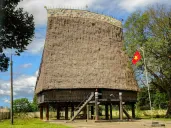
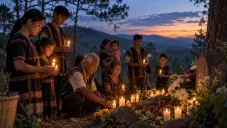
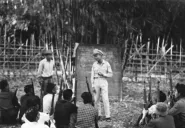
The French built Poste Maître in 1933 and named it for their dead explorer; a schoolmaster from Saigon and the delegate at Bu Dop went looking for the grave on December 5 and 6, 1940, were led by R’Ding and a hundred and fifty Nong to a small mound under a leafless kapok tree in a clearing, grown, the Mnong said, from a seed in the cushion under his head, and planted a wooden cross; a monument went up in Cochinchina in 1943; and the grave was found again on June 27, 2012, the kapok still standing after the American bombing of the 1960s. Since 1975 the Vietnamese state has celebrated N’Trang Lơng as a hero of the resistance to colonialism, and has put up monuments to him. On the Cambodian side, the anthropologist Catherine Scheer has traced how, in the same decades, he went “from murderer to hero,” and a discreet statue of him now stands there too. When Guérin asked in Mondulkiri in 2001 whether the Mnong missed Pa Trang Loeung, the answer was: “They miss him, they miss him a great deal. The people of the villages talk to the people of the other villages, from village to village in all Mondulkiri. In Vietnam too they talk of Pa Trang Loeung. They say they think of him. If grandfather Pa Trang Loeung had not been killed, if he had gone as far as the country of the French, then Pa Trang Loeung would have become king, king of the Mnong.” We record him as what the sources show: a koragn who defended his people’s country against the French and the Khmer for more than twenty years, at a cost his own villages paid, and whom the villages call grandfather.
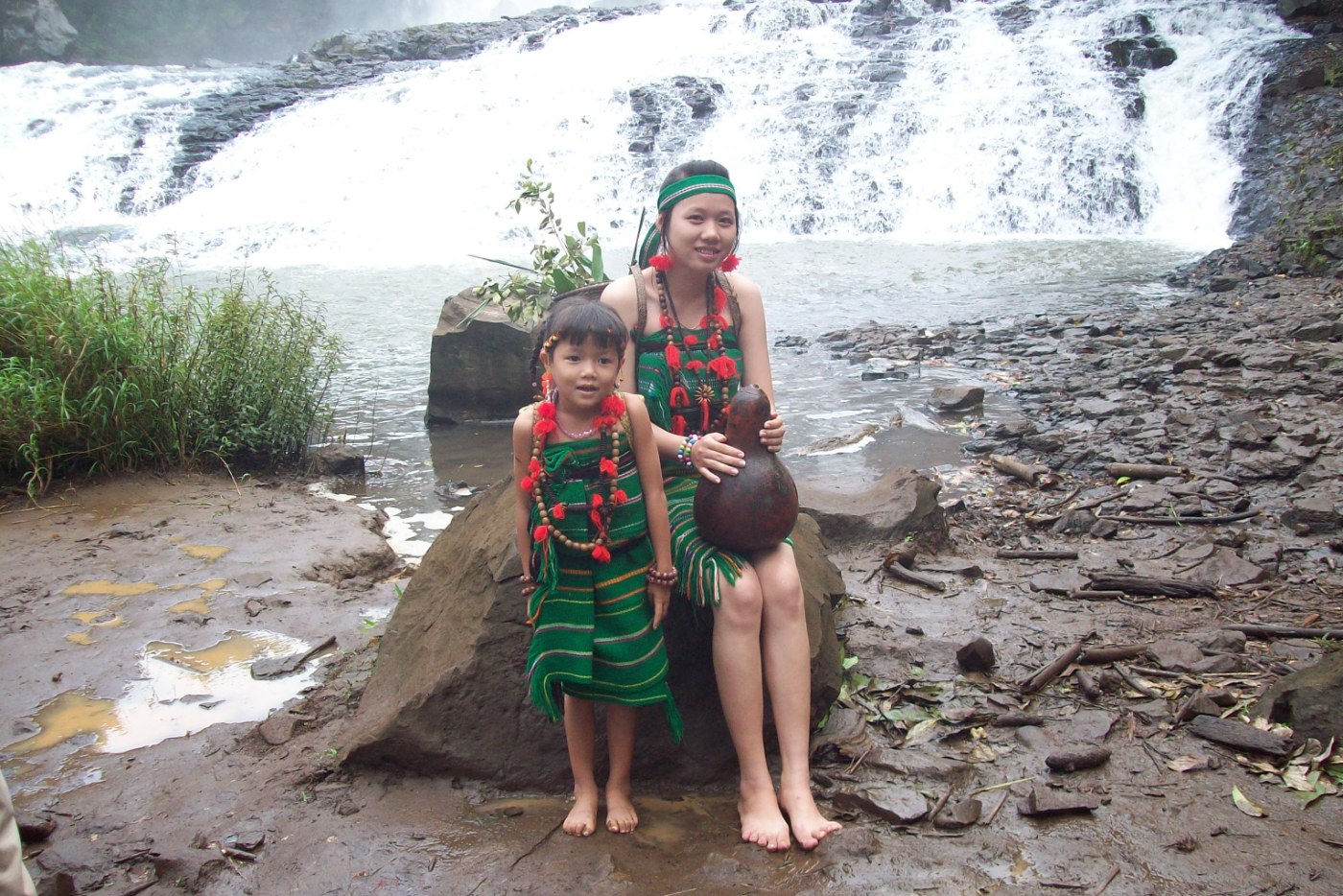


What the sources disagree about. The date of Maître’s death: July 30 in some accounts, August 2 in others, “the first days of August 1914” in the files. The place: Phum Pou Antel, Bu Andel, Ban Poutop, Bu Nor, one neighborhood under several names. Who struck him: Pagnouk, by the cook Choeu’s deposition of 1914; Pa Trang Loeung himself, by the Mnong of Bu Nor in 1940; Pa Ang Leang also, by the file. The rape of 1912: his daughter-in-law in the file, his wife and daughter in the Mnong account. His death: the file says a blow from a rifle butt on May 22, 1935; some modern accounts say a gunshot on the night of the 22nd, at a place called Nam Nung, which the file does not mention. His birth: no source we accept gives a year or a village. The names: Pa Trang Loeung is the archives’ spelling and the Cambodian one; N’Trang Lơng is Vietnamese; we use the first for the man and keep the second in the title because it is the name he is known by on our side of the border.
See also: The Mnong, The Stieng, The French arrive, 1876–1929, Roads, taxes and forced labor, The Kings of Fire and Water, Kin across the border.
Sources
- Mathieu Guérin, Des casques blancs sur le Plateau des Herbes: la pacification des aborigènes des hautes terres du Sud-Indochinois, 1859–1940 (doctoral thesis, Université Paris 7, 2003), part I, chapters 1–3, and pp. 159–203, 220–257, DCHO library; published as Paysans de la forêt à l’époque coloniale: la pacification des aborigènes des hautes terres du Cambodge, 1863–1940 (Caen: Association d’histoire des sociétés rurales, distributed by the Presses universitaires de Rennes, 2008) — the whole history from the archives of Cambodia and Aix and from interviews of 2001; Choeu’s deposition; the Mnong testimonies
- Henri Maître, Les Jungles Moï (Paris, 1912), pp. 25, 73, 75, as quoted by Guérin; on Gallica — Bu Sra, the Plateau des Herbes
- André Baudrit, “Henri Maître, explorateur de l’Indochine sud-centrale, 1883–1914,” BSEI XI (1936), DCHO library — the report of July 7, 1914; Baudrit, “Une visite au tombeau de l’explorateur Henri Maitre,” BSEI XVI (1941), reprinted with Pierre Le Roux et al., “Retrouvaille de la tombe de l’explorateur Henri Maitre au Vietnam” (2012), on academia.edu — R’Ding’s account, the kapok, the grave
- Guérin interviewed in Le Petit Journal, Cambodia (January 29, 2009); Guérin, “Groupes ethniques autochtones des hautes terres du Cambodge,” Aséanie 17 (2006), academia.edu
- Catherine Scheer, “From murderer to hero: memory politics in the highlands of Cambodia,” lecture, Université libre de Bruxelles, April 30, 2024, abstract — the monument of 1943, the Vietnamese celebration since 1975, the Cambodian statue
- Oscar Salemink, “The Return of the Python God: Multiple Interpretations of a Millenarian Movement in Colonial Vietnam,” History and Anthropology 8 (1994), pp. 129–164, on academia.edu; Beyond Complicity and Naiveté (1999), DCHO library
- Gerald C. Hickey, RAND RM-4041 (1964), pp. 29–30, DCHO library; Michitake Aso, “Rubber and Race in Rural Colonial Cambodia,” Siksācakr 12–13 (2010–11), PDF
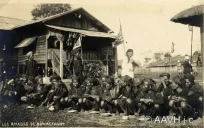
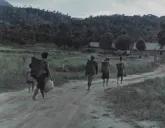
- Humazur, Université Côte d’Azur: the album of the Aéronautique militaire de l’Indochine, Escadrille n°2 (1930), item 4894, and the record of Auguste Morère — the photographs on this page; Claude Morère, ed., Le dialogue interrompu: Auguste Morère, un destin d’exception (2008)
- Jean-Michel Grau, biography of Henri Maître; Pierre Le Roux, “Retrouvaille en 2012, au sud du Vietnam, en pays mnong, de la tombe d’Henri Maitre” (2012), academia.edu
- Our own records
Compiled September 2026. Guérin’s thesis is quoted in our translation; Maître’s Bu Sra passage is printed in French as he wrote it. Mnong names are spelled as the archives spell them, since we have no Mnong text.