










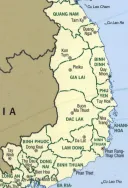








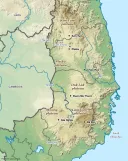
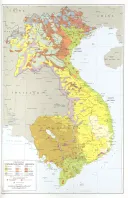






The Stieng live at the southwestern edge of the highlands, where the plateau falls toward the plains north of Saigon: in what was Phuoc Long and Binh Long, then Song Be, then Binh Phuoc, and across the border in Kratie and Mondulkiri. They were the first of our peoples a European lived among and wrote about, in 1859, and among the last the French subdued. Their red soils were taken for rubber in the 1920s and 1930s, they killed the French post chief at Ba Ra in 1933, and in December 1967 the Viet Cong burned 252 of them alive at Dak Son. There are about a hundred thousand Stieng in Vietnam today and about five thousand in Cambodia, where the number is falling.
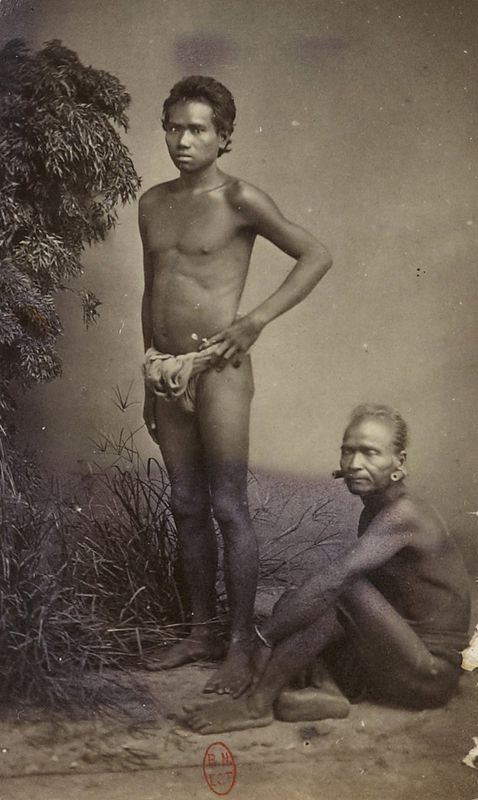

The country
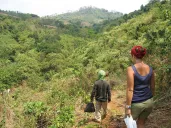
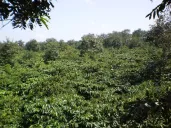
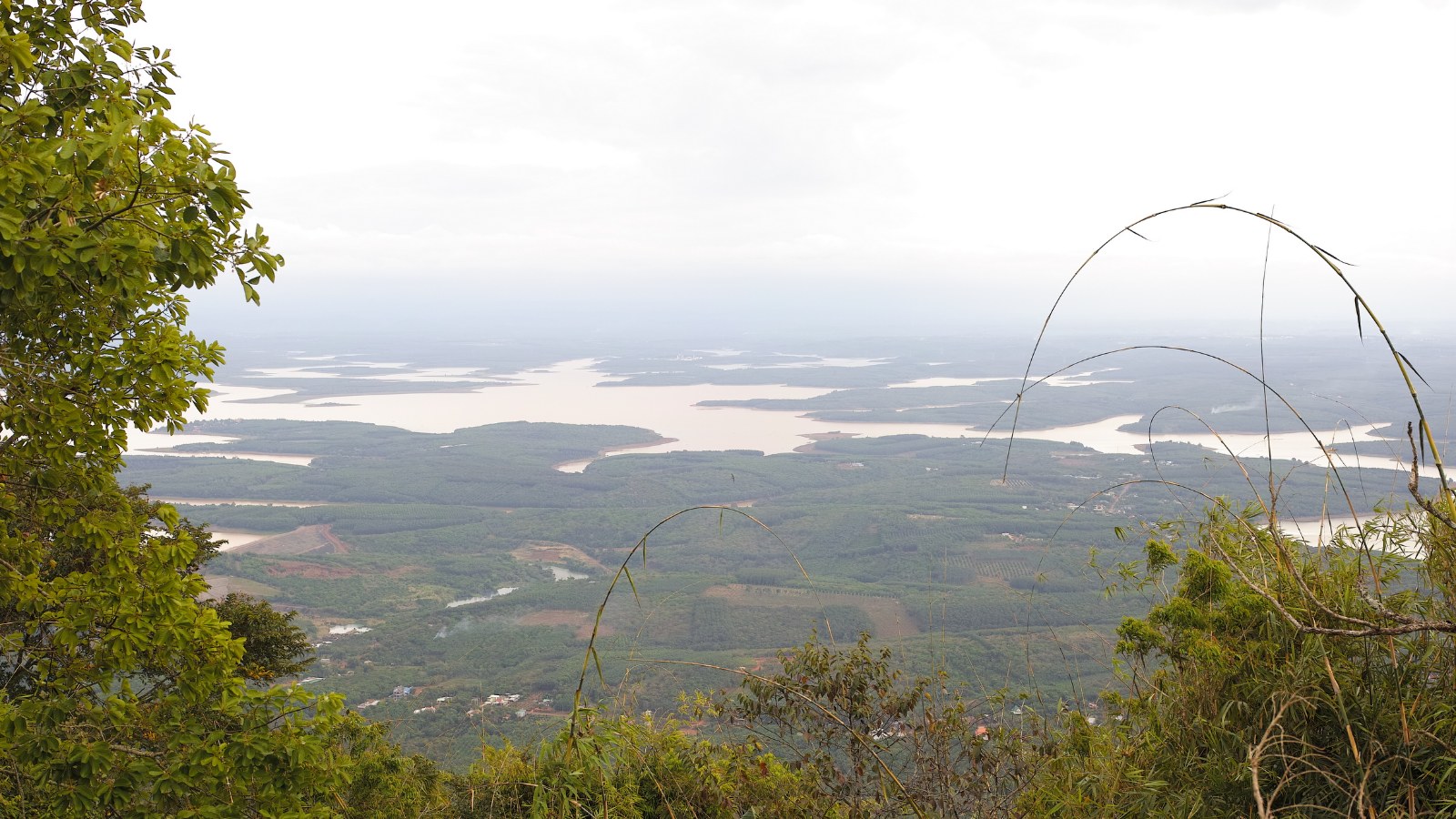
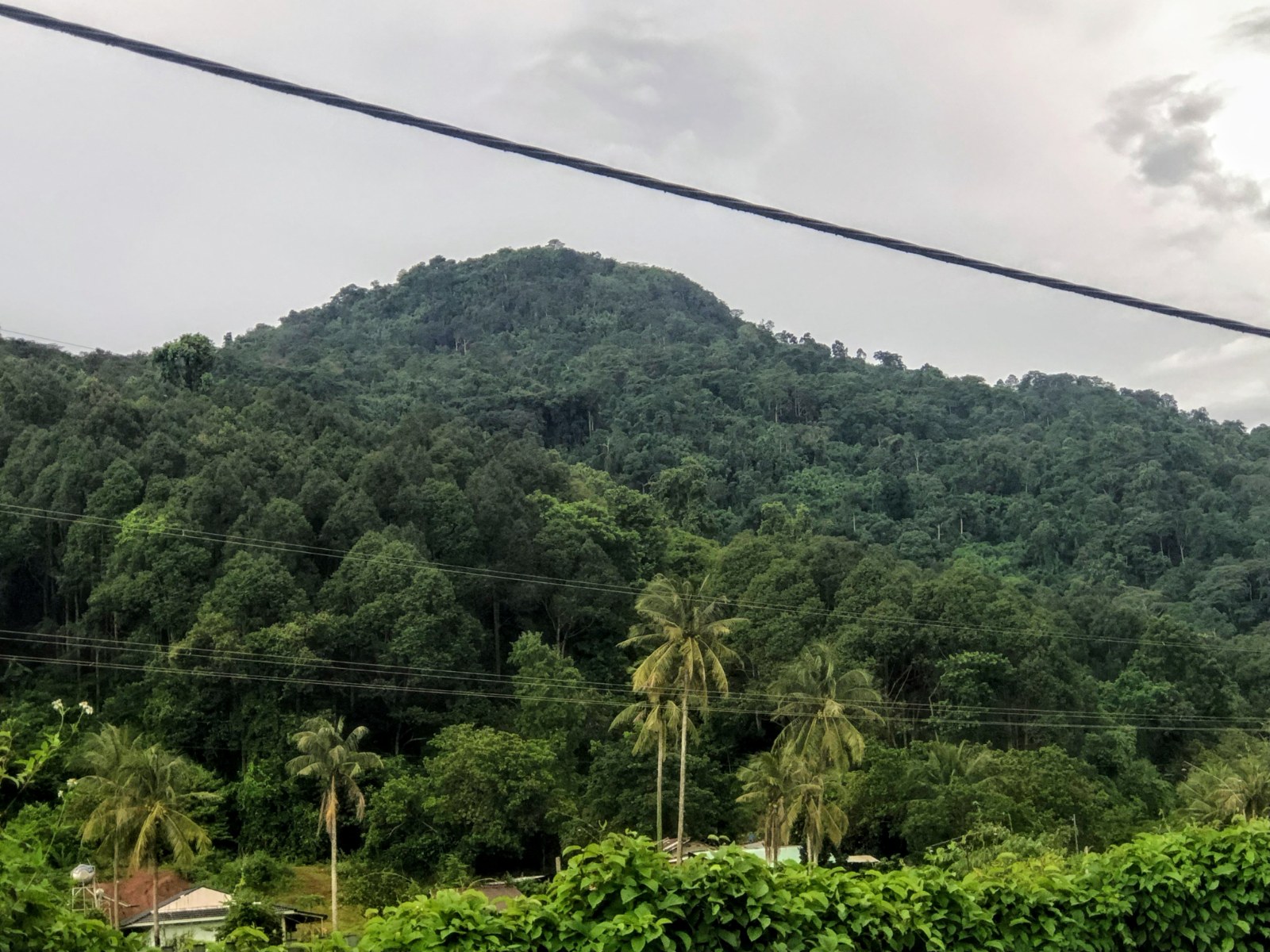
Stieng country rarely rises above five hundred feet. It is low rolling hill strewn with blocks of lava, and flat land, and the soil is red basalt, deep where the rock has crumbled, which is why the French wanted it: cleared, it grew rubber better than almost anywhere in Indochina. Over it stood a rain forest in three stories, the tallest trees 125 to 150 feet, and under the trees the springs that bred the malaria that kept Vietnamese and Cambodian peasants out. In 1947 a French survey found that 92 percent of the infants in the Stieng area had malaria. The forest was thin in game apart from elephants and boar; an inexperienced hunter could starve in it. The Song Be was the main river; Route 13 ran up the western side toward Cambodia and Route 14 across the eastern hills. Bu Dang, Bu Dop, Loc Ninh, Hon Quan, Phuoc Long and the lone mountain of Ba Ra are the names on it.

Mouhot at Brelum, 1859
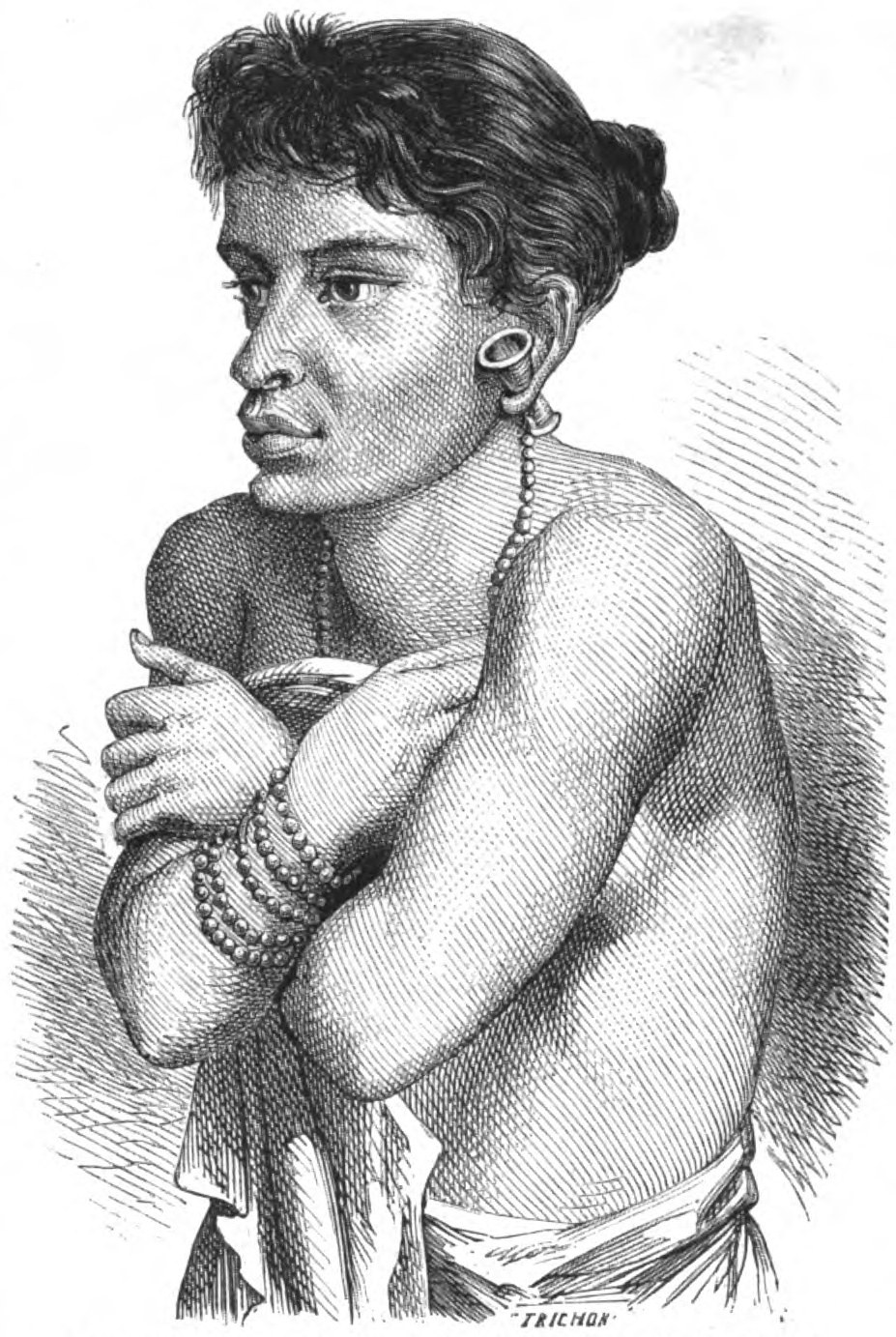
The French naturalist Henri Mouhot reached the mission of Brelum on August 16, 1859, two days’ journey by cart from the Cambodian border, in a clearing between two hills where two long bamboo houses stood with a garden and a cross that the missionaries had planted two years before. He stayed nearly three months, and his book is the first description of any of our peoples by someone who lived with them. What he saw is worth setting down, because most of it is still true.
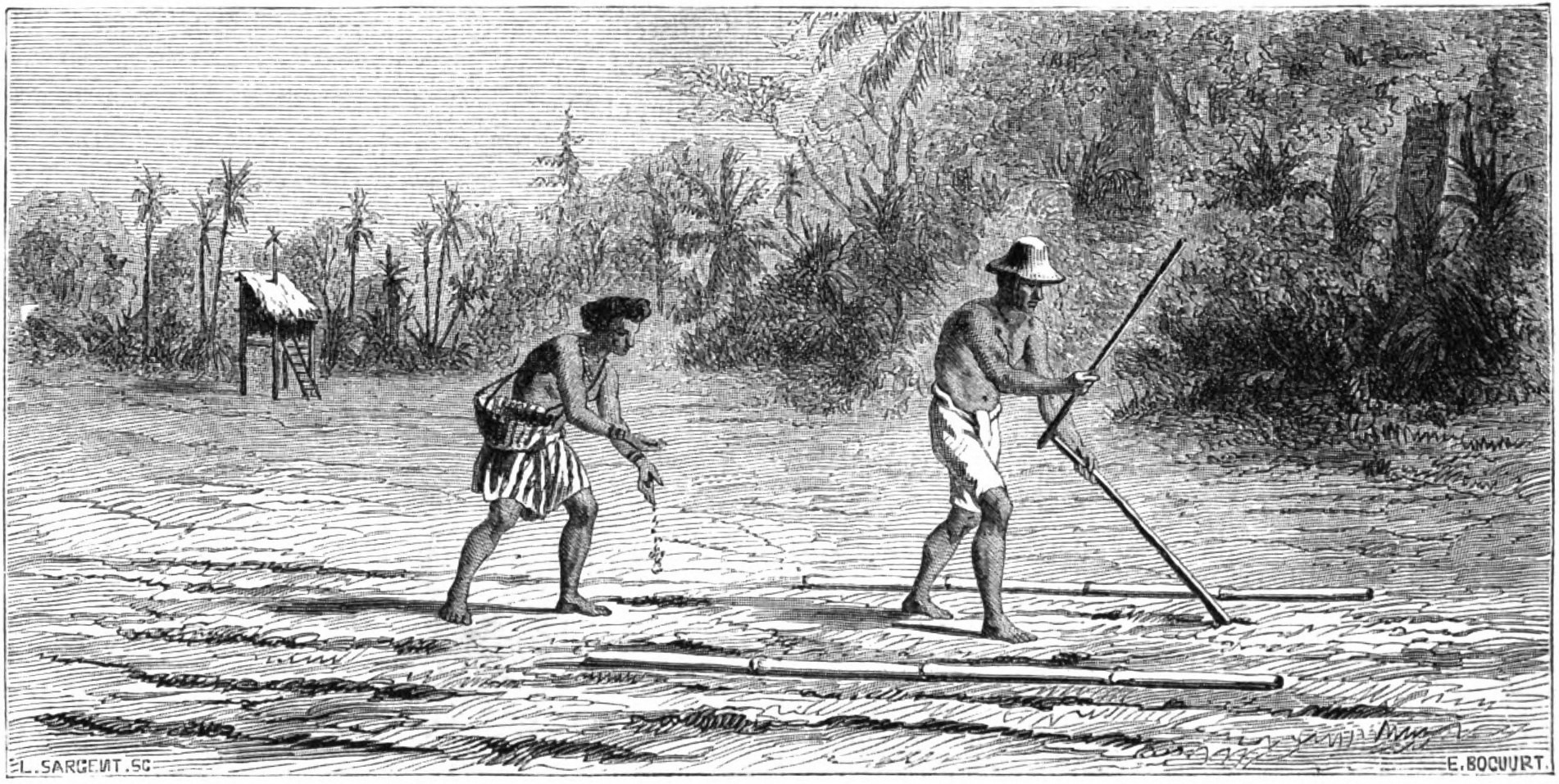
The Stieng, he wrote, formed as many separate communities as there were villages, and he took them for the original people of the country. They were so attached to their forests that to leave them seemed like death, and those dragged off as slaves to the neighboring countries pined and tried every way to escape, often with success. If anyone in a family died of fever the family moved, taking the children in baskets on their backs, for land was not wanting and the forest everywhere alike. The nearer villages paid a tribute of rice and wax every three years to the Cambodians on one side and the Lao and Vietnamese on the other, and were otherwise nearly independent. If one house had plenty the whole village shared it, and when there was want all suffered alike. They worked iron and ivory well, made their own drinking vessels, and the women wove and dyed the long fine scarves that were the only dress of both sexes, the best of them worth an ox. Everyone of any substance had slaves and a field at a distance from the village, where the household spent the whole rainy season in a hut on posts. In the dry season the man cleared a square of bamboo a hundred or a hundred and fifty meters across with a cane-handled hatchet; when the rains came he laid two long bamboos on the ground for a line and walked it with a stick in each hand making holes, and the woman followed, stooping, and threw a few grains into each hole from the basket at her side. The harvest was at the end of October, and for two months before it there was famine, when they ate snakes, toads and bats.

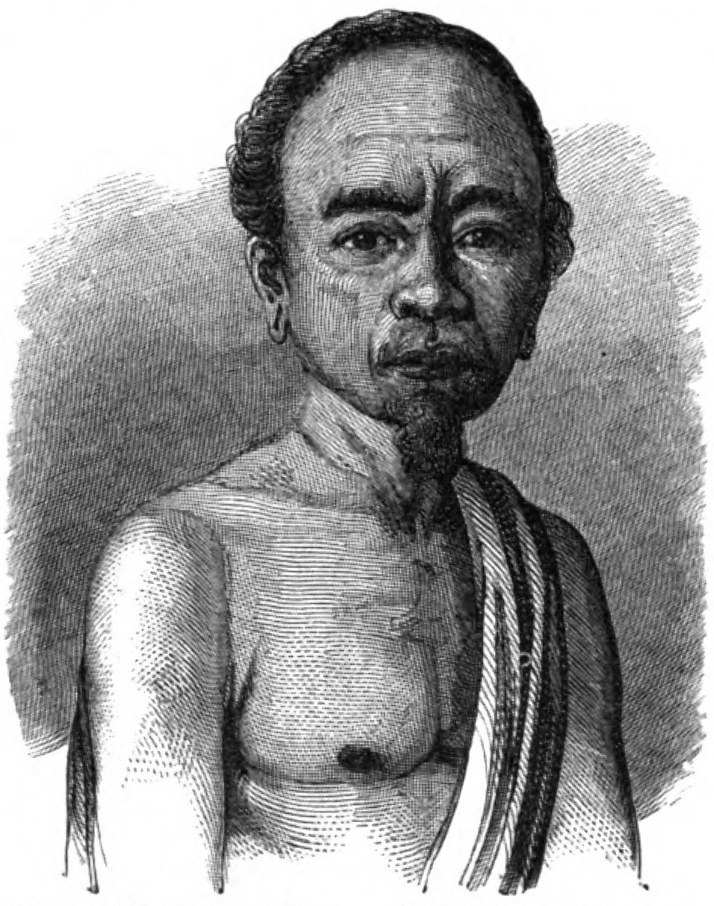

He was struck by their bodies and their manners. They were above the middle height, well made and robust, bathed three times a day, and wore their hair long, twisted up and held with a bamboo comb with a pheasant’s crest in it. A stranger was always fed, with a pig or a fowl and rice wine sucked through a bamboo tube from a jar, and to refuse an offered pipe was a rudeness that more than one man had paid for with a knife. Slaves were treated with the greatest liberty and no one was ever beaten; theft was paid for with a pig or an ox and jars of wine for the whole village, and a fine unpaid grew until the debtor owed fifteen or twenty buffaloes and was sold as a slave. They had neither priests nor temples but recognized a supreme being they called Bra. Sickness was a demon, driven out with noise day and night until someone fell into a fit and cried that it had passed into him; then a pig or an ox was sacrificed, and sometimes, Mouhot said, a slave. The dead were buried by the houses under a little roof of branches, with gourds of water and small bows and arrows, and every day a member of the family came and sowed a few grains of rice so that the dead would have something to eat. Before every meal a little rice was spilled for the ancestors. Animals had souls too, and a killed animal was asked pardon and given a sacrifice in proportion to its size; for an elephant the ceremony was done with pomp.
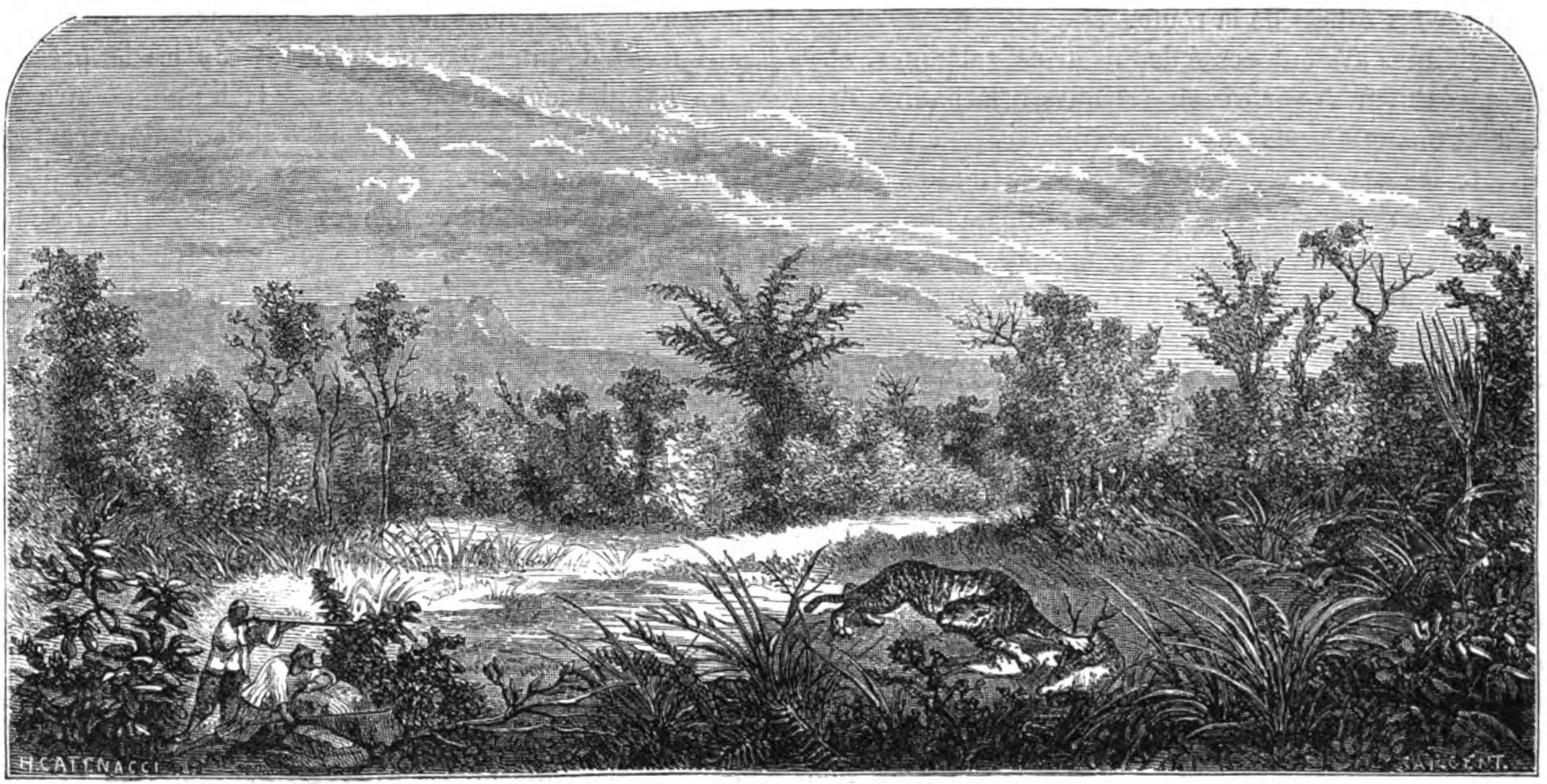
And the crossbow. “It is rare to meet a Stien without his cross-bow in his hand,” he wrote, his knife over his shoulder and his basket on his back for quiver and game bag; they glided through the thickest woods with the speed of a deer, shot to fifty paces, and used a poison so quick that an elephant, tiger or rhinoceros with the skin barely broken was found dead a few hundred yards on. Glass beads and brass wire passed for money, a buffalo costing six armfuls of thick brass wire. Wars between villages were frequent but never serious: each side tried to take prisoners in the fields and paths to sell to the Lao or Cambodians, and at the first alarm a village withdrew into the forest, planting sharpened bamboo stakes in the paths behind it that went through a pursuer’s foot. During his stay there was a total eclipse of the sun (see Hunting, the crossbow and the forest).

Under Vietnam and France
Mouhot noted at the border a village of twenty Stieng who had moved there to escape slavery in their own tribe. The Vietnamese moved in from the other side. When the French took the Mekong delta in 1859, the Stieng near Thu Dau Mot rose against them, as the Chrau did east of Ba Ria, and in 1862 Vietnamese resistance to the French drew in several Stieng groups. Then Vietnamese settlement pushed into the Stieng lowlands, and by 1875 the villages around Hon Quan had Vietnamese names, An Loc, Binh Tay, Dong Phat, Dong No, Xuan La, though only Stieng lived in them, and were two cantons of the Vietnamese delegation of Hon Quan under Vietnamese law. The Catholic mission had been at Brelum since 1851; Father Azémar came in 1861, wrote the first Stieng dictionary and the first study of the Stieng of Brolam, and made few converts. The Stieng of the interior were left alone for fifty years because nobody wanted the fever.
Then the French found what the red soil could grow. The great plantations were laid out on Stieng land from about 1910: Loc Ninh with Bu Dop in 1911, the Terres Rouges company’s Quan Loi, Xa Cam and Xa Trach, Michelin’s Phu Rieng and Thuan Loi and Dau Tieng from 1917 and 1925. Colonial officials, one historian has written, knew it was in their interest to present the region as uninhabited. The Stieng were dispossessed, and the French tried to use them as field laborers. They would not submit to plantation hours, and the companies shipped in tens of thousands of Tonkinese to tap the trees instead, so that the Stieng lost the land and gained nothing from it, and withdrew deeper into the forest. That is the story told on Rubber. In February 1930 the Tonkinese of Phu Rieng struck; the Stieng around them were not part of it, and were not asked. A Stieng man of the 1930s, the American handbook noted a generation later, was still proud of having served in the French army and wore the rags of his uniform; his village had lost the ground under it all the same.


Ba Ra, 1933
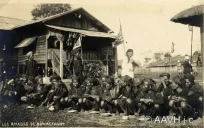
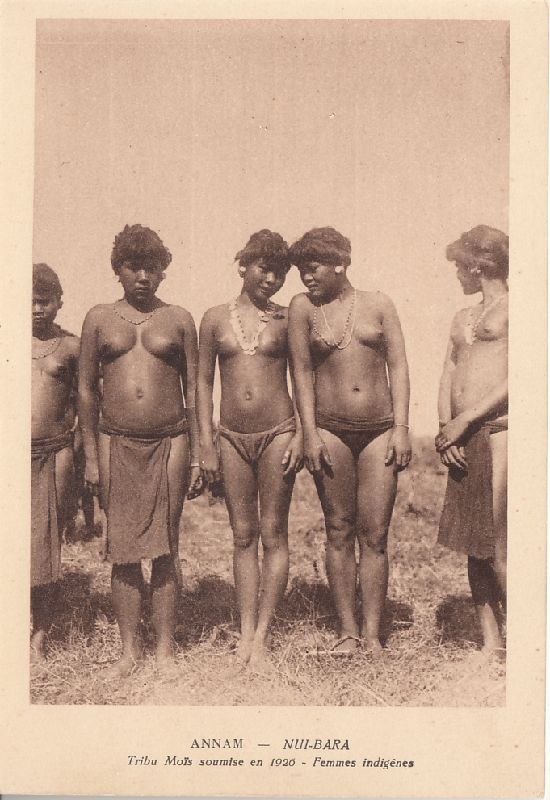
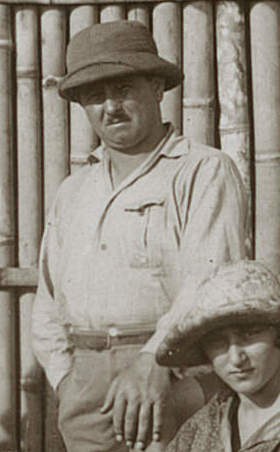
The mountain of Ba Ra stands alone above the plain at Phuoc Long, 736 meters, twin to Ba Den in Tay Ninh. The French put a post on it, and from 1921 the post was held by a gendarme-administrator, Auguste Morère, born in 1897, who kept a diary. In 1931 the Mnong killed the French chief of Snuol district on a road; in October 1933 the Stieng of the Ba Ra country killed Morère at his post. The French say the 25th; the American handbook of 1966, working from French sources, says the 29th, and adds that the rising was apparently due to the encroachment of the rubber plantations. The French brought troops up the new roads, Rhade militia among them, and crushed the rising within three months. In 1934 and again in 1935 the Mnong and the Stieng together attacked Camp Le Rolland, the big French post at Dak Dam across the border in Mondulkiri, in the last years of the war that N’Trang Lơng had begun in 1912 (see N’Trang Lơng). After that the Stieng were counted subdued, and the postcards said so.
.jpg)


How the Stieng lived
The fullest description we have in English is the chapter the American army compiled for its soldiers in 1966 from the French studies of Gerber, Raulin, Bourotte and Azémar. It is a foreign army’s manual and reads like one; we use it for what it records.
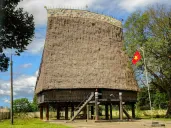
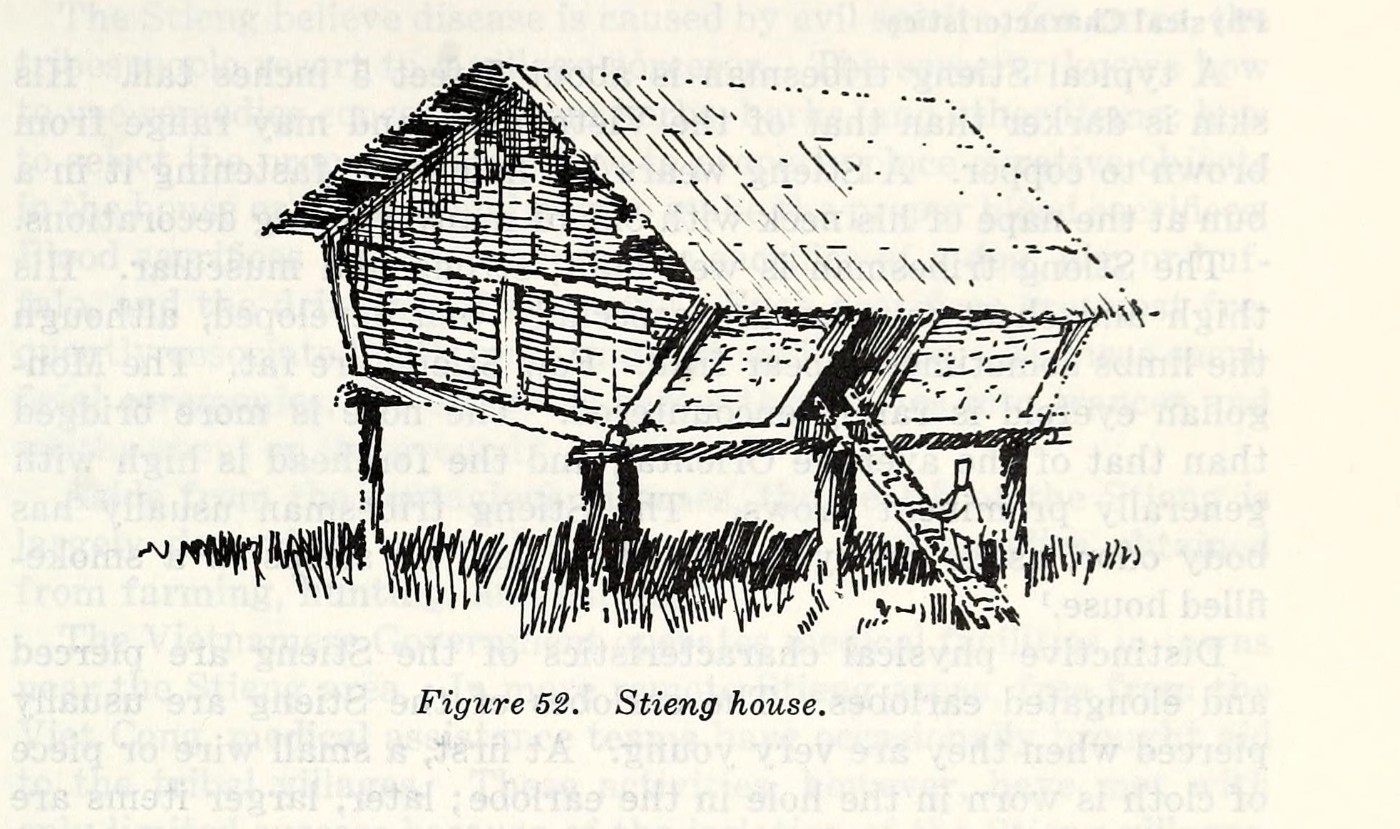
The Stieng had no tribe and no tribal chief, and no clans. The village was the highest unit and the extended family the basic one, and a village might be thirty people or a single family, so widely scattered that each was independent. Villages moved every few years with the fields. In the days of war between villages they were walled with logs and branches set with thousands of sharpened stakes. The house stood on bamboo posts six to ten feet up, with walls of woven bamboo screens leaning outward to a roof of grass or palm, a floor loosely woven so that refuse fell through, no chimney, and a door so small that one stooped to enter, which the Stieng said was for defense. Descent and inheritance ran through the father, and a bride went to her husband’s house; if no bride price was paid the husband went to hers and became an adopted son. A wedding was made by tying the couple’s wrists with a cotton string in front of a witness who knew the customs and the prayers. Wealth was slaves, elephants, jars and gongs, and the gongs were the most valued possessions of all. There were three classes, the rich, the ordinary and the slaves, and two kinds of slave, the permanent, bought or captured, and the temporary, in bondage for debt; men went into debt and temporary slavery to buy animals for sacrifice, and a family in trouble might sell an orphan or a child. Untilled land belonged to the whole village under the chief; tilled land, gongs, jars and animals belonged to the family under the husband; a man owned only his weapons and his own things.
The spirit world was everything. Good and evil spirits lived in all the objects of the world, streams, rocks, the soil, crossbows, jars and gongs, and the greatest were the spirits of the sun, the moon, the earth, the sky and the lightning, which struck down those who broke a taboo. A spirit took its name from the thing it lived in: a mountain’s spirit was yang and the mountain’s name. Evil spirits could eat the soul of a living man. Every five years or so, when the crops failed, a great sacrifice of buffaloes was made, as many as sixty or seventy. A sacrifice after a violent death was made in the forest so that the ghost would not follow it home. A new village was sacred for seven days, closed to strangers by a rope of leaves across the gate; a house was closed for three days after a birth, human, buffalo or pig, by a shut door and a bamboo pole with leaves on it. A stranger who entered a closed village was answerable for every illness that followed, and before the French came, the handbook says, many Frenchmen who broke such taboos lost their lives. The village sorcerer knew the herbs, the amulets and the blood sacrifices. The Protestants came in 1954 and the Catholics had been there a century, and neither had made much difference.
The law was customary and unwritten, and the whole family answered for what one of its members did. Fines were the ordinary penalty, even for homicide, which a first offender’s family could buy off at the price of two to four human lives and a ceremony called pai kliar; death was for the second offender whose family would not help him, and for the man believed able to cast a spell, and the condemned man’s wife and children were sold to pay his debts. Cases were heard at two levels, the village chief with two elders for the small ones, and the chiefs of neighboring friendly villages for the great, without appeal and without any line between civil and criminal. The French let this stand and added a customary tribunal that sat the first seven days of every month; Diệm tried to replace it with Vietnamese law; in March 1965 Saigon restored the tribal courts by decree (see Customary law). The chief was elected at a meeting in the common house with pigs, oxen or buffaloes and jars of wine, and in the 1960s his orders were obeyed only if the villagers agreed with them; the Saigon government nonetheless held him responsible for his village.
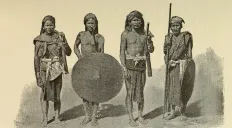
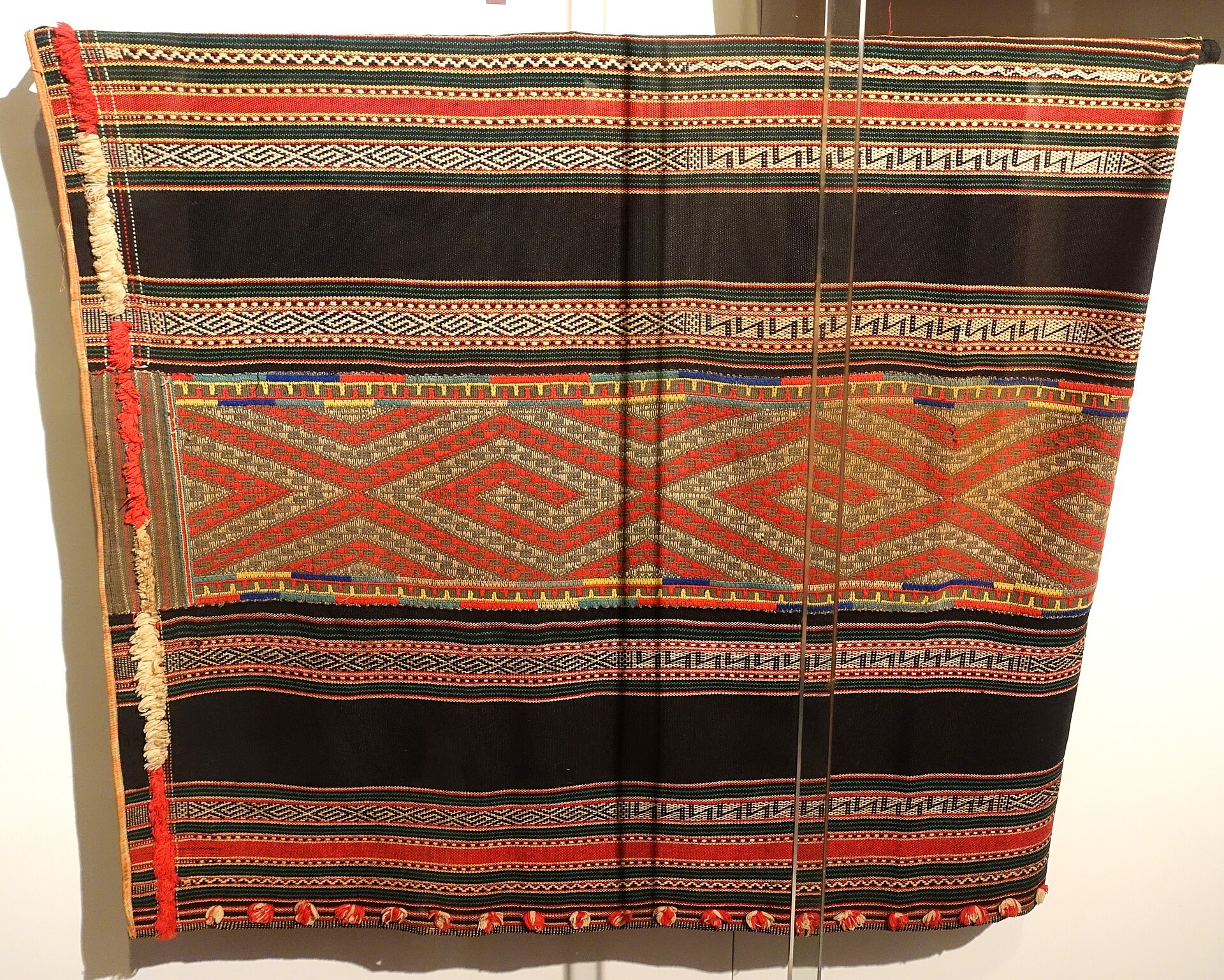
Men wore a loincloth, and a thigh-length buttoned coat on great days. Women wore a short skirt and, on ceremonial days, a cloth nine to twelve feet long draped over one shoulder and tied under the other arm, in which they also carried their babies. Both wore brass bracelets, women heavy bangles at the ankle, and both stretched the earlobe with plugs of ivory an inch and a half across. Arms, chest and forehead were tattooed in lines and triangles, blue under the skin, whose meaning nobody wrote down. The Stieng made everything from bamboo, houses, jars, baskets, chests, lances, scabbards, earrings, made two kinds of fire-maker, wove a little cotton, made a little pottery, and had once worked iron at their own forges until the Vietnamese traders arrived. Rice was sown in common, the men going ahead with two sticks and the women following with the seed, as Mouhot had watched in 1859. Gongs played at every rite; the colors were red and black; and the food, beside rice, was fish, game, buffalo, snails, rats, lizards, crickets, scorpions, snakes, toads, chickens, eggs, worms and ants, with tigers, turtles and domestic elephants forbidden.




_-_Vietnam_Museum_of_Ethnology_-_Hanoi,_Vietnam_-_DSC03240.JPG)
The American war
The war reached the Stieng early and stayed. Their country lay across Routes 13 and 14, which the Viet Cong needed for supply from the Cambodian bases to the delta, and by the early 1960s the government had little hold on it. The first crop-destruction missions of the whole herbicide program were flown in November 1962 from the airstrip at Ba Ra against about a hundred Stieng fields in Phuoc Long, and a Special Forces camp was built at Bu Dop in 1963 (see The Trail and the poison). In May 1965 the Viet Cong attacked the province capital of Song Be. On the night of December 5, 1967, they attacked Dak Son, a village near Song Be that held some eight hundred Stieng, most of them refugees from other villages, with flamethrowers. The American press counted 252 dead, thirty-three with third-degree burns, sixty of the survivors shot and a hundred taken away. An American refugee officer said to the reporter: the Stieng are pawns in this war. That is what the Stieng were to both sides, and the whole of it is on Dak Son, 1967. In January 1975 the North Vietnamese took Ba Ra mountain and then Phuoc Long town, the first provincial capital of the South to fall.
The Stieng today
Phuoc Long and Binh Long became Song Be in 1976 and Binh Phuoc in 1997, and in June 2025 Binh Phuoc was dissolved into Dong Nai. The state counted 100,752 Stieng in 2019, 81,708 of them in Binh Phuoc; the Ethnologue count of speakers is about 45,000 in Vietnam and 51,540 in both countries, because many Stieng no longer speak Stieng. Binh Phuoc grew half the country’s cashews and a quarter of its rubber, on the red soil, and in 2001 Hanoi announced an economic defense zone in Dak Lak and Binh Phuoc in which a hundred thousand soldiers, militia and their families would clear 230,000 hectares for rubber, cashew, cotton, coffee and pepper. The Stieng of Binh Phuoc are the least written-about of all our peoples in the reports on the highlands since 2001, because the reports have concentrated on Dak Lak and Gia Lai; they were among the peoples who stood up together in 1958, and they are in the census, and that is most of what the outside world has recorded of them in half a century (see How many Dega there are).
In Cambodia the Stieng of Snuol and Memot were dispossessed and assimilated under the French, in the historian Guérin’s words, and many had to leave. About twenty thousand were counted in 1978; the census of 2008 found 6,541; the national report on indigenous peoples of 2024 found 4,980, a fall of a quarter in a decade. Their forest in Snuol is now rubber too: in 2011 a subsidiary of the Vietnam Rubber Group was granted 8,926 hectares inside the Snuol Wildlife Sanctuary, and in March 2018 the Cambodian security forces shot dead at least six villagers in a land dispute with a rubber company at Pi Thnou in Snuol district, in the Stieng-speaking country, though the reports did not say who the dead were. What happened to the Stieng of Cambodia under the Khmer Rouge, nobody has written down at all.
What we do not know
- Anything of Stieng history between 1875 and 1920 except what the French wrote about the mission and the rubber.
- The Stieng side of 1933: who led the rising, what Morère had done, what the French reprisals cost. His own diary was published in 2008 and we have not read it.
- Which Special Forces companies at Bu Dop, Loc Ninh and Song Be were Stieng, and what became of the men.
- What the Khmer Rouge did to the Stieng of Snuol and Memot, 1975 to 1979.
- Whether the villagers killed at Pi Thnou in 2018 were Stieng.
If you are Stieng, from either side of the border, this page needs you more than most. How to record an elder says how we take an account.
Sources
- Henri Mouhot, Travels in the Central Parts of Indo-China (Siam), Cambodia, and Laos, vol. 1 (London, 1864), chapters IX and X, DCHO library, also on the Internet Archive — Brelum, August to November 1859, and everything in the section on him
- Department of the Army, Minority Groups in the Republic of Vietnam, Pamphlet 550-105 (1966), chapter 18, DCHO library, also on the Internet Archive — the country, the history to 1933, the house, the classes, the law, the spirits, the dress, the food; it draws on T. Gerber, “Coutumier stieng,” BEFEO 45 (1951), H.-P. Raulin in BSEI 1946 and 1947, and Bernard Bourotte in BSEI 1955
- Gerald C. Hickey, The Major Ethnic Groups of the South Vietnamese Highlands, RAND RM-4041 (1964), DCHO library — the risings of 1859, 1931, 1933 and 1934–35; the counts of 1951 and 1960; the household’s responsibility for its members
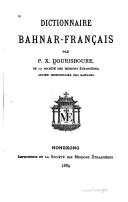
- H. Azémar, “Les Stiengs de Brolam,” Excursions et Reconnaissances XII (Saigon, 1886), and Dictionnaire stieng (1887), scans at ODSAS
- Humazur, Université Côte d’Azur, the record of Auguste Morère — his dates and his death at Ba Ra, October 25, 1933; Claude Morère (ed.), Le dialogue interrompu: Auguste Morère, un destin d’exception. Le journal de marche du gendarme-administrateur au milieu des rebelles Stieng, Indochine 1921–1933 (2008)
- Mathieu Guérin, Paysans de la forêt à l’époque coloniale (Caen, 2008), and his interview of January 2009 — the Stieng of Memot and Snuol
- Noëllie Bon, Une grammaire de la langue stieng, langue en danger du Cambodge et du Vietnam (Lyon, 2014); Glottolog, Bulo Stieng and Budeh Stieng; Ethnologue — the language, its two groups and its speakers
- Encyclopedia of World Cultures, “Stieng” — 50,194 in 1985
- Human Rights Watch, Repression of Montagnards (2002) — 66,000, and the Stieng in 1958; Montagnard Christians in Vietnam (2011) — the economic defense zone of 2001
- Peter Arnett, Associated Press, from Dak Son, Michigan Daily, December 7, 1967 — twenty thousand Stieng in Phuoc Long, the dead, and “pawns in this war”
- Library of Congress, Cambodia: A Country Study, “Khmer Loeu” — the Stieng of Cambodia in 1978; Cambodianess, December 2024, on the national report — 4,980
- Sochua Hak, Jim McAndrew and Andreas Neef, “Impact of Government Policies and Corporate Land Grabs on Indigenous People’s Access to Common Lands,” Land 7:4 (2018) — the concession in Snuol; Radio Free Asia, March 8, 2018 — the shooting at Pi Thnou
- Tuyen Mong Thi Nguyen, “French Colonialists’ Investment in and Exploitation of Natural Rubber in Vietnam,” Journal of Asian Development 5:2 (2019) — the plantations and their dates
Compiled September 2026. The outside record of the Stieng is a naturalist of 1859, a priest of the 1880s, a gendarme’s diary and an army manual; the Stieng themselves have not yet been asked by anyone who wrote it down.