




























Our law was not a book. It was verse, held in the memory of men who could stand up in a village and recite the clause that settled the case. It priced a human life in gongs measured against a man’s own forearm, made failing to help the unfortunate an offense, and devoted more of itself to the wrongs a chief can commit than to theft. The French wrote a part of it down and built courts on it; Saigon replaced it and then restored it; since 1975 no Vietnamese law has recognized it at all.

The law was spoken, and it rhymed
The Ede name for it is klei duê klei bhiăn, and the operative word is duê: the rhymed, parallel, formulaic speech that our law shares with our epics. It is a language between ordinary speech and poetry, built out of alternation, comparison, repetition and deliberate exaggeration, and it is built that way for one reason — so that it can be carried in a head and handed down without paper.
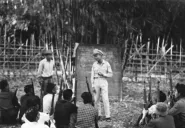
The judges, the pô phat kđi, learned it by heart. In a case they could quote the fitting clause, argue from it, weigh right against wrong and pronounce. That means our law was argued, not merely applied: a proceeding was a contest of citation between men who had the whole corpus in memory. When Léopold Sabatier came to write it down, what he took down was a performance he had watched — judicial recitation, rhythmic and parallel (see Sabatier and the Rhade code).
Here is the mechanism working. On the permanence of marriage: having married a woman a man must live with her until he dies; if one holds a drinking tube to drink rice wine one should continue until the wine becomes flavorless; having beaten a gong one must go on beating until someone stops the hand. A rule, then an image that makes the rule impossible to forget, then a second image in case the first one slips. On a child who turns on his parents, the clauses climb: a big calf to trample them, a big thigh to step on them, a sharp hoe and a large knife to beat them. On inheritance the parallels exhaust the possibilities: if an uncle dies his nephew inherits, if a grandmother dies her grandchildren inherit, if one person dies another inherits, and no one dares wrongfully occupy another’s land.
And it could be merciless. One passage against an idle, wandering woman runs for a page — she strays like a mosquito from its flock, loiters like a hen looking for a nest, eats vegetables in this house and rice in the next, has never touched a mortar and pestle, thinks of wandering with her feet in the east and her head in the west, her mouth open like a winnowing basket — before it arrives at its verdict, which is that a gluttonous dog should be thrown a hot eggplant. Our law knew how to shame as well as to fine.
Who judged
Three offices, in the Ede arrangement. A council of elders chosen by the community, the khua buôn. A judge, the khua pat kdi or pô phat kđi — literally the man who cuts the case — whose office was distinct from the council. And, at the level of the lineage rather than the village, female authority: the ana gô and the dam dei. Between them they settled everything that arose in a village.
Over the land stood the po lan, the master of the soil. Hickey’s account has the clan’s land held among the Rhade by senior women bearing that title, who gave permission to farm and claimed the penalty when the land was violated; a modern enumeration of Ede offices makes the po lan male and places the women’s offices at lineage level. We have not been able to reconcile the two, and we give both rather than pick (see Dega women).
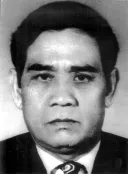
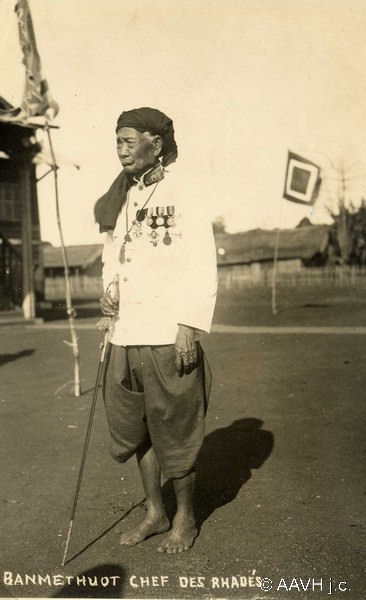
We can name exactly one Dega judge from any source: Ma Krong, also known as Khunjanob, who became head of the Ede customary law tribunal at Buon Ma Thuot — and by the same act became a French official. Sabatier used his influence over the Mnong and the Rhade to get the head tax collected and to build an administration for Darlac that paid for itself. That is not a blemish on the story. It is the story.
What the law weighed
The Ede code as it has come down to us runs to 236 articles in eleven chapters, and the way the articles are distributed is an argument in itself.
| Chapter | Articles |
|---|---|
| Marriage | 48 |
| Property | 38 |
| Offenses against the village head | 33 |
| Offenses against the community | 27 |
| General provisions | 23 |
| Serious crimes | 21 |
| Offenses by the village head | 11 |
| Adultery | 11 |
| Livestock | 10 |
| Land | 8 |
| Parents and children | 6 |
Marriage is the largest chapter by a wide margin. The chief’s office, from both sides, takes forty-four articles — more than serious crimes and adultery together — and eleven of those are about what the chief himself may not do: he may not abuse his power or use the authority entrusted to him to make arrests without sufficient evidence. A code with a chapter for the chief’s own offenses is not a code of obedience.
The chapter on offenses against the community covers loitering, ignoring the village regulations, spreading contagious disease, burning the forest, and offending the customs of the village. It also covers failing to help the unfortunate. In our law that was actionable.
What a wrong cost
There were seven kinds of penalty: a sacrifice to the spirits, paid for by the offender; a fine in goods or money; return of a borrowed thing; return of a stolen thing, at three times its value; payment for a human life; slavery; and death.
Threefold is the law’s recurring arithmetic. A man who steals an animal and eats or sells it pays for the animal and two more. A debtor who misses the date repays three times what he borrowed, and if he cannot, a gong comes off the wall of his house, or he stands as security with his own body until his family clears it. A man who injures another’s animal pays for its treatment and then, if it recovers, a pig and a jar; if it dies, an animal as big as the one that died.
A killing was priced, and the price was read off the human body. For a rich man, a gong whose diameter equals a forearm plus a finger span, measured from the tip of the thumb to the outstretched tip of the second finger; for a poor man, a gong as wide as a forearm plus a fist. Another edition of the code gives the compensation as an act rather than a sum: a duê jar set at the feet of the dead man, a bơng jar at his head, and other goods besides. We print both, and we print the uncomfortable part: the price of a life depended on whose life it was.
The jars were real currency and the rates were known. Among the Ede Bih a tang kroa or tang brăh jar stood for two buffalo and a tang pôk for one; a tuk êba jar for five gongs, a tuk navi for an elephant. Among the Mnong Gar a jăng rlơh jar equaled a big elephant. Our fines can be converted into elephants, which is one way of saying that a man who killed another man knew exactly what he had done to his own household. What these objects meant otherwise is on Jars, rice wine and the buffalo feast.
At the far end, expulsion, sale as a slave to Cambodia, to Laos or to a neighboring people, and execution — by a long-handled spear, or by hanging from a tree in the forest.
Marriage, inheritance and the women’s side
The Rhade and the Jarai are matrilineal and the husband moves to the wife’s house; children take the mother’s name. Legally that meant custodianship more than rule. All the property of a household was managed by the mother or, as her representative, by the eldest sister. Things big or small, valuable or worthless, a cauldron or a cup or a bowl, are kept by the eldest sister. The red tuk jars, the Mnong êbah jars, the bracelets and the silver and gold bowls handed down from rich ancestors are preserved by the eldest daughter. When a man died, his hand tools and personal things went back to his mother and his sisters.
A man who agreed to be a husband and then abandoned his wife was guilty, and she could bring him to court for judgment. What adultery cost we do not know; the chapter exists, in eleven articles, and we have not been able to recover the tariff.
Land, water and the commons
Four articles describe a whole system of tenure. The steward takes care of his land, takes care of the forest, and takes care of his own sphere — a duty, stated as a duty. Inheritance runs in the female line and laterally, and no one may seize or usurp another’s land. Everybody has the right to set fire to wood, to hunt animals and to catch fish, and no one may forbid another. And once every seven years all the villagers, children and grandchildren, bring presents to the master of the land: one a bowl of rice, another a basket or paddy.
That is stewardship, open commons, matrilineal and lateral inheritance, and a render every seventh year — a complete tenure system, in four clauses, for a people whose land the state now says was unregistered. Alongside it stood the sacred water site, a shared space every Ede community kept clean by common obligation. And over the whole of it sits one line that our law says about the law of states: the king’s laws are defeated by village custom. See Land law and customary land.
What we owe the men who wrote it down, and what we do not
The code we can read is not the law our ancestors recited. It has passed through five hands and three languages.
- Before 1915 — Ede oral verse, recited in judgment.
- 1927 — Sabatier publishes the Rhade-language compendium at Hanoi. One scholar’s text gives 1926 and his own bibliography gives 1927; we follow 1927.
- 1940 — Dominique Antomarchi, director of the Franco-Rhade school, publishes the posthumous French translation, the Recueil des coutumes rhadées du Darlac, 302 pages, still out of print and with no digital edition (see The Franco-Rhade school).
- After 1975 — Nguyễn Hữu Thấu translates the code into Vietnamese from Antomarchi’s French, not from the Ede; it is revised in 1984 for a state research project and again in 1991.
- 1996 — published in Hanoi as Luật tục Êđê, in the 236-article arrangement. Jarai and Mnong volumes follow in 1998 and 1999.
- 2000 — an English rendering appears in a Japanese academic journal, and that is where most of the clauses quoted on this page come from.
So every English line above has crossed at least three languages and been edited at both ends by people with an interest in the text: colonial administrators codifying for a court they ran, and then a state publishing house. The editor of the Vietnamese edition concedes that Sabatier collected the regulations of only one Ede group — the “Rhade code” is not the law of the Rhade but the law of some Rhade, in one province, taken down by one Frenchman. It is fair to say, as scholars of the period do, that the Indochinese coutumiers belong to the same colonial genre as Dutch adatrecht: custom written down by administrators, in the form administrators could use, and fixed there.
What the argument does not touch is the verse. The form is ours, the images are ours, the priorities set out in those eleven chapters are ours, and the judges who recited them were reciting something older than any Frenchman. The canon, the numbering and the fixity are artifacts of 1927 and after. Both things are true, and we would rather say so than pretend the book fell out of the sky.
The other peoples’ codes were collected too — Paul Guilleminet’s Bahnar, Sedang and Jarai coutumier of 1952, Pierre-Bernard Lafont’s Jarai Tơlơi Djuat of 1963, Jean Boulbet on the Ma’. None of them is digitized. We have read none of them, and we will not summarize what we have not read.
In the courts
- 1923 — A customary court is established at Ban Me Thuot under Sabatier, alongside the school and the medical service, with Ma Krong at its head.
- The French period — Tribunals are organized for most of the larger highland peoples, using the codified customs and appointing highland judges. For the Rhade, cases the village chief could not settle went to the Tribunal Coutumier, which sat the first seven days of every month at Ban Me Thuot, presided over by a man from Ban Don known as the King of the Rhade. It heard only cases where both parties were highlanders, and judged them by our law.
- 1951 — Bảo Đại’s special statute for the highlands promises that customary tribal law will be retained.
- The 1950s — Under Ngô Đình Diệm the government sets out to substitute Vietnamese law. Hickey writes that it planned at one point to abolish the tribunals, and did not know whether it had.
- October 1964 — At the Pleiku conference after the September revolt, our delegates ask for the reinstatement of customary highland law (see FULRO).
- March and July 1965 — In March our leaders ask again, at Saigon, for the highland courts. On July 22, Decree Law No. 006/65 restores the legal standing of highland law and courts: village courts sitting weekly under the head of the village administrative committee with two highland assistants, district courts under the district chief hearing appeals and serious cases. The decree is printed as an appendix to Gerald Hickey’s RAND study of 1967, in our library.
- After 1975 — Nothing. Customary law has not been specifically recognized in Vietnam’s legal system since 1975.
What is left
Something survives, on sufferance. Village elders still resolve disputes and still draft village conventions — but the conventions require district approval, which makes them an administrative instrument rather than autonomous law. Customary law itself is used, when it is used, for small claims, or where a state judge’s ruling cuts across village custom, and it works by conciliation, education and admonishment; anything serious goes to the state court.
The statute book gestures at us. The 2015 Civil Code recognizes ownership of property by a family line, hamlet, village or community formed in accordance with customary practice. The 2013 Land Law allows land to be allocated to communities to preserve national identity associated with the traditions and customs of the people. But communities have no legal personality under the Civil Code, so there is no entity for the recognition to attach to. Meanwhile fifty state forest enterprises manage a million hectares of the Central Highlands, and in some provinces three percent of the population holds forest use rights. Land that was ours under the four clauses above became forest land under someone else’s.
What we have not found
We have not found a single line of Ede law in Ede with a facing translation, and we have not found procedure at all: no oath, no ordeal, no intermediary, no account of who spoke for whom, no witnesses, no jar drunk at a settlement, and no description of how a judgment was announced or remembered. We do not know how a man became pô phat kđi. We have found no Dega person’s account of a case they saw or a judgment they lived under — not one. And we have found nothing about customary settlement in the diaspora.
The people who can close the largest of those gaps are alive. If you sat on a highland court before 1975, brought a case to one, or heard an elder recite a judgment, that is the source. See How to record an elder.
Why it matters now
Customary law is not only history. It is the evidence that our land had owners before any state issued a title, and it is what the UN Declaration on the Rights of Indigenous Peoples means in Article 34 by a people’s “distinctive customs, spirituality, traditions, procedures, practices and, in the cases where they exist, juridical systems or customs.” See Vietnam and the Declaration.
Sources
- Ngô Đức Thịnh, “Traditional Law of the Ede,” Asian Folklore Studies 59 (2000), pp. 89–107 — the 236 articles and the chapter counts, the clauses on marriage, parents, killing, theft, debt, land and the commons, the seven penalties, the verse form, the judges who learn it by heart, and the editions. The clauses quoted on this page are his English renderings
- Lưu Hùng, “Introduction to Jars in the Life of Ethnic Groups in the Central Highlands of Vietnam,” in Ceramics in Mainland Southeast Asia (Smithsonian Institution, 2008) — the jars at the head and feet of the dead, the eldest daughter’s trust, and the exchange rates in buffalo, gongs and elephants, quoted from the 1996, 1998 and 1999 bilingual editions
- Jeremy Ironside, The Recognition of Customary Tenure in Vietnam (Mekong Region Land Governance, 2017) — the khua buôn, khua pat kdi, ana gô and dam dei; the sacred water site; non-recognition since 1975; the village conventions requiring district approval; the 2015 Civil Code and 2013 Land Law; and the forest enterprises
- Oscar Salemink, “A view from the mountains: a critical history of lowlander–highlander relations in Vietnam” (2011) — Ma Krong at the head of the tribunal, and what Sabatier used him for
- Oscar Salemink, Enclosing the Highlands (2003), and “Mois and Maquis,” in G. W. Stocking (ed.), Colonial Situations (1991) — the comparison of the Indochinese coutumiers with Dutch adatrecht, and customary law competing with statutory law
- Gerald C. Hickey, The Major Ethnic Groups of the South Vietnamese Highlands, RAND RM-4041 (1964) — text copy — justice in the hands of the headman and council, the po lan as senior women, the French tribunals, and Diệm’s plans
- Department of the Army, Minority Groups in the Republic of Vietnam, Pamphlet 550-105 (1966) — the Tribunal Coutumier at Ban Me Thuot and the decree of 1965
- Human Rights Watch, Repression of Montagnards (2002) — customary lands, fallow rights, village boundaries held by elders, and inheritance through the female line
- Rie Nakamura, “A Man of the Central Highlands,” JATI 19 (2014) — Sabatier’s indigenous law court alongside the school and the medical service
- Léopold Sabatier and Dominique Antomarchi, Recueil des coutumes rhadées du Darlac — Hdruôm hră klei duê klei bhiăn dum (Imprimerie d’Extrême-Orient, Hanoi, 1940), 302 pp.; Paul Guilleminet, Coutumier de la tribu bahnar, des Sedang et des Jarai de la province de Kontum (EFEO, 1952); Pierre-Bernard Lafont, Tơlơi Djuat: coutumier de la tribu Jarai (EFEO, 1963) — named here because they exist; we have not been able to read any of them
- UN Declaration on the Rights of Indigenous Peoples, Article 34
Compiled September 2026. The clauses on this page reach us through Ede, French, Vietnamese and English, and we have said so in the text rather than present them as if they came to us direct. We are still looking for anyone who sat on, or brought a case to, a highland court before 1975.