










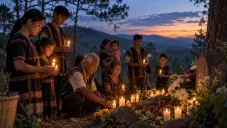
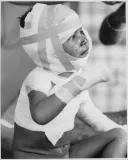
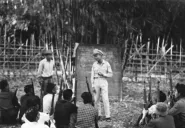
A ring of brass or copper on the wrist is one of the oldest bonds among our peoples. It settles an engagement and ends one; it pays the midwife and the broker; it is heated in coals and dropped into a jar of blood and rice beer so that men who should be enemies can drink and be bound. In 1964, on the morning of a mutiny, a Rhade shaman put three identical copper bracelets on the wrists of a Rhade commander, an American captain and a Vietnamese captain, and a photographer from an American magazine was allowed to watch. That is how the ring our grandmothers gave went around the world.
The name, and the metal
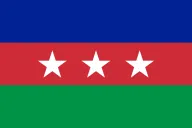
The Jarai word the American survey of 1966 records is kong. Among Rhade in exile the word given for it is kong or kong te, and it is the yellow ring, with a gap in it, on the flag the Montagnard Dega Association adopted at Greensboro in 1987. See The Dega flags.
For Bahnar, Sedang, Mnong, Koho and Stieng we do not yet have the word, and we would rather say so than guess. One trap for anyone who goes looking: the Koho lam gong in the same survey is the go-between in a commercial deal, not the bracelet. It looks like kong and is not.
The metal varies by people, and the survey of 1966 is in effect a materials list for the whole plateau. Bahnar men and women wore copper or silver, and the survey answers a question about how they were built: “The bracelets are several large rings welded together; the size and number of bracelets worn indicate the person’s wealth.” Rhade men wore iron neck rings and both sexes wore bracelets; Rhade women also wore heavy tin ankle rings, some of them very beautiful and possibly of Cham origin — which points to a trade in ornament running up from the coast. Stieng men and women wore copper or brass, the women heavy brass or copper bangles at the ankle, and Stieng children wore an anklet with two bells from birth until about the fourth year. Mnong, Hre, Rengao and Hroi all appear with bracelets of silver or copper.
Who made them
Not traders. The smith was a village officer.
“The Ma on the Bao Lac Plateau have ironsmiths who make tools, weapons, and ornaments. In addition, the ironsmith has a quasi-religious role and is frequently consulted as a soothsayer.”
The same survey lists the offices a Ma man could hold: village chief, sorcerer, judge, ironsmith, canoemaker. The smith stands in that list, and he reads omens. Among the Sedang, iron workers appear in the same breath as household heads, shamans and slaves when a village’s people are enumerated; the Sedang were the ironmasters of the northern highlands. See The Sedang.
And the forge stood in the village, with its own ritual standing. Among the Rengao, when new land was to be burned, the head of the household carried a piece of wood to the village forge, lit it there, and blew the fire hard with the bellows — to insure a good fire on the new field. Metalworking was not something that arrived with outsiders.
The Stieng tell where the trades came from. A god came down from heaven and married a woman named Dai Cho Phek; their son Djieng was taken up to heaven and taught magic and the crafts, and knew how to forge tools, weave baskets, build houses and till the soil; and the god sent him back to earth to teach the trades to his people.
Engagement, and the bracelet that is not touched
Among the Jarai the girl’s family begins it, and the bracelet does the asking.
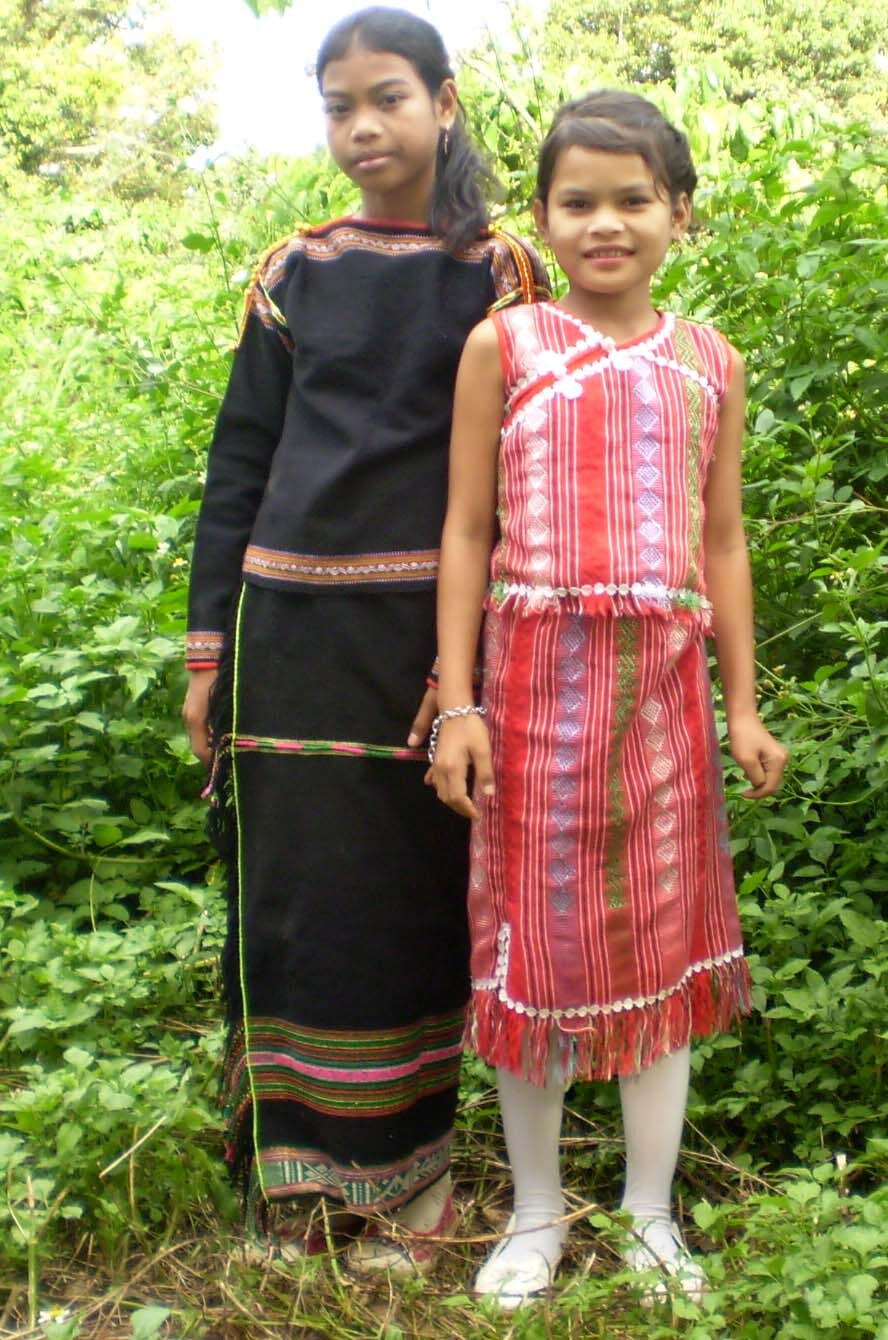

“The girl’s mother gives a bracelet or kong to the intermediary who, holding the bracelet in his hand, asks whether the girl consents to his approaching the boy. The girl indicates her consent by not touching the bracelet.”
Consent given by not touching. The go-between then carries it to the boy’s family, and if they agree, “the go-between gives the bracelet to the boy’s mother, who then places it on her son’s wrist to show that the two young people are engaged.” If the boy’s parents are against it they do not refuse; they say, “Ask the boy what he thinks” — and the boy declines, because referring the question to him is how disapproval is expressed. An engagement is officially broken by returning the bracelet to the girl’s family.
A week or so later comes the marriage itself, and the term it is given is the one to carry through this whole page:
“It involves a ritual alliance or bo’lih trong, a pact between the families of the bridal couple. The young couple exchange bracelets and pieces of a sacrificed chicken.”
A ritual alliance. The same kind of word covers the joining of two people and the treaty of two villages, and the same object seals both.
Among the Rhade a boy and girl who exchange bracelets are tacitly engaged, and the relationship is binding: the boy has agreed to marry her if she becomes pregnant. If a Rhade husband and wife separate, the law requires that they return the dowry and the bracelets they exchanged, and they are then free to remarry. Among the Bahnar, in the presence of the village chief, the bride and groom hand back the wedding bracelets they exchanged. Among the Hroi, a couple divorcing by mutual consent return the wedding bracelets and divide their goods equally. See Customary law.
Among the Ma the woman may propose. “A young girl or widow approaches the man she desires through an intermediary and her family, who offer the man’s family a brass bracelet and a necklace of beads; if they accept these gifts, a wedding date is set.” At poorer Ma weddings the intermediaries are paid “only a bead necklace and a brass bracelet of little value.” Among the Mnong the bridegroom’s gifts may run to a small neckless jar, a basket of bamboo tubes of preserved bamboo shoot corked with buffalo skin, a tin comb, a glass-bead necklace, a brass and tin bracelet, a small bottle, or a hen.
And it starts long before marriage. Koho children wear necklaces and bracelets with tiny bells on them. Stieng babies wear their belled anklet from birth. Whatever the American record later made of it, the bracelet is not an award given to grown men. It is put on a child. See Growing up Dega.
It also comes off. Hroi mourning runs one to four months for a relative, a year for a parent, two to three years for a husband or wife, and those in mourning “are forbidden to wear bracelets or collars, to participate in social affairs, or to listen to singing.” A person in grief is a person without a ring.
The stranger
To understand what was given to the Americans you have to know what a highland village did with any outsider, which was to be careful.
Among the Bahnar, anyone from outside the toring — the group of villages — is a tomoi, a stranger, and outsiders “are considered as a possible danger to the relationship between the villagers and the spirits. Any misfortune occurring in the village while outsiders are there will be attributed to them.” To stop a stranger stealing his spirit, a Bahnar licks his thumb and brushes it over his heart. Among the Rengao a stranger who wished to settle had to live in a house at the edge of the village, just inside the fence, while the villagers watched for signs that the spirits were displeased; after two or three years with no evil results he could move nearer the center. Among the Stieng a stranger coming to live permanently must sacrifice a chicken or a pig and rice wine. Among the Ma, a meal of pork liver shared between the chief and a stranger raises the stranger to the status of friend or ally of the chief and so of the village. Among the Sedang he is received hospitably and observed closely.
And among the Rhade, this:
“Ordinarily, when a stranger enters a village, a tribesman will approach and ‘shake hands’ with him. The proper procedure is to shake one’s own left hand with the right hand of the tribesman and bow slightly.”
“Often a metal bracelet is given to a stranger. The bracelet is evidence of a number of minor privileges — such as the right to touch certain sacred drums — which may vary in detail from village to village. It also assures the visitor of the protection of the tribe.”
Protection of the tribe, and permission to touch the drums. That is a legal status, conferred by an object, on a person who has no other standing.
The United States Army understood at least part of this, because it put it in writing for its own soldiers, as item four on a numbered list of practical suggestions:
“The Rhade establish close individual and collective friendships. These ties are usually represented by an exchange of Rhade bracelets — these bracelets should be considered a very significant sign of friendship and alliance and should not be undervalued by outsiders.”
That is the Army telling nineteen-year-olds, before they got off the aircraft, not to treat our law as a souvenir.
The oath
Here is the center of it. To make peace between villages that had been at war, the Bahnar hold the blood oath, xep. A jar of rice beer is set aside; a chicken and a pig are killed and their blood caught; the man giving the feast pricks his own finger and lets his blood mix with theirs, and rice beer is added. Into the jar go powdered deer horn, elephant tusk, wild boar tusk, tiger teeth, bark from a plant known for its magical powers, and bark from the root of a magical liana. And then:
“finally a copper bracelet is added that has first been burnished in hot coals”
Some of the liquid is poured on the head, chest and back of the parties, and they drink.
A ring of metal is heated, put into a jar of blood and beer, and the men who drink from that jar are bound to each other. Everything else on this page — the girl’s untouched bracelet, the stranger’s ring, the Green Beret’s brass coil — is a version of that.
The same idea recurs under other names. The Jarai bo’lih trong is the marriage alliance. Among the Mnong the great ceremony is the tam boh, the exchange of sacrifices, normally between parents and a married son — and “the Tam Boh can take place between unrelated people; in this case it is called tam boh jook kuang, and it forms an alliance between them.” Among the Rengao and the Bahnar the two families at a wedding contract a friendship alliance, pledging not to harm one another. See Jars, rice wine and the buffalo feast and Yang, the spirits.
What a bracelet pays for
It is also money, in a precise sense: it appears in fee schedules, next to buffalo and jars.
- The midwife. Among the Koho, when a woman feels her first pains the midwife is called and usually stays three days after the birth to nurse mother and child. “Payment to the midwife is a bead necklace, a brass bracelet, and a blanket.”
- The broker. For any important commercial transaction the Koho use an intermediary who takes a commission of about ten percent. For hiring a servant he receives a cow buffalo, a silk blanket, a silver bracelet and a bead necklace. For the sale of jars, each intermediary gets a brass bracelet and a bead necklace on top of his share of the buffalo, and afterwards buyer, seller and broker share a jar of rice wine and a chicken over a sacrifice.
- The price of a death. When a Koho takes his own life on another family’s land, his family must pay that family one male buffalo, one jar worth four piastres, two bead bracelets and a silver bracelet.
- A new house. Among the Mnong, at the site of a new house a buffalo horn is laid east to west and pinned down with forked branches of the jirang tree; the end of one branch is split, and a tin bracelet and leaves of the gun plant are fastened into the split. The head of the household then sleeps, hoping his dreams will carry a sign.
- The end of childhood. In the old Rhade initiation the child paid for the sacrifice of a pig and had his upper front teeth filed away with a thatching sickle, an operation that took half an hour to an hour and was bloody and painful — and then “received a bracelet engraved with a secret mark.” The pain and the mark belong together.
The ring that is the office
Among the Jarai the Master of Fire, the Sadet, carried the same object at the top of the whole system. Before his death he threw his copper bracelet into the pool where the people of Plei M’tao bathed, and whichever man came up with it on his arm would be the next Sadet. At the installation of the new one, “a cotton bracelet is placed on his wrist as a symbol of his new role.”
A cotton bracelet. The ring is the office, and it does not have to be metal to be the office. See Kings of Fire and Water.
Buon Brieng, 1964
The American story does not begin, so far as the record goes, at Buon Enao. The published operational history of the village defense program that started there in 1961 names the Americans, counts the villages and the strike forces, and does not mention a bracelet once. If bracelet ceremonies were held at Buon Enao, the documents that survive do not say so, and we would rather leave the gap open than fill it.
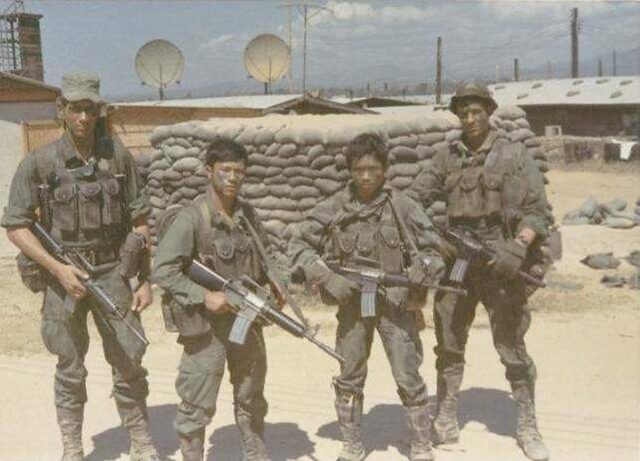

What is documented, twice, is Buon Brieng in 1964.
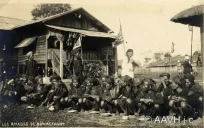
On July 23, 1964 a Viet Cong battalion ambushed a four-truck convoy led by Specialist Fourth Class George Underwood, the junior medic of Detachment A-312. Underwood and thirty-nine of our people were killed in what the record calls a well laid out ambush with dug-in positions. Afterwards the camp leaders came to the American captain: the ambush had brought evil spirits into the camp, and they would go on plaguing the unit until a proper sacrifice was made. A water buffalo was killed and the rice beer, nhom pae, was drunk through long reeds while the shaman chanted and daubed the Americans’ feet with the buffalo’s blood and women danced to brass gongs. At the end of it, copper bracelets were put on the Americans’ wrists. The photograph names four of them: Earl Bleacher, Burhl Cunningham, Gene Bell and Lowell Stevens.
Thirty-nine of our people and one American medic were dead, and the ceremony that followed was not a decoration parade. It was the repair of a relationship with the spirits, and the Americans were inside it.
Two months later came the morning that made the object famous. On September 19 and 20, 1964 our soldiers at four camps around Buon Ma Thuot rose, killed Vietnamese Special Forces cadre and put their American advisers under guard. Buon Brieng did not rise. Its battalion commander was Y Jhon Nie, whose father was French and whose mother was Rhade, and who had been raised as a highlander before being sent to a Catholic boarding school. At half past eight on the morning of the twentieth, Captain Vernon Gillespie called Y Jhon and the Vietnamese commander, Captain Truong, into the team house and told them he was taking command of every force in the camp.
Then Y Jhon announced that there would be a sacrifice at ten, and that Gillespie and Truong would attend as his guests of honor. The record adds the sentence that explains the scale of these things: “The number of jars of Nhom Pae measured the importance of the ceremony; seven jars were the highest level.” This one merited seven jars, a water buffalo, a pig and several chickens. The whole camp took part. A photographer from an American magazine, Howard Sochurek, was allowed to watch.
“As Gillespie, Y Jhon, and Truong drank Nhom Pae through long reeds, a Montagnard shaman chanted and daubed their bare feet with the blood of the sacrificed buffalo to drive the evil spirits away.”
“When the ceremony ended, the shaman placed identical copper bracelets on the wrists of Y Jhon, Gillespie, and Truong to symbolize the bond of brotherhood and friendship.”
The captions under the photographs are plain: “The Shaman puts a copper bracelet on Captain Vernon Gillespie’s wrist to signify brotherhood.” And: “Captain Truong receives his copper bracelet.”
Consider what that is. On a morning when Rhade soldiers were killing Vietnamese officers in camps a short drive away, a Rhade shaman at Buon Brieng put the same ring on a Vietnamese captain that he put on the Rhade commander and the American. It is the oath jar doing exactly what the oath jar is for: making people who should have been enemies drink from one vessel and be bound. And it was photographed for a magazine read by millions of Americans. That is how our ring went abroad.
It also settles a claim that circulates: that no Vietnamese Special Forces soldier ever received a bracelet. On at least this one recorded occasion, one did — from the same shaman, at the same moment, an identical ring. The men who say otherwise were serving later, elsewhere, in a war that had by then gone much worse between us and the Vietnamese, and they are describing what they saw. But the bracelet was never a badge of race. It was an act of a particular village toward a particular person.
What the Army said, and what the soldiers did
The Army’s own official history of Special Forces in Vietnam sets it down as a matter of doctrine:
“Participation by the Special Forces in tribal ceremonial functions was not uncommon, and the Montagnard bracelet worn by many Green Berets was a token of Montagnard respect and involved a ceremony for its presentation.”
Involved a ceremony for its presentation. And then there is what actually happened, reported by an American service newspaper from Plei Me at the end of 1965, a few weeks after the week-long siege there.
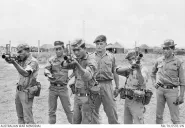
“Many of the green beret-boys wear a simple brass coil around one wrist — not to be fashionable, but for added life insurance.”
“A bracelet identifies you as a friend of the Montagnards… If you are out alone and get into trouble, the bracelet could make the difference in being rescued.”
“Some of the men serving in the area have been presented with the bracelets by the tribesmen, while others have adopted the added insurance without the formalities.”
That is the whole distance between the two understandings, printed in one paragraph in an American newspaper in 1965: a sworn alliance on one side, a piece of survival kit on the other, and men wearing the ring who had never been given it. The same article calls us primitive and says we have no written language, both of which its author could have checked. See Writing our languages.
Kpa Doh’s bracelets
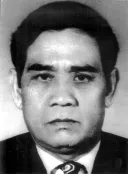
One man’s bracelets can be traced further than anyone else’s. Kpa Doh was chief interpreter and, in practice, the Montagnard commander of the II Corps Mike Force. An American officer who served with him records, flatly: “Kpa Doh gave me my first Montagnard bracelet when A-424 arrived at Camp Buon Beng.” That was 1964.
Two years later Kpa Doh gave another one to John Wayne, who came through on a tour in 1966. The men who were there say it was brass and that Kpa Doh presented it himself as commander of the Mike Force; the actor’s own estate says silver. What is agreed is that it was bent to fit his wrist and that he wore it for the rest of his life and was buried in it. The same American officer wrote to Wayne afterwards to say that Kpa Doh could not afford a dress uniform for a course at Fort Leavenworth, and Wayne sent him the money for clothing and travel.
Kpa Doh was killed at the fall of Phnom Penh in 1975. See The men of FULRO.
That one man’s name is now attached to a bracelet sold commercially in four metals is the beginning of the last part of this story.
The trade now
Save the Montagnard People, founded in 1986 by American veterans, many of them former Special Forces, sells bracelets from North Carolina: aluminum at twenty-five dollars, brass at twenty for a child and thirty-five for an adult, silver at a hundred, with the caveat that the carvings may differ from the picture. Much of the money goes back to the community here. One licensed maker sells a “John Wayne Montagnard Bracelet” for sixty dollars, hand cut and shaped, the seller says, by a Montagnard who fought alongside the Green Berets and who still trains American soldiers at Fort Bragg, and packed in surrender bags made from Vietnam-era magazines.
A Dega veteran hammering bracelets in North Carolina and selling them under John Wayne’s name is doing what a village smith did, and we will not sneer at it. But it is worth noticing that the Greensboro association’s cultural program — dance, gong music from three of our peoples, basket weaving, painting, storytelling — does not include metalwork. The smith who was also a soothsayer has no successor in the program.
And then there is the rest of the market. One seller advertises bracelets “Made in Vietnam by Montagnards” from Dak Lak, “crafted in the old ways of sanding stone, file and etching blade,” and says the markings “represent tribal identity, life, death or spirituality” — which is a sales line, not evidence. We looked for an authority for the common claim that the notches on a band count buffalo sacrificed and found none. A collector site offers a brass bracelet engraved MICHAEL with an X, sold as a war relic, with — as the listing itself concedes — no photograph of the original recipient, no military record and no chain of custody, shipping from Vietnam in two to four weeks.
A ring that could only be given is now something that can be bought from three continents. The ones sold by our own associations put money back into our community. The ones sold as relics out of Dak Lak mostly cannot be told from the ones made last month.
One bracelet, at the Wall
Between May and June 1997 someone left a brass bracelet at the Vietnam Veterans Memorial in Washington: twenty-eight grams, seven and three-quarter centimeters across, engraved with geometric designs. It was accessioned on June 3, 1997, catalog number VIVE 00712. The donor is anonymous. With it was a typed note on white paper, so that whoever found it would understand what it was.
“Among the mountain tribes of Viet Nam the brass bracelet is a symbol of loyalty and friendship. The bracelets are made for presentation to a specific friend and bestowed with great ceremony, often including a ‘blood-brother’ rite. Plain or decorated brass bracelets are given to a young man when he becomes engaged or married. Babies and children wear bracelets to insure a long and healthy life. A man’s wealth is sometimes measured in the number of friends that have given him these symbols of their friendship, and during his lifetime a man may collect hundreds of them.”
Somebody carried it there, typed that out, laid both down, and walked away.
What we still want to know
We have the Jarai word and the Rhade word. We do not yet have the Bahnar, Sedang, Mnong, Koho or Stieng word for the bracelet, and the people who have it are reading this. If you speak one of those languages, tell us what you call the ring. The mission dictionaries will carry a spelling of it too, and we will set the two beside each other.
We do not know what is said aloud when a bracelet is put on a wrist — not the American description of the ceremony, but the words themselves, in our own languages.
We do not know what the marks on the band count. One Rhade initiation bracelet was “engraved with a secret mark,” and the note at the Wall says a man’s wealth may be measured in the number of friends who have given him one. Beyond that, every confident explanation we found was written by somebody selling bracelets.
And we do not know whether the metal in a wartime bracelet really came from downed aircraft and shell casings. It is said everywhere and documented nowhere we could reach.
If your family has a bracelet with a story attached — who made it, who gave it, what was said — that is exactly what this page is missing. See How to record an elder.
See also: Yang, the spirits, Customary law, The American years, Veterans in America.
Sources
- Minority Groups in the Republic of Vietnam, Department of the Army Pamphlet 550-105, 1966, prepared by American University — at the Internet Archive, searched leaf by leaf. The Jarai kong and the untouched bracelet (leaves 290–291); the Rhade bracelet as a sign of friendship or of a vow and as an alliance (699), the reception of a stranger and the right to touch sacred drums (701), the instruction to American personnel (727), the tacit engagement (688), the return of dowry and bracelets at divorce (689), and the initiation bracelet with its secret mark (694); the Bahnar bracelets welded from several rings (41) and the return of wedding bracelets (35); the Hroi (247–248, 250); the Koho midwife (420), the broker’s commission (431–432) and the compensation for a suicide (436); the Ma proposals and the ironsmith who is consulted as a soothsayer (465–467, 476); the Mnong new house (503), wedding gifts (513) and tam boh (511, 512, 525); the Stieng (790, 801); the Rengao forge (642), the stranger at the fence (643) and the friendship alliance (638); and the Sedang reception of strangers (759). Several passages were reassembled from repeated full-text queries and should be checked once against the page images
- Gerald C. Hickey, The Major Ethnic Groups of the South Vietnamese Highlands, RAND RM-4041-ARPA, April 1964 — DTIC AD0441230. The Bahnar blood oath xep with the copper bracelet burnished in hot coals (p. 39); the Sadet’s copper bracelet thrown into the bathing pool at Plei M’tao and the cotton bracelet of installation (pp. 33–34); the Sedang iron workers (p. 62). Note that Hickey’s Village in Vietnam (1964), which is sometimes cited for the blood oath, is a study of a delta village and has nothing to do with it
- Robert W. Jones Jr., “A Team Effort: The Montagnard Uprising of September 1964,” Veritas 3:2 (2007), US Army Special Operations Command History Office — the seven jars, the buffalo, the shaman, and the three identical copper bracelets given to Y Jhon Nie, Captain Gillespie and Captain Truong, with the photograph captions. Verified against the article. Its notes cite Howard Sochurek’s photographs in National Geographic, January 1965, which we have not seen
- Robert W. Jones Jr., “A Team Effort: Special Forces in Vietnam, June–December 1964,” Veritas — the ambush of July 23, 1964 in which Specialist Fourth Class George Underwood and thirty-nine Montagnards were killed, the ceremony that followed, and the photograph naming Bleacher, Cunningham, Bell and Stevens
- Eugene G. Piasecki, “Civilian Irregular Defense Group: The First Years, 1961–1967,” Veritas 5:4 (2009) — the founding of the program at Buon Enao, the named Americans, and the village and strike-force numbers. Searched for “bracelet”: the word does not occur, which is why this page does not date the American bracelet ceremonies to 1961
- Col. Francis J. Kelly, U.S. Army Special Forces 1961–1971, Vietnam Studies (Department of the Army, 1973), p. 91 — the Army’s own statement that the bracelet “was a token of Montagnard respect and involved a ceremony for its presentation”
- Stars and Stripes, “Bracelet is a lifesaver at Plei Me,” late 1965 — Captain Larry Brown on the bracelet as life insurance, and the sentence about the men who adopted it “without the formalities”
- National Park Service, Vietnam Veterans Memorial Collection, catalog VIVE 00712 — the brass bracelet accessioned June 3, 1997, its measurements, and the full text of the note left with it. Verified against the catalog record
- Jim Morris in The Sentinel (Special Forces Association Chapter 78), February 2025 and November 2020, and J. David Truby, “John Wayne’s True Vietnam War,” November 2020 — “Kpa Doh gave me my first Montagnard bracelet when A-424 arrived at Camp Buon Beng”; the brass bracelet given to John Wayne in 1966; and Kpa Doh’s death at the fall of Phnom Penh. John Wayne Enterprises, “When Duke Met the Grunts” (2017), calls the same bracelet silver and says it was bent to fit his wrist and worn for the rest of his life; we follow the men who were there on the metal and note the disagreement
- Flags of the World, entry for the Montagnard Dega Association — Neil Olsen, July 14, 2012, on the yellow ring as a bracelet, kong or kong te; Chrystian Kretowicz, July 18, 2002, on the colors of the 1987 flag
- Save the Montagnard People, Inc., and current retail listings — the price list above, and the claims made by sellers, which we quote as claims. The statement that notches count buffalo sacrificed has no source we could find behind it
- Smithsonian Institution, National Anthropological Archives — Photo Lot 73-34, Gerald Cannon Hickey photographs of Montagnard peoples, and the Department of Anthropology accessions 304150 and 309097 under which his highland material culture was donated. We could not open the object catalog and cannot confirm whether a bracelet is among them. See Archives and collections
Compiled September 2026. The ethnographic material comes from a 1966 American survey whose evaluative language we quote where the wording is itself the evidence and never adopt; the peoples are kept apart on purpose, and where a practice is recorded for one people we say which and do not extend it to the rest. Claims made by sellers of bracelets are reported as claims. Two passages often quoted on this subject, from memoirs we have not been able to open, are left out rather than repeated at second hand.