















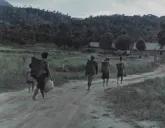


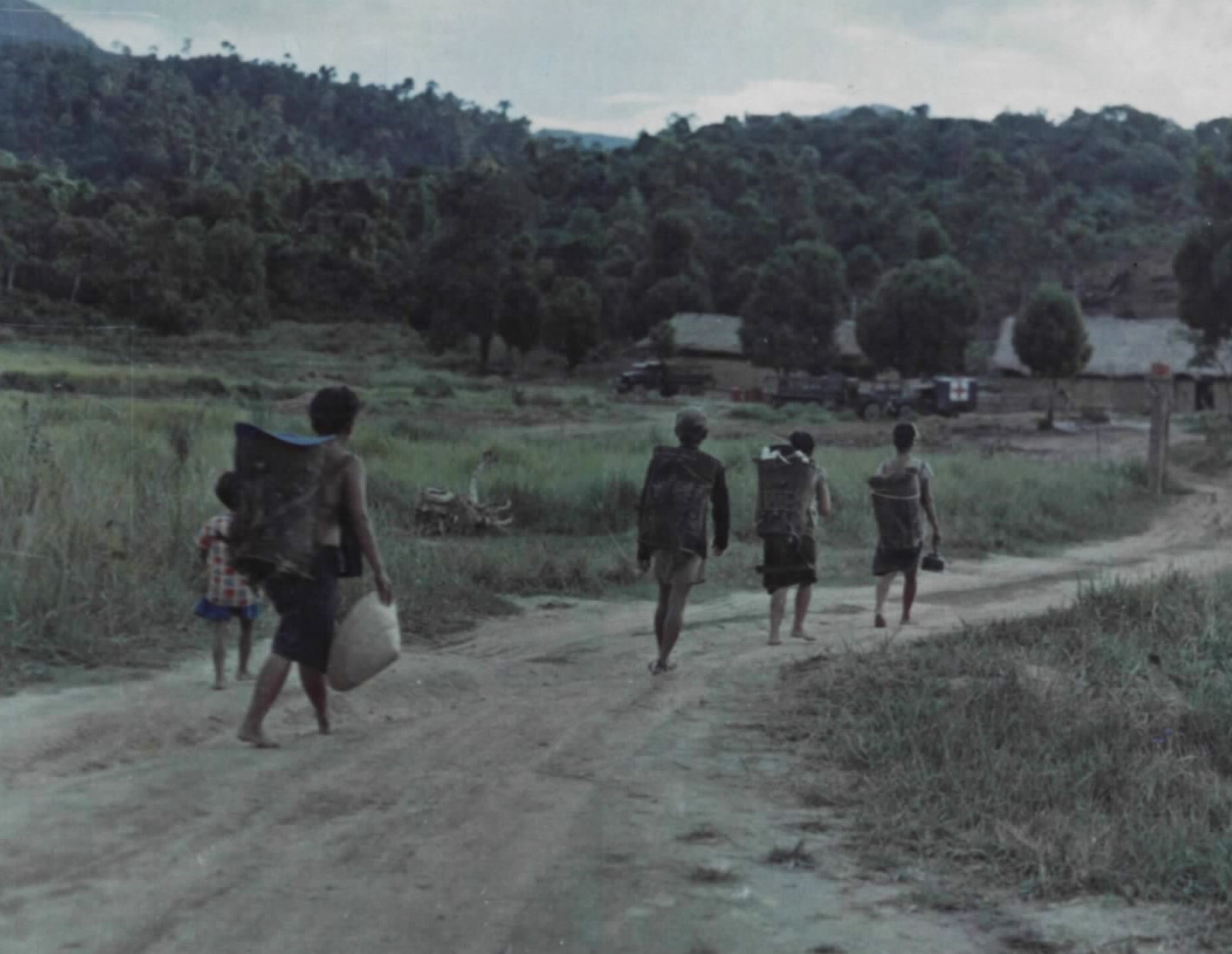
In the autumn of 1970 a South Vietnamese corps commander ordered the province chiefs of the highlands to empty every one of our hamlets that had been graded C or D. Families were given a few hours’ notice, in the harvest season, and told to leave the gongs and the jars behind. At Plei De Groi, 2,500 people were moved in; by the following October there were 750. Between 200 and 300 of them had died of exposure, hunger and disease. All of that is written down in an audit report that the United States government produced for its own Senate, and almost nobody has read it since.

How many of us were moved
Nobody counted us separately, and that is the first thing to say. Every wartime total either covers all the refugees in a highland province, most of them Vietnamese, or bundles us in as “Montagnards and other South Vietnamese.” What follows is the best that exists.
| Figure | Who gave it |
|---|---|
| At least 200,000 highlanders killed in the war, and more than 85 percent of the population driven from their villages | Gerald Hickey, as rendered by Human Rights Watch |
| At least 200,000 died, and 85 percent of the villages abandoned or destroyed | Hickey’s own wording in Window on a War — the same sentence, but about villages, not people |
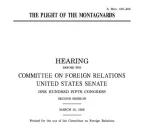
| More than a million of our people killed, and 85 percent of our villages destroyed or abandoned | Rong Nay, for the Montagnard Foundation, under oath before the US Senate, 1998 |
| Nearly 150,000 highlanders fled areas held by the Viet Cong | US Senate refugee subcommittee, on 1963 |
| About 62,546 Montagnards and other South Vietnamese relocated in Military Region 2, May 1970 to August 20, 1971 | US General Accounting Office, 1971 |
| 45,000 highlanders relocated under the 1970–71 order | Dispatch News Service International, March 1971 |
The gap between two hundred thousand and a million is not a rounding error, and we are not going to resolve it here. The lower figure is a scholar’s estimate; the higher one is what our own organization told the United States Senate. Both belong on this page, with the name of whoever said it. And for three of our peoples — the Bru, the Pacoh and the Katu — one account records that not a single house was left standing.
The order, and what it actually meant
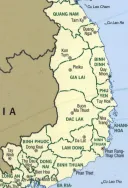
Late in the summer of 1970 Lieutenant General Ngô Dzu, commanding Military Region 2, ordered all his province chiefs to eliminate every highland hamlet rated C or D. Those are pacification grades. The trigger for emptying a village was not that anything had happened in it; it was the score in a column.
What that looked like on the ground, from the auditors’ findings:
- A few hours’ notice. Many families were moved with only a few hours’ warning, and transportation was not adequate.
- In the harvest. The moves began in the autumn harvest season, which left the relocated hamlets without their rice.
- Leave the gongs. Many of our people complained of being forced to leave behind their prized personal possessions — gongs, jars and hardwood furniture. A federal audit recorded the loss of a lineage’s ritual wealth as a finding. What those objects are is on Jars, rice wine and the buffalo feast.
- Without approval. Many people were relocated against their wills, without adequate preparation, and without the approval of the Central Pacification and Development Council.
- Not enough land at the other end. American advice was that a family needed at least two and a half hectares to survive. Some sites gave less than one hectare per family, and some as little as a quarter of a hectare.
- Somebody else on the old land. At Buon Kli B the auditors found that ethnic Vietnamese were by then farming the land promised to us.
Compensation existed on paper: 3,600 piasters a head for six months of rice, 7,500 piasters a family for building material, 8,500 piasters or ten sheets of aluminum roofing. The rice allowance had already been overtaken by prices — the cash for ninety kilograms of rice was 2,250 piasters, and ninety kilograms cost between 3,690 and 4,650 piasters on the market. And it did not always arrive. Of 736 people moved out of Darlac province in 1968, the auditors noted that they were not officially recognized as refugees; their benefits reached them in 1971, three years later.
The camps, by name
These are the places, as United States auditors found them in 1971.
| Site | People | What was there |
|---|---|---|
| Plei De Groi, Pleiku | 2,500 forcibly relocated; 750 living there by October | Six wells, no latrines, one school for 130 school-age children, a dispensary with very little medicine. Between 200 and 300 dead by March 1971. |
| Buon Kli B, Darlac | 6,244 forcibly relocated, February 1971 | Three wells, no latrines, a five-classroom school for 2,000 school-age children, a maternity clinic but no dispensary and no medicine. A spokesman said about twenty people had died of sickness and lack of food. |
| Buon H’Dok, Darlac | about 678 | The entire camp was about half a hectare. No wells, no latrines, no schoolhouse, no dispensary. No land to farm; the people worked as day laborers on a plantation. |
| Buon M’Bre, Darlac | 899 | The refugees dug their own wells. Twenty latrines. One classroom and two teachers for 300 school-age children. A dispensary with no medic and no medicine. The harvest would feed them about three months. The promised farmland was not provided. |
| Plei-Ia Maih, Pleiku | 775 | No wells, no latrines. Two classrooms and no teachers. One dispensary and one medic, with very little medicine. |
| Plei-Doch, Pleiku | 1,479, recorded as having moved voluntarily | No wells, no latrines, no schools, no dispensary, no medicine. The crops were poor because the soil was bad. |
| Cu Tanh 1, 2 and 3, Khánh Hòa | about 903 | Six wells for the whole camp area, no latrines, two classrooms, a dispensary. The promised rice and commodities were not delivered. A plantation on one side and a highway on the other, and no adequate farmland. |
Read the Plei De Groi line again. Two thousand five hundred people moved in. Seven hundred and fifty there a year later. Two to three hundred dead of exposure, malnutrition, tuberculosis and an influenza-type virus. Nobody has ever accounted for the rest.
The pattern was not confined to us. In Military Region 1, across 252 sites holding 450,000 people, over 84 percent of the sites reported no land available for cultivation, drinking water was inadequate at 111 of them, and 187 had no latrines. More than 90 percent were listed by the government as normalized when, by its own criteria, they were not.
The Americans who said no
The written American standard was clear. The consolidation of highland hamlets, the civil-operations command stated, is not voluntary unless communities as a whole have spontaneously requested or fully consented to the relocation.
And then, in the auditors’ own words: officials at the working level opposed these massive relocations; however, top officials in the organization, as far as the auditors could determine, made no representations to the South Vietnamese government to oppose the moves.
The Americans who knew the highlands said no, and it never went up the chain. Gerald Hickey, who had spent his working life with us, wrote afterward that forced relocations of populations for military purposes were ill advised — an attempt to create front lines in a war without front lines — and that some Americans leading the pacification program clung to the misguided notion that generating refugees was a plus for the government, when the rising number of refugees was in fact a sign of social disruption. The same audit found the reporting system itself unreliable, producing erroneous, misleading and confusing data. The program that emptied our villages was measured by numbers its own auditors would not stand behind.
What it did
A village is not a set of houses. It is a territory with boundaries the elders hold in memory, swiddens that belong to a lineage whether they are being farmed this year or lying fallow, graves, a water source, and a longhouse that the women own. Move the people and none of that moves with them.
The clearest small observation we have found is Hickey’s, in 1967: in certain Halang areas, under the population pressure caused by refugee relocations, farmers had begun to mark their swiddens with split bamboo sticks. Our land had never needed markers, because everyone knew whose it was. Under the weight of displaced people, it did.
The rest is measurable in what the camps lacked. A quarter of a hectare where two and a half were needed. Three months of rice from a harvest. Day labor on a plantation for families who had farmed their own land. Two hundred to three hundred dead at one site. And at the other end, the land itself was not waiting: it was being farmed by somebody else. The long arc of that is on The great migration and Pushed off our land.
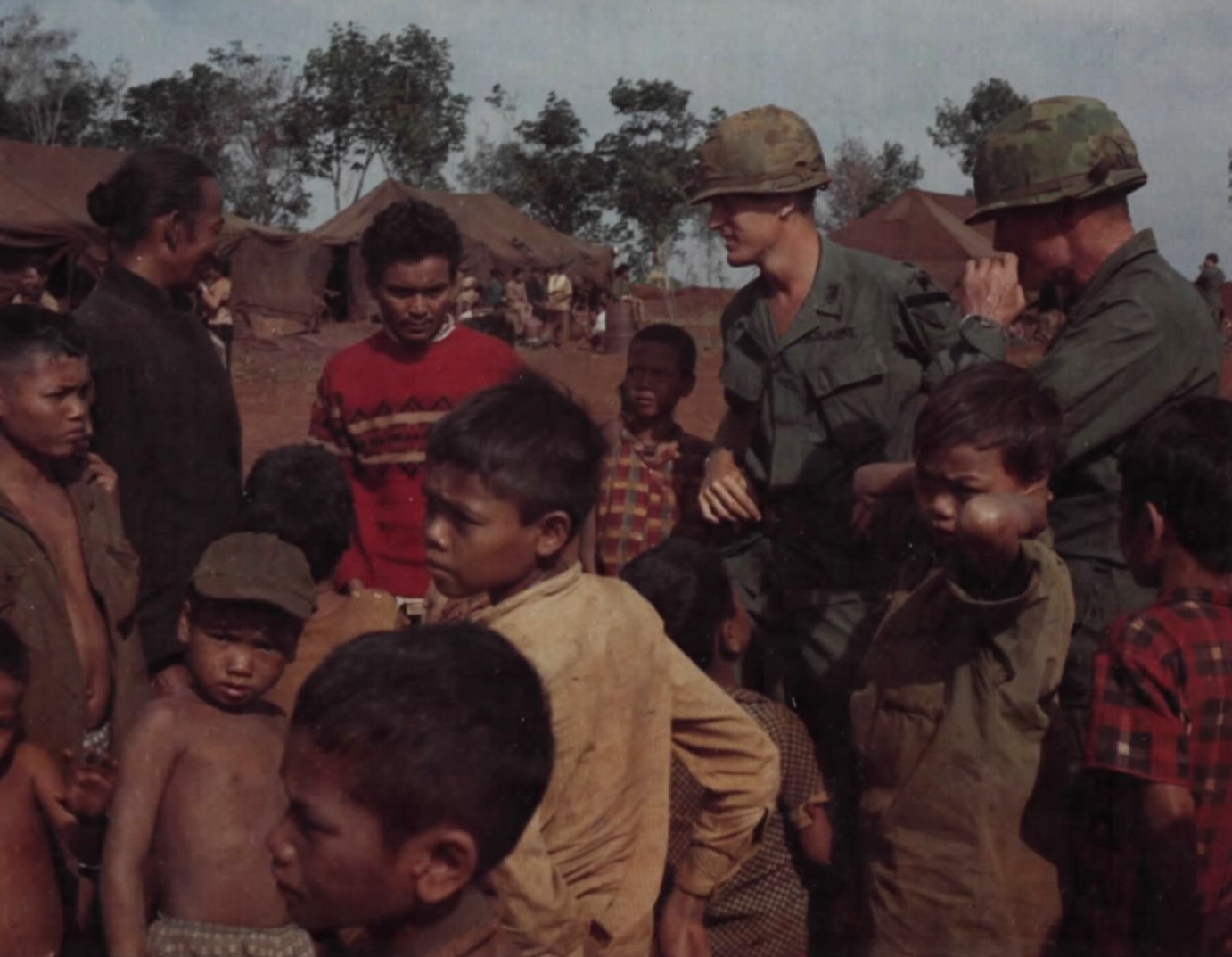

Sixteen words
We searched the war’s written record for one of our own people describing what being moved was like. We found a single sentence. In March 1971 a reporter at Buon Ma Thuot put the official claim — that the moves had been accepted — to a highland leader, who is not named in the story. He said: “All of them want to go back. There they had very good land. Here they can’t do anything.”
That is the whole of the contemporaneous Dega testimony about the largest displacement in our history. Everything else on this page was written by Americans, about us, for other Americans.
1975
In March 1975 the highlands were abandoned and the column went down Route 7B from Pleiku toward Tuy Hòa. Estimates of the column run from 160,000 to over 300,000 people; perhaps 60,000 reached Tuy Hòa and at least 100,000 were stranded. The road crossed Jarai country. No account we have found separates the highlanders in it from the rest, in the column or among the dead. See 1975.
What we do not know
There is no year-by-year count of highland refugees, because nobody made one. There is no mortality figure for the displacement as a whole; the only numbers we have are for two camps. We have found nothing on the civilian flight from the Ia Drang in 1965, no primary account of the mechanics of moving a single village into a strategic hamlet, and nothing at all documenting what relocation did to the longhouse or to the authority of a village headman and his court.
The testimony is missing from the archives because nobody collected it, not because it does not exist. The people who were carried out of their villages as children in 1970 and 1971 are in their sixties and seventies now, many of them in North Carolina. See How to record an elder.
Sources
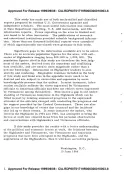
- US General Accounting Office, Follow-Up Review on Assistance to War Victims in Vietnam, B-133001 (1971), a report to Senator Edward M. Kennedy as chairman of the Senate refugee subcommittee — the 62,546 relocated in Military Region 2, the few hours’ notice, the gongs and jars, the compensation scales, the named camps and their conditions, the deaths at Plei De Groi and Buon Kli B, the land being farmed by others, and the failure of senior officials to object
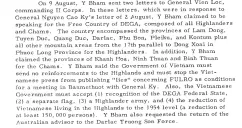
- Dispatch News Service International, “45,000 Montagnards: S. Viets order forced relocation of tribe,” The Michigan Daily, March 27, 1971 — General Dzu’s order to eliminate hamlets rated C and D, the timing in the harvest, the land figures, and the highland leader quoted at the end of this page
- Gerald C. Hickey, The Highland People of South Vietnam: Social and Economic Development, RAND RM-5281/1 (1967) — the decrees of 1958 and 1959 that took away the right to own the land we farmed, the word “reservations,” and the split bamboo sticks in the Halang swiddens
- Gerald C. Hickey, Window on a War (Texas Tech University Press, 2002) — the 200,000 dead and 85 percent of villages, relocation as an attempt to create front lines, and refugees counted as a success
- US Senate, Subcommittee to Investigate Problems Connected with Refugees and Escapees, Refugee Problems in South Vietnam, S. Rep. 89-1058 (March 1966) — the flight of 1963, the province table of January 1966, and the observation that the refugees were mostly children, women and older people
- US Senate Committee on Foreign Relations, The Plight of the Montagnards (March 10, 1998) — Figure of more than a million killed
- Human Rights Watch, Repression of Montagnards (2002) — Hickey’s estimate as HRW renders it, and the relocation into strategic hamlets
- Joe P. Dunn, “Kok Ksor and the Struggle for Cultural Survival,” Athens Journal of History 10 (2024) — the death toll of 200,000 to 220,000, and the Bru, Pacoh and Katu
- Carl Robinson, “Vietnam’s 50th — The Road of Death” — the size of the Route 7B column, by a former Associated Press correspondent who covered it
- “Doctors: Healing the Montagnards,” Time, January 13, 1967 — Dr. Patricia Smith at Kon Tum on what a highlander arriving at her hospital could be assumed to have
Compiled September 2026. The 1971 audit that supplies the named camps and their conditions appears not to have been used in any published account of our displacement, and we would be glad to be told otherwise.