







On September 13, 2007, Vietnam voted for the Declaration on the Rights of Indigenous Peoples and said nothing. Twenty-nine states explained their votes that day. Vietnam was not among them; it appears in the record of that meeting exactly once, in the list of the 143 in favor. In the years since it has told four separate UN mechanisms that the Declaration does not apply to anybody inside its borders — and in the same years, the treaty bodies that interpret the three covenants Vietnam did ratify have told it the opposite, in its own case file, naming us.
The vote, and the silence
| Votes | States | |
|---|---|---|
| For | 143 | including Viet Nam |
| Against | 4 | Australia, Canada, New Zealand, United States — all four later reversed their position |
| Abstained | 11 | Azerbaijan, Bangladesh, Bhutan, Burundi, Colombia, Georgia, Kenya, Nigeria, Russian Federation, Samoa, Ukraine |
| Not voting | 34 | of a membership of 192 |
General Assembly resolution 61/295, adopted at the 107th plenary meeting of the sixty-first session. What the Declaration contains, and why it reaches further than minority rights do, is on Indigenous rights at the United Nations. Four states spoke before the vote: New Zealand, the Russian Federation, Benin and Colombia. Twenty-nine spoke in explanation afterward, among them Japan, Thailand, India, Myanmar, Indonesia, Nepal, Bangladesh, Pakistan and the Philippines — every Asian state with a position to protect said what it was. Vietnam did not. It voted yes and left the room.
Vietnam gave no explanation of its vote, before the ballot or after it. That silence is a more interesting fact than any explanation would have been, because everything Vietnam has said since has been said somewhere else — to treaty bodies, to special rapporteurs, and in the review of its human-rights record — where the audience is smaller and the sentences are shorter.
What Vietnam says, and how it has changed
The position has been stated six times in fourteen years, and it has hardened in a way that is worth watching.
February 2012, to the Committee on the Elimination of Racial Discrimination. The explanation is almost sympathetic. There was no consensus about which groups were indigenous, so the word “minority” was used instead. The term “indigenous” had not been used since independence from colonial rule because of the negative connotations it carried: in the past it was a negative word, and the people it described were characterized as poor and of the lower class of society. That is an argument about the history of a word.
November 2023, to the same committee. “The State party did not use the term ‘indigenous peoples’ but rather ‘minority people’ for historical reasons.”
July 27, 2023, to four UN special rapporteurs and working groups. Four months earlier, answering a joint communication about three Rhade men, the Permanent Mission in Geneva had put it very differently, in a note verbale numbered 126/VNM.23:
“In Viet Nam, there are no indigenous people, nor do there exist so-called ‘indigenous Montagnard’. The way to call ‘the Montagnard’ is incorrect, even implying disparagement and is not recognized in the current list of Vietnamese ethnic groups.”
And, in the same paragraph:
“In fact, some individuals and organizations with bad intentions often take advantage of the concept of ‘indigenous people’ to spread false information, distort the situation in Viet Nam, undermine the great unity bloc of ethnic groups, incite secessionist ideas, threaten national security, and infringe upon Viet Nam’s sovereignty.”
Three denials in one paragraph: of the category, of the name, and of the good faith of anyone using either. Note also who is calling our name disparaging. The state that says “Montagnard” implies disparagement is the state whose own inherited word for us was Mọi, which means savage. See Who are the Dega and Names and words.
September 20, 2024, in an official UPR document under its own symbol. Paragraph 23 of A/HRC/57/7/Add.1 ends: “It is also important to clarify that in Viet Nam, there are no indigenous peoples as defined in certain international documents and treaties.” Not a disagreement; a definitional fact, asserted.
July 2025, to the Human Rights Committee. Viet Nam did not use the term “indigenous people,” using instead “ethnic minority” or “small minority.”
October 7, 2025, to special procedures again, in note verbale 198/VNM.25. Here the argument moves from vocabulary to ground:
“Currently, 54 ethnic groups live intermingled throughout Viet Nam’s territory, with no separate or exclusive land areas belonging to any single ethnic group.”
That is not a claim about a word. It is a denial that any of us has a territory, which is the predicate for articles 25 to 28 of the Declaration, and it is a claim that families in our villages can contradict with documents they are holding. See Land law and Got pushed off.
The drift is the point. In 2012 the word was avoided because colonialism had soiled it. By 2023 the concept itself does not apply, and using it is a national-security matter tending to secession. The same position, restated for thirteen years, has changed its reason twice and gotten harder each time.
What the state does recognize is set out in its own report to CERD in 2011: 54 ethnic groups, the Kinh the majority, the remaining 53 amounting to 12.253 million people, or 14.3 percent. An ethnic minority is defined there as an ethnicity with a smaller population than the largest one in a country that has more than one. The definition is arithmetic and nothing else. It has no element of priority, no element of territory, no element of institutions, and no element of self-identification — which is to say it excludes, by construction, every criterion on which an indigenous claim rests. The operative category is a headcount.
What the Declaration actually says
These are the articles that decide our cases, quoted from the text.
Two small points of accuracy that matter to anyone using this page in an argument. Article 32(2) says “free and informed consent,” not “free, prior and informed consent”; the word “prior” is carried by the phrase “prior to the approval of any project.” Articles 10 and 19 use the full three-part formula. We do not harmonize them, because quoting a legal text accurately is the only way to be taken seriously about it. Article 32 is the bauxite article: see Bauxite.
And article 27 deserves its own sentence. Look at what we already ask for on What we ask for: a procedure by which a village can register land held in common and contest a certificate issued over it, heard by somebody other than the authority that issued it. That is article 27, put in plain words, before we had read it back. Our asks are not invented. They are the Declaration’s own machinery.
The limiting clause, which we quote in full
“Nothing in this Declaration may be interpreted as implying for any State, people, group or person any right to engage in any activity or to perform any act contrary to the Charter of the United Nations or construed as authorizing or encouraging any action which would dismember or impair, totally or in part, the territorial integrity or political unity of sovereign and independent States.”
That is article 46(1), and it was the price of the 143 votes. It means the self-determination in article 3 is internal: autonomy and self-government under article 4, not a right to leave. That is a real constraint on what the Declaration delivers, and a page that quoted articles 3 and 26 without quoting 46(1) would be doing the selective reading we refuse elsewhere.
It also disposes of something. The note verbale of July 27, 2023, says that invoking indigeneity incites secessionist ideas. The instrument Vietnam voted for forecloses that reading in its own text. Article 46(1) is not an argument against us. Used properly, it is the answer to the charge.
What the treaty bodies have told Vietnam
This is the part of the record that does work, because it is not about a declaration. It is about treaties Vietnam acceded to in 1982 and the committees that interpret them.
| Year | Body | Treaty | What it said to Vietnam |
|---|---|---|---|
| 1997 | CERD | Racial Discrimination Convention | General Recommendation XXIII, addressed to all states: recognize and protect indigenous peoples’ rights to own, develop, control and use their communal lands; ensure no decision directly touching their rights is taken without their informed consent; where lands were taken without free and informed consent, take steps to return them, with just compensation where return is impossible. Ten years before the Declaration |
| 2012 | CERD | same | “While the State party supported the adoption of the United Nations Declaration… the Committee notes the State party’s reluctance to engage in open and inclusive discussions on the recognition of indigenous peoples.” It invited Vietnam to attend to self-identification “including Khmer Krom and Degar (Montagnard),” and to consider ratifying ILO Convention 169. It recorded concern at “the displacement of minorities and the confiscation of ancestral lands without prior consent” |
| 2014 | CESCR | Economic, Social and Cultural Rights | Citing the Declaration by name as the source of the principle, it recommended that Vietnam respect the right of everyone to identify as belonging to an indigenous people |
| 2019 | Human Rights Committee | Civil and Political Rights | “The Committee is concerned that the State party does not recognize the indigenous peoples in Viet Nam.” It asked Vietnam to carry out consultations with indigenous peoples “with a view to obtaining their free, prior and informed consent,” and to conduct any relocation according to international standards |
| 2023 | CERD | Racial Discrimination Convention | Vietnam “has been reluctant to engage in open and inclusive discussions on the recognition of Indigenous Peoples, including the Khmers-Krom and Montagnards, in line with the United Nations Declaration”; it should “recognize Indigenous Peoples in accordance with the principle of self-identification”; and it found that communities “are only notified 15 days in advance that their land has been acquired and are subject to relocation, without compliance with the principle of free, prior and informed consent” |
Two of those lines deserve stopping over. In 2012 a UN treaty body named us — Degar (Montagnard) — in its concluding observations on Vietnam, and in 2023 it did it again. And fifteen days’ notice that your land has already been acquired is not a defective consultation. Consultation under article 19 must come before the measure, in order to obtain consent. Fifteen days after the fact is the exact inverse of the standard, and a UN committee has said so about Vietnam in writing.
The same 2023 dialogue also took up the arrest and prosecution of about a hundred of our people after the attacks in Dak Lak that June (see Cu Kuin, 2023). The committee was being asked in one session to consider both halves of the position: that we do not exist as a category, and what happens to us.
The honest caveat, which we state rather than hope nobody notices: concluding observations are authoritative interpretations, not judgments. Nobody can be made to comply with them. The argument survives that, because the point is not that Vietnam has been convicted of anything. It is that the distinction Vietnam relies on — binding treaty on one side, non-binding declaration on the other — has been substantially bridged in practice, by the very bodies with authority to interpret the treaties, in Vietnam’s own file, five times over twenty-six years.
At the 2023 review the Committee asked three direct questions: would Viet Nam accept the existence of indigenous peoples and their rights in Viet Nam; did it plan to ratify ILO Convention 169; and what was being done to promote self-identification. The summary of that meeting records no substantive answer to any of them. On land, the delegation said that actions to reclaim it were conducted in close consultation with local communities and that resettlement conditions needed to be better than the land being claimed.
What the Declaration is not
It is a General Assembly resolution. It is not a treaty; nobody signed or ratified it; it creates no cause of action; no state can be taken to court for breaching it as such. Vietnam took on no new obligation by voting yes in 2007. Canada, endorsing it in 2009, called it “a non-legally binding document” that “does not reflect customary international law”; the United States called it “not legally binding or a statement of current international law” while allowing it “moral and political force.”
Against that there are three counter-arguments, and they are not equally strong, so we keep them apart. The strongest form — that the Declaration reflects customary international law — is contested and should be presented as contested. The International Law Association at its 2010 conference called it a declaration deserving of the utmost respect. James Anaya, then Special Rapporteur, put the defensible version: he did not claim the whole Declaration is custom; he said the position that none of it is custom is manifestly untenable, and he emphasized the Declaration’s remedial character — that it connects to obligations states already have under other instruments. The second argument, that the Declaration restates rights already recognized rather than creating new ones, is partly true and partly not: the text embodies real compromises limiting indigenous claims, article 46 above all. The third is the one that actually works, and it is the table above.
Two older texts matter here more than the Declaration does, because they interpret treaties Vietnam has ratified and they predate 2007 entirely. CERD’s General Recommendation XXIII of 1997 is in the table. The Human Rights Committee’s General Comment 23 of 1994, on article 27 of the Civil and Political Rights Covenant, cuts both ways and we say so: it confirms that minority rights are not self-determination, which supports Vietnam’s structural point — and it also establishes that even on the minority-rights side of that line, the culture article protects “a particular way of life associated with the use of land resources, especially in the case of indigenous peoples,” including traditional activities such as fishing and hunting. That is a fallback we hold whatever label anyone applies to us.
The Convention nobody mentions
ILO Convention 169 of 1989 is the binding treaty in this field, and Vietnam has not ratified it. Almost every argument about it concerns the definition of indigenous. But the Convention covers two categories, not one, and the first is usually overlooked. Article 1 applies it to:
“tribal peoples in independent countries whose social, cultural and economic conditions distinguish them from other sections of the national community, and whose status is regulated wholly or partially by their own customs or traditions or by special laws or regulations”
— and separately to peoples regarded as indigenous by descent from the populations inhabiting the country at the time of conquest, colonization or the establishment of present state boundaries. Article 1(2): “Self-identification as indigenous or tribal shall be regarded as a fundamental criterion.”
The first limb says nothing about who was there first. It asks whether a people’s conditions set them apart from the rest of the national community and whether their status is regulated in part by their own customs. Vietnam’s whole stated objection — that the concept is inconsistent with how its ethnic communities formed, that the 54 groups have lived intermingled, that no one holds priority — is an objection to the second limb only. It does not touch the first. See Customary law and the village court, which is a description of exactly the condition limb (a) names.
The Asian argument, and its answer
Vietnam is not alone, and it did not invent this. Indonesia said the quiet part aloud in 2007, explaining its own position: because Indonesia’s entire population at the time of colonization remained unchanged, the rights in the Declaration were accorded exclusively to indigenous people and did not apply in the Indonesian context. India said self-determination applied only to peoples under foreign domination, not to a section of a people or a nation. Bangladesh abstained partly because “indigenous people” had never been defined. Vietnam said none of this in 2007 and has said all of it since 2022.
The answer came from the UN’s own mandate holder in 2013, and it is the strongest passage we know of on the subject, because it concedes the premise before taking it apart. Yes: the vast majority of people in Asia may be considered, in a literal sense, indigenous to the region. That is not the question. The Declaration is directed to “those groups indigenous to a territory that are in non-dominant positions, and that have suffered and continue to suffer threats to their distinct identities and basic human rights in ways not felt by dominant sectors of society.” The notion that the entire population is indigenous, the report goes on, has been used as a justification for denying recognition to particular indigenous peoples. And the recommendation removes the escape route entirely: Asian states should commit to recognizing the rights of indigenous peoples as set out in international instruments, “irrespective of the terminology used under national law and policy,” and should be guided by how these groups perceive and define themselves.
Irrespective of the terminology. The rights do not depend on the label, which means the label is not the state’s to withhold. We note, because it is true and it is not in our favor, that when that report listed groups in Viet Nam it named the Tay, Thai, Hmong, Muong and Khmer. It did not name us.
The empty chair
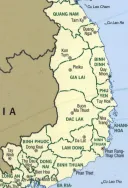
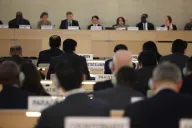
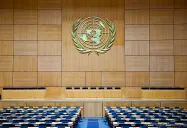
In Geneva, from July 12 to 16, 2010, the Expert Mechanism on the Rights of Indigenous Peoples met — the one body in the UN system created specifically to advise on these rights. Our own delegation went. Vietnam’s representative told the meeting there were no indigenous peoples in Vietnam, only minority groups, and our speakers were struck from the roster. The statement they had prepared argued that we are indigenous to the Central Highlands, that Vietnam had endorsed the Declaration in 2007, and that it had neither implemented it nor translated it.
The incident is corroborated from outside our own account: UNPO’s submission to CERD in January 2012 records that a Vietnamese representative sought to block an indigenous Montagnard organization’s participation because there were no indigenous peoples in Viet Nam.
The argument about a word, made visible: a delegation deleted from a list, in the one room built for it. See The UN record and Our organizations.
Even the Declaration is policed
At the 2023 CERD session, an expert put to the delegation that Khmer Krom young people were being held in police custody for sharing information online about the Declaration and distributing translated booklets of it and of the Civil and Political Rights Covenant. In the same session Vietnam explained that it did not use the term “indigenous peoples” for historical reasons. A state that voted for a text in silence in 2007 was, sixteen years later, detaining people for translating it. The Khmer Krom are not us; the state is the same, and so is the reflex.
Why the word matters to us
Under minority rights, a Dega is a person entitled to speak Rhade and go to church. Under the Declaration, the Dega are peoples with rights to the lands we have traditionally owned, occupied or otherwise used, to consent before relocation, to redress when land has gone without it, and to our own institutions. Every land case in this library — coffee, the dams, rubber, bauxite — reads differently depending on which framework applies. The refusal of the word is the removal of a body of law, and the note verbale of July 2023 shows it is enforced as well as asserted.
The Expert Mechanism said the causal part out loud in 2025, about the Khmer Krom rather than about us: the state’s refusal to recognize them as Indigenous Peoples “has facilitated appropriation of their ancestral lands.” Non-recognition is not a separate grievance running alongside dispossession. It is the mechanism of it.
We identify ourselves as an indigenous people. Self-identification is a fundamental criterion in ILO Convention 169, it is the principle CERD has pressed Vietnam to honor twice, and it is where the question begins. Article 13(1) of the Declaration gives us the right “to designate and retain their own names for communities, places and persons.” Set that against a note verbale that calls our name incorrect and disparaging, and the dispute is no longer about anthropology.
What we have not been able to check
We have not read the verbatim record of the 2007 meeting itself, A/61/PV.107; our finding that Vietnam did not speak rests on the UN press release for that meeting, which lists every state that did, and on the voting record. It is a negative claim and we flag it as one.
We have not read the 2011 report of the Independent Expert on minority issues on her 2010 visit, which included the Central Highlands, and so we do not quote it. We have not been able to retrieve the reservations and declarations Vietnam entered to the three covenants, and we do not assert that there were none. And there is a conflict between this library’s own pages about the date Vietnam acceded to the Genocide Convention — June 9, 1981 on What Vietnam signed, July 9, 1981 in a university ratification table that is demonstrably out of date elsewhere. We have flagged it rather than quietly picked one.
Sources
- UN Digital Library, record and voting record for A/RES/61/295, and press release GA/10612 of September 13, 2007, which lists every state that spoke before and after the vote — and in which Vietnam appears only in the list of those in favor
- The Declaration itself, quoted from the text published by the mandate of the UN Special Rapporteur on the rights of indigenous peoples, and also available from UN DESA
- Permanent Mission of Viet Nam, Geneva, reply No. 126/VNM.23 of July 27, 2023, answering joint communication AL VNM 4/2022 — the three denials, and the passage about secessionist ideas. And reply No. 198/VNM.25 of October 7, 2025 — the terms Vietnam uses instead, and the sentence about no separate or exclusive land areas
- A/HRC/57/7/Add.1, September 20, 2024 — Viet Nam’s views on the recommendations of its fourth Universal Periodic Review; paragraph 23
- CERD/C/VNM/10-14, Viet Nam’s report to CERD, September 21, 2011 — the 54 groups, the 12.253 million, the 14.3 percent, and the arithmetical definition of an ethnic minority at paragraph 32
- CERD/C/VNM/CO/10-14 (2012) — paragraph 12, which names “Degar (Montagnard)”, and paragraph 15 on ancestral lands; and OHCHR’s summary of the February 2012 dialogue — the negative-connotations explanation
- CERD/C/VNM/CO/15-17 (2023), with the passages on recognition and on fifteen days’ notice as block-quoted in the UK Home Office’s Country Policy and Information Note on Vietnam (December 2024), pp. 29–30; and OHCHR’s summary of the November 30, 2023 dialogue — the three unanswered questions, the delegation’s reply on land, and the Khmer Krom booklets
- CCPR/C/VNM/CO/3, August 29, 2019, paragraphs 55–56 — the Human Rights Committee on non-recognition and on free, prior and informed consent
- E/C.12/VNM/CO/2-4, December 15, 2014 — CESCR invoking the Declaration by name on self-identification
- CERD General Recommendation XXIII (1997) on indigenous peoples, and Human Rights Committee General Comment No. 23 (1994) on article 27 — both of which interpret treaties Vietnam ratified in 1982, and both of which predate the Declaration
- A/HRC/24/41/Add.3, July 31, 2013 — the Special Rapporteur’s consultation on Asia; paragraphs 6, 9, 31 and 39, and the list at 7(l) which does not include us
- ILO Convention No. 169 (1989) — article 1(1)(a), 1(1)(b) and 1(2)
- A/HRC/EMRIP/2025/3, May 6, 2025 — the Expert Mechanism on non-recognition as the mechanism of land appropriation, said of the Khmer Krom
- Our own account of the Expert Mechanism session of July 2010, and UNPO, alternative report to CERD’s 80th session, January 2012 — the two independent accounts of the 2010 exclusion
- Karen Engle, “On Fragile Architecture: The UN Declaration on the Rights of Indigenous Peoples in the Context of Human Rights,” European Journal of International Law 22:1 (2011) — the Canadian and United States characterizations, and the restatement argument; and Paul Joffe, UN Declaration on the Rights of Indigenous Peoples Not Merely “Aspirational” (2015) — the International Law Association’s conclusion and Anaya’s formulation
- IWGIA, Vietnam
Compiled September 2026. The line about not having found Vietnam’s explanation of its 2007 vote is replaced: it gave none. Quotations from UN documents keep the spelling of the original, including “Viet Nam” as the UN writes it.