











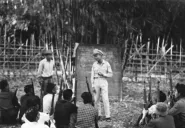
The Republic of Vietnam began to lose the war in our country, at Buon Ma Thuot on March 10, 1975, and it lost the highlands in two weeks. For our people the spring of 1975 was not an ending. Our minister asked the Americans for protection and was refused. Two thousand of our people waited on a beach at Nha Trang for a ship that never came. Our leaders in Phnom Penh were handed to the Khmer Rouge. And in the months that followed, the men who had served beside the Americans, and many who had not, were taken to prison or went into the forest. This page tells that spring and the year after it.
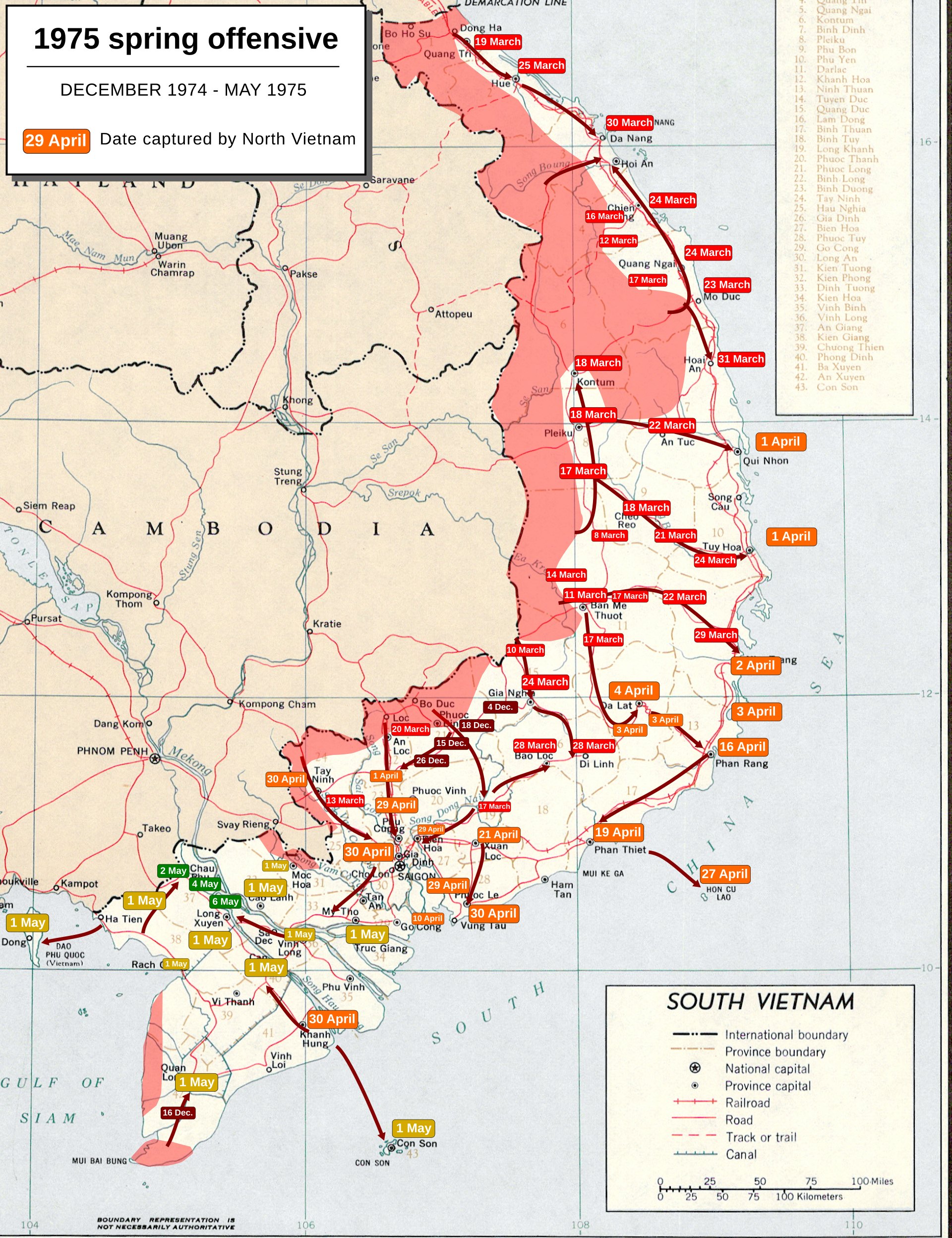

Buon Ma Thuot, March 10–11
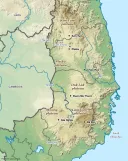
The North Vietnamese came out of Cambodia with tanks in the first days of March and struck at Buon Ma Thuot, the Rhade town that was the capital of Darlac, on the morning of March 10. The standard account of the offensive records who was holding it:
“The defense of Buôn Ma Thuột, therefore, was entrusted to a single Ranger group and provincial Popular and Regional Force units composed mostly of Montagnards.”
The town fell the next day. What our own people did in those two days is disputed, and we give every account we have found, because the question has been used against us ever since.
- The American journalist David Butler, in The Fall of Saigon, reported that partisans of FULRO guided the attacking troops to the approaches to the town and joined in the fighting. The US Marine Corps’ official history of 1973–1975 repeats him.
- A South Vietnamese Marine officer, Lieutenant Colonel Tran Ngoc Toan, told the same history of a man he met afterward in a prison in the North: “a Montagnard chief who told me that in a top secret meeting with an envoy of Hanoi’s Politburo held in the jungle near the juncture of South Vietnam, Cambodia and Laos, the Communists promised self-government for the Montagnards in return for cooperation in defeating the ARVN in Military Region 2. He said that after leading the NVA tanks into Ban Me Thuot which helped conclude that battle in a victory for the Communists, the North Vietnamese immediately took him prisoner.”
- Human Rights Watch, relying on a journalist’s account from 2001, writes of “a FULRO faction that supported the NLF” that agreed not to warn Saigon that the tanks were coming.
- Michael Benge, the American aid officer who knew the FULRO leaders, writes that North Vietnamese propaganda men under Y Bih Aleo asked both FULRO factions to stand down, that “only the rogue unit led by Nay Guh agreed to a stand-down, but after the takeover of Ban Me Thuot, the execution of Montagnards in both FULRO elements began.”
Read together, the four accounts agree on more than they seem to. The North made promises to some of our people before the attack. At most one faction took them. And the reward, for the chief in Toan’s prison and for the FULRO men of both factions in Benge’s account, was prison or death. The promise the North made in the forest before Buon Ma Thuot was the same promise it had made since 1960, and it was kept the same way; see Highlanders on the other side.
On March 11 the South Vietnamese air force bombed the Rhade village of Buon Pa Lam. Our own history records 125 killed and 210 wounded, and the whole village burned. We have found it in no American or Vietnamese account. It is on the register of massacres.
The road to the sea
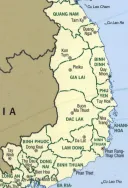
On March 14, at Cam Ranh, President Nguyễn Văn Thiệu ordered his commander in the highlands, General Phạm Văn Phú, to give up Pleiku and Kon Tum and bring the army down to the coast. The only road still open was an old, broken provincial road, Route 7B, from Pleiku south through Cheo Reo, the Jarai town of Phu Bon province, and down the valley of the Ba River to Tuy Hòa. Phú and his staff flew to Nha Trang. The army set out by road on March 16, and the people of the highland towns set out behind it.
Our own history records what Thiệu asked the Americans for in the same days: that “the U.S. Air Force consider the Central Highlands as a free bombing area.” Our villages were still there.
The column jammed at Cheo Reo, where the soldiers and the refugees met on one road, and the North Vietnamese caught it there. By the South Vietnamese army’s own estimate, as the standard account reports it, “only 20,000 of the 60,000 troops that had started out from Pleiku finally reached the coast. Of the estimated 180,000 civilians that fled the highlands with the column, only about 60,000 got through.” Nobody counted how many of the dead were ours. The Border Ranger battalions of the highlands, many of them Dega, were left, in Benge’s words, “Lacking air, artillery and reinforcement support”, and “they soon ran out of ammunition.”
The Americans who had fought beside our men were gone. The American Legion told the US Senate in 1998 what that meant to the men who were left:
“Many of the Montagnards held out some degree of hope at the time of the total U.S. withdrawal from South Vietnam in 1975, that their American allies would be returning to the Highlands to rejoin them. That was not to be.”
April 4: the request that was refused
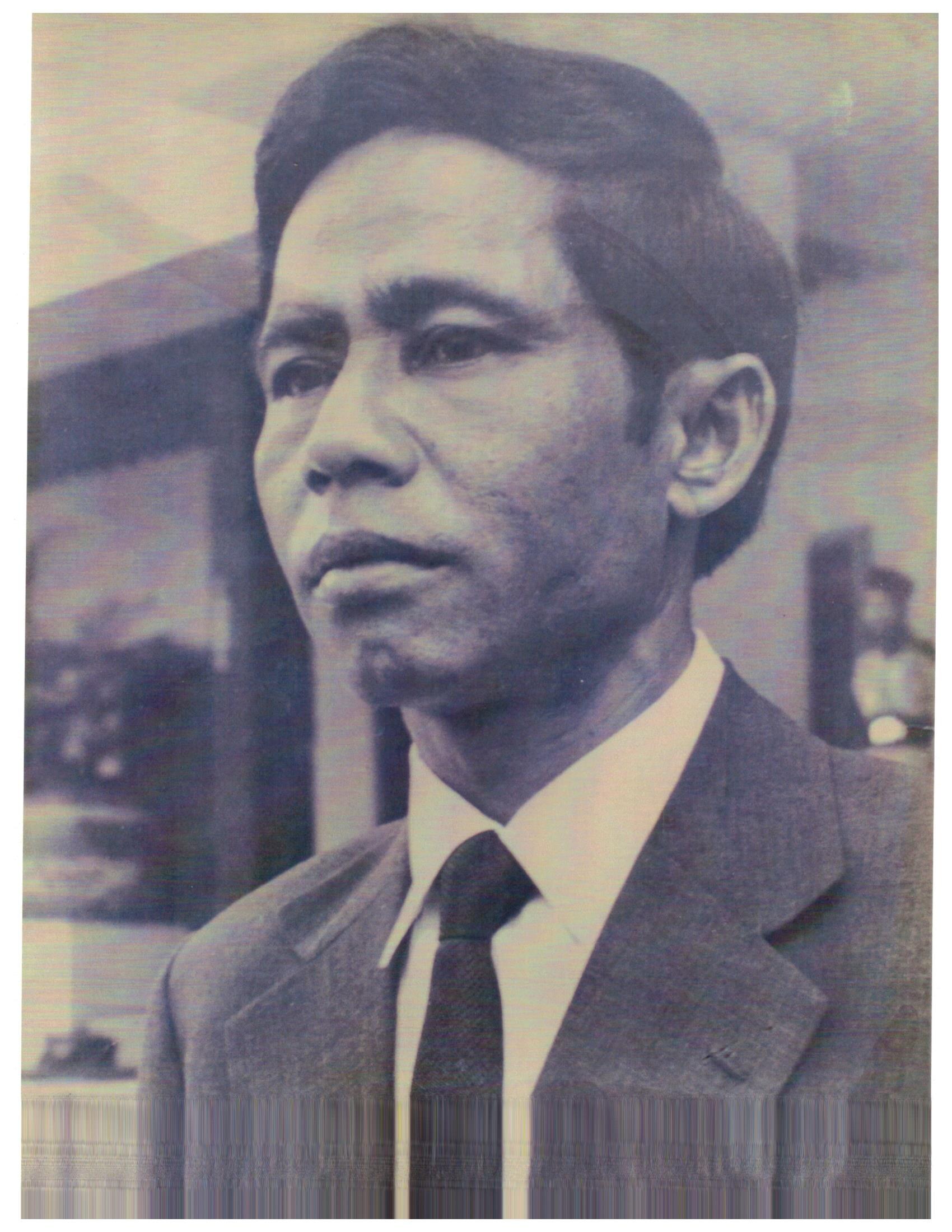
On April 4, 1975, in Saigon, Nay Luett, the Jarai who was Minister for the Development of Ethnic Minorities, called an emergency meeting at his ministry with American officials: George Jacobson, assistant to the American ambassador, Colonel Lamar “Mack” Prosser, and Edward Sprague, the American who knew our leaders best. Our own history records what he asked:
“Nay Luett asked for protection for the Montagnard leaders and people because he knew genocide would be committed upon the Montagnard people. He also proposed to organize a 50,000 member strong Montagnard Force, with support from the United States, to defend the Montagnard people in the Central Highlands, but Mr. Jacobsen and the South Vietnam government refused.”
Benge, who tells the same meeting, adds that the Americans implied that FULRO and other Montagnards should go to the jungle and that the United States would support them there: “That support also never materialized.” Nay Luett, Benge writes, then added to the list of people to be evacuated almost a hundred Dega children who were at school in Saigon. They were not taken out either.
The two tellers differ on the details, and they are not independent of each other. Both agree on what was asked and on the answer.
The beach at Nha Trang
As the highlands fell, some of our soldiers from Buon Ma Thuot and Phu Bon reached the coast and joined the Mike Force men at Nha Trang. Ed Sprague gathered as many of our people there as he could. The American historian John Prados, as Dan Southerland of Radio Free Asia summarized him in 2018:
“Ed Sprague, a senior U.S. advisor in the highlands who knew Montagnard leaders well, arranged to get some 2,000 Montagnards to Nha Trang. But much to Sprague’s lasting regret, the Montagnards stood on the beach waiting for an American ship that never came.”
Benge writes that the American consul general in Nha Trang, Moncrieff Spear, had given assurances that US Navy ships would come for them, “however, the evacuation never materialized.” Nha Trang fell on April 2. We do not know the names of the two thousand, or how many of them lived. Their families in North Carolina may.
Phnom Penh, April 17
In the same weeks the Khmer Rouge took Phnom Penh, where the president of FULRO, Y Bham Enuol, had lived under guard since 1969. He, his family and more than a hundred of his followers took refuge in the French embassy. The Khmer Rouge made the French hand them out, and they were killed. The Bunong soldiers of the Khmer Republic, recruited from a refugee camp in our country, died the same day. Kok Ksor, a highland officer of the Cambodian army, was in the United States on a training course; his wife, H’li Nie Hrah, got their children out of the city. The whole story is on Y Bham Enuol in Phnom Penh.
The men of FULRO in the forests of Mondulkiri did not learn that their president was dead for seventeen years.
April 30, and the first months
Saigon fell on April 30. The new government had promised our people autonomy for fifteen years. Gerald Hickey, the American anthropologist who had worked among us from 1964 to 1973, wrote what he learned from the highlanders who reached him afterward:
“Peace, however, did not return to the highlands. It soon became apparent that the oft-promised autonomy for the highlanders was only a propaganda ploy.”
Human Rights Watch, from Hickey and other sources, set out who was taken: “Those who had worked with U.S. Special Forces or FULRO were sent to re-education camps,” and “all of the highland leaders from the ministry and those who had been active in provincial administrations and programs were captured and incarcerated either in jails or ‘reeducation camps.’” Nay Luett was one of them. Paul Nưr, who had been minister before him, was another. See Paul Nưr and Nay Luett: the ministry years.
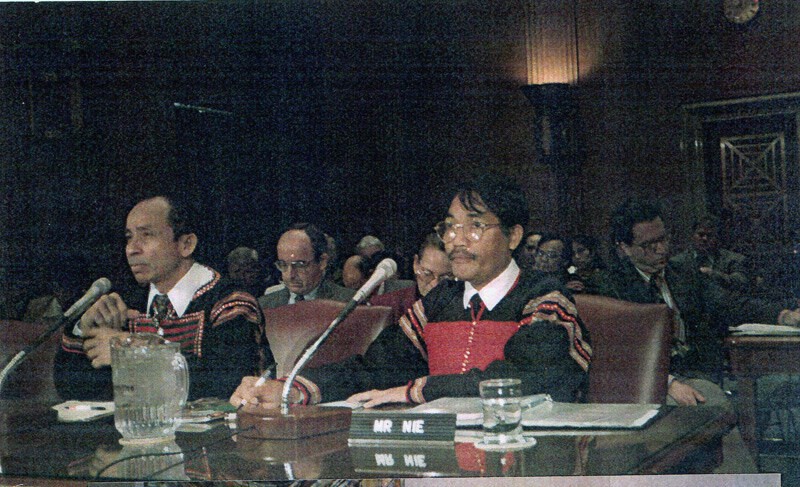
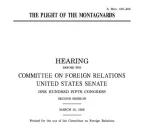
Our own people told the US Senate what those months were. Rong Nay, on March 10, 1998:
“After Hanoi occupied South Vietnam in 1975, all the property of the Montagnard people had been confiscated. Our basic freedom, politics, and religious activities are outlawed. Our legal rights cease to exist under communist law. All the Montagnard leaders and preachers have been arrested and jailed.”
Y Hin Nie, president of the Montagnard Dega Association, told the same hearing that after 1975 “churches have been closed,” that the authorities had turned 80 percent of them into storehouses, and that “Our association with the Special Forces was evidence of the Montagnards’ status as traitors to the post-1975 Communist Government of Vietnam.”
The men who had served with the Americans went to prison one by one. K’Sao Krajan, who had won an American Bronze Star, was held for four years. Y Monah, the border scout, for five. Ykhiem Ayun, a Mike Force soldier wounded four times, hid, was caught at Pleiku, and was not released until 1992. Their stories are on Mike Force, SOG and the special operations war.
The land
With the prisons came the settlers. Human Rights Watch records that the new government set out to “settle ethnic Vietnamese in New Economic Zones in the highlands while aiming to relocate highlanders to the valleys to grow rice and industrial crops, rather than continuing their ‘unstable nomadic life.’” The program had a name, định canh định cư, fixed cultivation and fixed residence. In 1998 Rong Nay told the Senate what it had come to: the government “brought 2 million Vietnamese from the North to settle throughout the central highlands and forced the Montagnards to leave their villages and go live in the mountains where the land cannot grow anything.” The land story is on Land taken for coffee and Pushed off.
The Dega who had chosen the other side
It did not matter which side a man had fought on. Y Bih Aleo, R’com Briu and Y Ngong Nie Kdam had served the Front for twenty years. Our own history records that they were among the leaders who were killed. The Vietnamese state’s own biographies say otherwise, and we do not use them; we cannot settle it. What is certain is that none of the Front’s promises to our people — autonomy, our land, schools in our languages — was kept to the Dega who had fought for it either. That disposes of the argument that what happened to us after 1975 was punishment for choosing wrongly in the war. See Highlanders on the other side.
Into the forest
Some of the men who were not caught went into the forest, and the men who escaped from prison went after them.
Our history records that more than twelve thousand of our people went into the forests of Vietnam, Cambodia and the Thai border after 1975, under Y Ghok Nie Krieng with Rong Nay as his assistant commander, and that more than eight thousand of them died there. That war lasted until 1992. It is told on FULRO, Re-education and the forest, 1975–1992 and Mondulkiri, 1992; the camps are on The camps.
What the word “after” means
Histories of Vietnam treat 1975 as an ending. For our people it was the middle of the story. The land programs of 1957 and of 1976 differ in vocabulary and scale rather than in kind; both moved our villages off our land and put others on it. The prisons of 1975 were followed by the prisons of 2001 and 2004. Kok Ksor, who lost his president in Phnom Penh that April, put it in one sentence many years later: “For our people – the Montagnards – the Vietnam War did not end in 1975.”
What we do not know
The names of the two thousand on the beach at Nha Trang, and what became of them.
The Dega dead of Route 7B, and of the Border Ranger battalions left behind in the highlands.
The Montagnard chief in Tran Ngoc Toan’s prison: who he was, and whether he lived.
The hundred Dega children at school in Saigon in April 1975.
The first months in each village: who was taken, and when. If your family remembers the spring of 1975, please record it; see How to record an elder, and read Reporting safely first if you are in Vietnam.
See also: The battles fought on our land, Y Bham Enuol in Phnom Penh, The camps, FULRO, Massacres of our people.
Sources
- US Senate, Committee on Foreign Relations, The Plight of the Montagnards, March 10, 1998 — the testimony of Rong Nay and Y Hin Nie, and of the American Legion
- George R. Dunham and David A. Quinlan, U.S. Marines in Vietnam: The Bitter End, 1973–1975 (US Marine Corps History and Museums Division, 1990), at the Internet Archive — Butler’s report and Tran Ngoc Toan’s account, p. 72
- Michael D. Benge, “The History of the Involvement of the Montagnards” (2010) — an advocate who knew the men: the stand-down, the meeting of April 4, Nha Trang and the Border Rangers
- Dan Southerland, “An Update on the Montagnards of Vietnam’s Central Highlands,” Radio Free Asia, October 23, 2018 — Sprague and the beach, from John Prados, The Hidden History of the Vietnam War
- Human Rights Watch, Repression of Montagnards (2002), chapter III — who was taken, and the New Economic Zones
- Gerald C. Hickey, Free in the Forest: Ethnohistory of the Vietnamese Central Highlands, 1954–1976 (Yale University Press, 1982), preface
- “1975 spring offensive”, Wikipedia — the defense of Buon Ma Thuot and the South Vietnamese army’s estimate of the losses on Route 7B
Compiled September 2026. The quotations on this page were checked against the texts they come from. Where the accounts of these months disagree, we give each with its teller. The spring of 1975 is within living memory, and we are recording it while we can.