
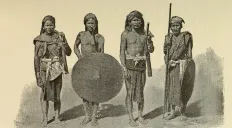

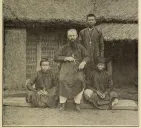


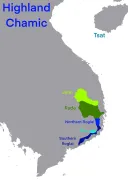
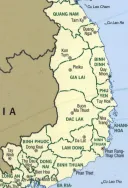






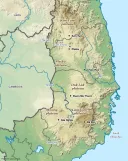

Four peoples hold the southern end of our country, from the Lang Biang plateau around Da Lat down to the hills behind the old Cham coast. Two of them, the Koho and the Ma, speak Mon-Khmer languages and are close kin. Two of them, the Churu and the Raglai, speak languages almost identical with Cham. The Koho and the Ma are easy to run together, and it is a mistake to: among the Koho a woman owns the house and the land and her daughter inherits them, and among the Ma a woman leaves her father’s house at marriage and owns nothing. They are neighbors, they are related, and on the thing that decides most of a life they are opposites.
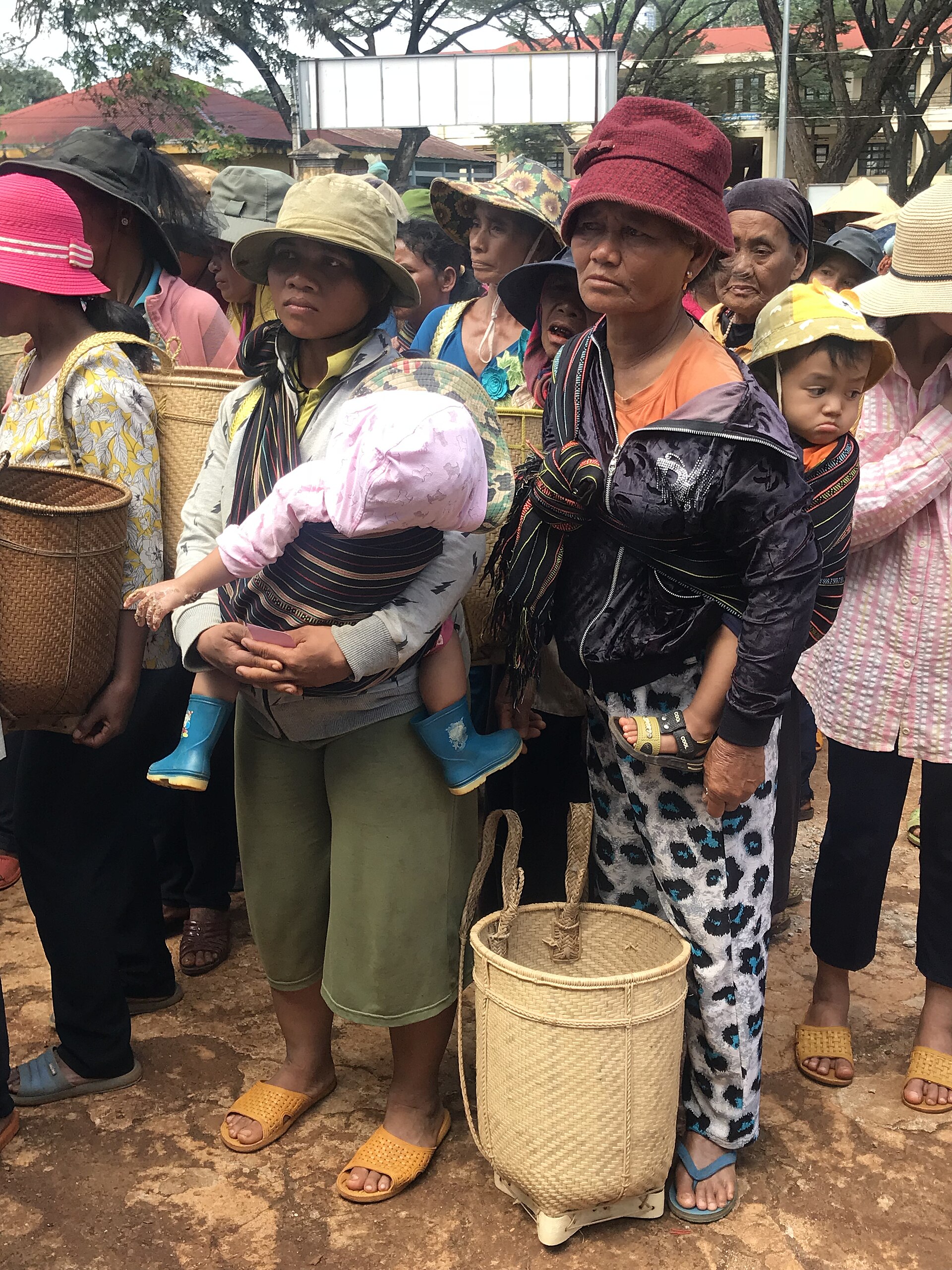

“Koho” is a word from outside
It is a linguist’s word before it is a people’s word, and the American handbook that did most to spread it says so in its own sentence: the dialects are so close that anyone can understand anyone, and “since no language barrier exists among the Koho, anthropologists use the linguistic term Koho as the generic name for all these tribes.” That is a cover name, fitted over a set of peoples who each have a name of their own.
The names underneath it mean something. The Kil, also written Gil or Chil, call themselves Kou N’Ho, Children of the Pines. The Sre are Cau Sre, People of the Rice, and they are named for the wet fields they cut in the valley bottoms. The Raglai are Orang Glai, Men of the Forest. The Ma, in the words of the Frenchman who lived among them longest, are Koon Cau, Sons of Men — and in their telling only the Koon Cau organize their lives around the spirits whose country they live in, which makes a Vietnamese from the delta and a Cham from the coast strangers in exactly the same degree.
The cover name was not applied carefully. The same handbook lists the Chrau among the Koho groups. The Chrau are not Koho; they are a separate people of the lower country with a language of their own. One loose colonial grouping hardened into a list, the list was printed by the Department of the Army in 1966, and the list is what the world has used since.
Where we are, and how many
The last count anybody made of all four is sixty years old, and it was made by an army.
| People | Number | When, and by whom |
|---|---|---|
| Koho, all groups | about 90,000 | 1966, US Department of the Army |
| Sre | about 30,000 | 1966, same |
| Ma | 20,000 to 30,000 | 1966, same |
| Raglai | about 40,000 | 1966, same |
| Lat, Nop, Laya and two groups of unknown affiliation | 10,000 together | 1966, from a North Vietnamese source |
| Chrau, Kil, Pru, Rien | “Population figures are not available” | 1966, same |
| Churu | no figure at all | the handbook has no Churu chapter |
| Koho | 122,000 | late 1990s, UN Development Programme figure used by Human Rights Watch in 2002 |
There is no independent figure for the Ma, the Churu or the Raglai from any year after the 1960s. The recent numbers that circulate are Vietnamese census counts, which we do not use, and the international human-rights literature does not supply an alternative: the Human Rights Watch population list of 2002 covers the Jarai, Rhade, Bahnar, Stieng, Koho and Mnong and stops there. Three of the four peoples on this page have not been counted by anyone we can cite in sixty years. See How many Dega there are.
The Koho: the house belongs to the woman
Koho society is matrilineal and matrilocal, and it is worth setting out what that means on the day it matters, because the phrase is easy to print and easy to empty. Women “own and inherit most property, initiate marriage, and transmit the family name.” At the wedding the animals killed — buffalo, pigs or chickens, according to what the family can bear — are paid for by the bride’s people, not the groom’s. The blessing is spoken by a sorcerer, or, if none is at hand, by the bride’s mother. The blood of the sacrifice is mixed with rice wine and used to anoint the feet of the couple. Then they move straight into the longhouse of the bride’s family and begin, with no waiting period of the kind the Bahnar keep.
Her family pays. Her mother may perform the rite. They live in her house. That is the whole of it, and none of it is metaphorical.
The Koho are not one society, either. The Sre of the southern plateaus keep permanent irrigated paddies, dammed streams and channels running for kilometers, ranks that run from slaves to the very wealthy; the Kil in the high mountains have little formal organization and cut new fields every few years. The handbook calls the Sre “more advanced” and the Kil “less advanced and more nomadic,” which is 1966 talking, not the mountain. What the same pages record without judgment is better: the Sre lend the Kil forest land, because Kil ground is poor, so that one village’s territory carries two farming systems at once — the Sre in the paddies below, another people’s swiddens in the forest above. Two economies, one landscape, by arrangement.

Among the Koho the unhusked rice is a person: rice wine is the liver of the paddy, and cooked rice is its flesh. Every village keeps a small stand of sacred trees, the yang bri, and to cut even a twig from them brings sickness and death on everybody. The healer is the bojou, and among the Sre, Nop and Kil the bojou may be a man or a woman; usually one serves a group of villages. The Raglai, across the language line, spell the same word bojau. More of this is on Yang, the spirits.
The Ma are not the Koho
This is the correction the page exists to make. The Ma speak a Koho dialect and are counted in the Koho group by almost everyone who has written about them, and their society is the reverse of Koho society at every point that decides a life. It is patriarchal, patrilineal and patrilocal. The name and the property pass down the male line. If a father dies before his son is grown, his brother holds the property until the eldest son reaches adulthood, and then it all goes to the son. A daughter, in the handbook’s flat phrase, “is considered only a temporary member of her father’s family,” because she will leave it.
The payment runs the other way too. Where a Koho bride’s family kills the animals, a Ma groom gives his future in-laws a jar as a bride price, and after the wedding the couple move into his family’s longhouse. A man too poor to pay lives with his parents-in-law and works their fields until the debt is cleared. A man who marries into a richer family may be adopted into it, with the dowry paid to his own people instead. The direction reverses with the money, but the default is his house.
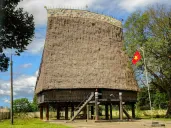
The Ma longhouse is the finest thing in the whole record of these four peoples, and it is an archive. It runs about forty meters, mostly up on piles, ten to twenty families of one patrilineal line under a roof, the eldest man of the line holding final authority. The door is at one end. Facing the door is an altar to the spirit of the hearth, the conao, built of painted or engraved planks finished in crosses of fern and sprays of frayed bamboo. And above the altar, hung from the smoke-blackened roof, is the record of the household:
“Every household birth is recorded in this manner, a small bamboo bow for a boy and a little bamboo fishing basket for a girl.”
Before a new field is cut, somebody goes to the chosen ground and brings back a branch, a leaf or a creeper and adds it to what hangs there. Every child and every field, in order, on one string above the fire. The Ma had no writing. They did not need any to keep this.
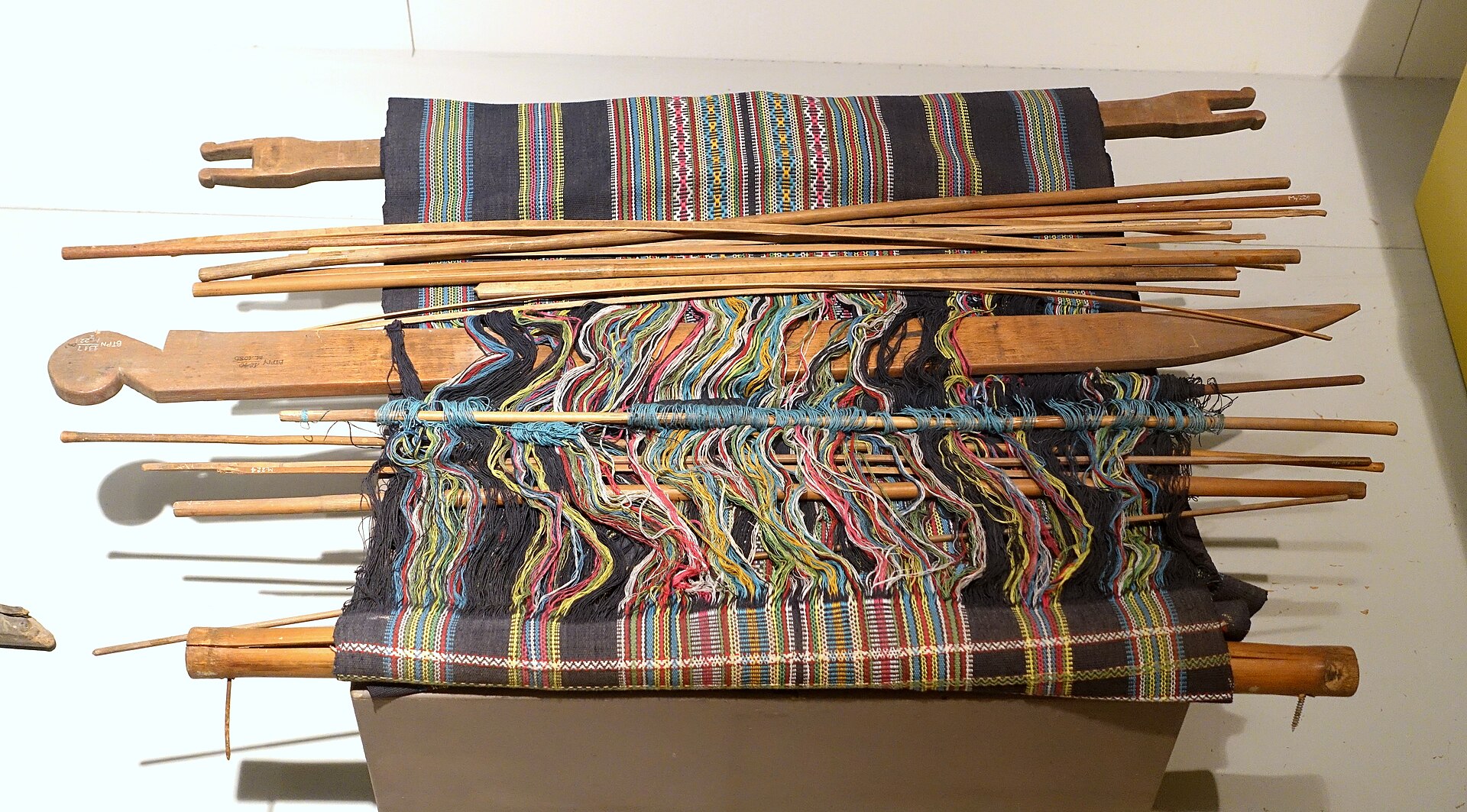
At night the house is also an instrument. Six players, rarely six women, walk the length of it in single file bent over their gongs, from one hearth to the next and back, for minutes or for hours broken by short rests; from outside and some way off the whole longhouse seems to hum. The Ma are known for the color and the design of their weaving, and for embroidering their white tunics; the villages of Gor, Pang and Rdy dig clay for pots; the smiths are on the Bao Loc plateau. And the term “longhouse” itself is only true of part of the country — on the right bank of the river and inside its bend the houses are low and short, some without piles at all. See Jars, rice wine and the buffalo feast.
The man who watched the Ma country go under
Jean Boulbet came into Ma country in 1946 as a tea and coffee planter at the Darnga estate near Bao Loc — that is, as part of the plantation economy that was taking the land — and stayed to spend fifteen years recording the Ma. He had a daughter, Laure, with a Cau Maa’ woman. He drew his account from what he saw between 1947 and 1963. He printed the Ma words for the world he was in: bboon, the village and its territory and the people of it; nggar, the country; bræe, the forest, the word that stands against bboon, so that a wild elephant is rubs bræe and a tame one rubs bboon; briae yaang and briae krong, the groves kept for the spirits; iông maa bboon, to be homesick for your village.
What he published as the Ma’s own voice is a sung dialogue, the tam pơt, between two fixed figures, Kôong and K’Yae, who stand for every pair of lovers in the Ma country. It has, he wrote, neither beginning nor end; the stanzas can come in any order and there is no limit to how many there are. The audience is expected to bodip — to catch the gaps, the dead ends, the double meanings, the images. In Ma the same word, ears, means the organs of hearing and also memory. A line runs: I think in my ears, I think on your face.
By the time he wrote it up the country was gone. Until about 1958, he said, the Cau Maa’ were still trying to live alongside what was coming and keep the essentials of their ground and their way of living — nibbled at, but holding. Then the war arrived, and he could not say how the Ma would come out of a war that was no concern of theirs and in which they were, one way or another, the losers. He was writing about a fight between Saigon, Hanoi and Washington over a country whose owners were not consulted, and he put it in a footnote to a love song.
The Churu, the Raglai, and the treasure of the Cham kings
The Churu and the Raglai are not Mon-Khmer at all. They are Chamic, and closer to Cham than the Rhade or the Jarai are: they “speak a language almost identical with Cham.” The Churu farm wet rice in the valleys, which is unusual in the highlands, and many of them also speak Koho. The old page said that the tie to Champa was widely told and that we had found nothing independent to settle it. That was wrong, and here is what settles it.
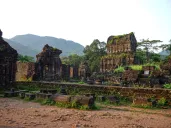
For years a French missionary at Phan Rang reported that a treasure of the Cham kings was kept up in the mountains among people the French called Moi. In 1903 the report was confirmed in the worst way: the highland guardians of one of the main deposits came down to the village of Tinh My, frightened that it was about to be taken from them, to say so to its owner. The École française d’Extrême-Orient answered by proposing that the treasure be listed as a historic monument, which meant an inventory, which meant going up.
What the inventory of 1904 and 1905 found was a system, not a hoard. Part of it lay in the Cham valleys of Bình Thuận; a good part stayed hidden in the mountains, ringed by the guardians’ fear of it. At Cvab the deposit was a granary three meters by two, on piles just off the ground, the walls under a thin thatch roof only seventy-five centimeters high, and beneath it a crawl-space that served as guard post and kitchen, whose smoke had been damaging the royal cloth for years. Inside were six round baskets finely plaited from rattan ribs, called dér praik, holding sets of funerary vessels. The Frenchman got three of them half open, on the sly, while the guardian shook with fear.
At Lavañ there were two granaries under one shed at the far end of a walled court set in a hollow of the mountain, sacred ground, where the visitors had to get down from the palanquin a hundred meters off and walk in. The treasure there was divided without any order between two highland priests, each jealous of his own share. Before it could be opened a hen or a kid was killed under each granary on the first evening and the bones thrown up to be read; the gods being favorable, a buffalo was killed, and only then were the bales and chests brought down. The hundred or two hundred robes, tunics, embroidered skirts and scarves were in a wretched state, looking as though they had been through a fire and then ruined by the water used to put it out. The royal patents of investiture kept there went back to the reign of Minh Mạng.
Two thefts are on the record. In 1886 the divorced husband of a relative of the treasure’s Cham owner went up to the deposits, took advantage of the guardians’ good faith, and carried off gold vessels and the old manuscripts — a loss called irreparable at the time. He was disowned by the Cham, went over to the Vietnamese and disappeared. Around 1895 two large vessels were stolen from a Ma hamlet at Da Lat that held a giant mat left by the Cham. A third deposit, only rags of clothing by then, was in the Lat village of Mo-kien on the Da Lat road.
So the deposits were not only Churu and Raglai. Koho Lat and Ma settlements appear in the same 1905 record. The inventory itself never says Churu or Raglai — it says Moi throughout. The identification of Lavañ and Kajon as Churu villages comes from a Vietnamese Catholic writer in 2014 working from the missionary record of the same country, and we give the chain rather than hide it. A Japanese researcher surveying these provinces in 2003 and 2004 still counted more than a dozen stores of Cham royal treasure held in Koho, Raglai and Churu villages. The Cham king Po Rome, who reigned in the seventeenth century, is repeatedly said to have been a Churu by birth; the sources behind that claim are an 1890 collection of Cham legends and a 1906 note, and we have not read either, so we leave it where it stands.
A hundred and twenty years is a long time to hold another kingdom’s regalia for nothing.
The Raglai
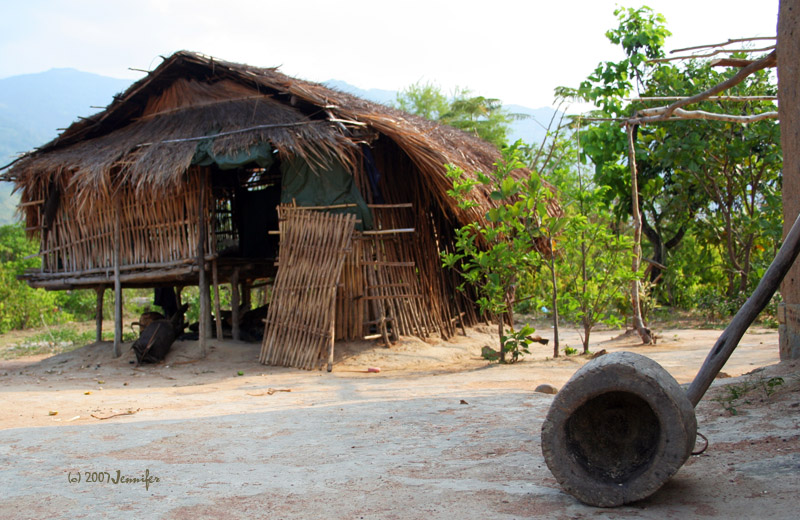

Property among the Raglai is inherited, controlled and disposed of by the women, and nothing can be sold until the senior woman of the family says so. The most valuable things a family owns are gongs and the old jars for brewing rice wine. There is no central authority in the village; the power to dispose of what the village has belongs to the senior women of its extended families.
Beside the eldest woman stands her eldest brother. He is married and lives in another household, and he keeps a standing part in his sister’s family’s affairs all the same. His authority is not the restrictive kind; he is owed respect as the eldest man of the blood line, and his work is to interpret the traditions and apply them to whatever has come up. The Raglai word for this maternal uncle is a special term of respect, and the same word is used to address any superior or any old man.
A Raglai child is named at once by its mother and her brother, and then the name is not said aloud for about six years, because the malevolent spirits cannot harm a child whose name they do not know. Meanwhile the child is called something deliberately unattractive, to put them off further. Six years of a false ugly name to keep a real one safe.
The Raglai bojau works in trance, naming the illness, naming the spirit responsible and naming the sacrifice. Unusually, they are organized: the diviners are loosely led by a bojau in the village of Choah near Bumong, and the whole arrangement appears to be attached to the worship of the spirit of Bumong, where many Raglai travel to offer sacrifice. We have found nothing else like it in the highlands.
Their history with the coast is old and hard. Pushed out of the coastal plain, the Raglai went back into the Annamite chain. When Vietnamese rule closed over the north in the fifteenth century and the Cham fell back on Khánh Hòa and Ninh Thuận, the Raglai fought beside them for two hundred years. The court at Huế drew a line between the two countries and moved the line whenever it wanted fertile ground on our side, sending military settlers to hold it; in 1887 some of them, called Homo, set themselves up in the mountains west of Phan Rang and recruited Raglai to work their paddies. Heavy taxes and “gifts” of ivory, rhinoceros horn and wood were taken from the Raglai near Nha Trang. Under the French a village got an appointed headman on top of its council of elders. Raglai rafts had carried goods down to the coastal towns until the fighting of the 1960s stopped it. See The slave raids and Roads, taxes and forced labor.
And then, in the middle of the Raglai chapter of the fullest survey ever printed in English, this: “Little information was available concerning special arts or skills of the Raglai.” Basket weaving and pottery, and some cloth from local fibers. That sentence is not a fact about the Raglai. It is a fact about the record.
What the handbook is, and how to read it
Almost everything above comes from one book: Minority Groups in the Republic of Vietnam, Department of the Army Pamphlet 550-105, compiled in 1966 by an American university under contract for the US Army. It is not an ethnography. It is a briefing book written so that soldiers could work in our villages, and its judgments are of their moment. Of the Ma it says they were “not completely pacified by the French until 1937,” that they are reserved with strangers and resent any intrusion on their way of living, that they are excitable and belligerent, and that they live in constant fear of evil spirits.
The clearest proof of what kind of document it is can be assembled from its own index. The same sentence, with the nouns changed, appears in chapter after chapter:
| Page | People | The sentence |
|---|---|---|
| 58 | Bahnar | less proficient with mortars, explosives and mines, “because of their difficulty in understanding the more theoretical and technical aspects of timing and trajectory” |
| 95 | Bru | “find the more abstract and technical aspects of such weapons… difficult to absorb” |
| 130 | Cua | “cannot handle sophisticated devices” |
| 220 | Hre | “find it difficult to absorb the more abstract and technical aspects” |
| 315 | Jarai | “less proficient with sophisticated devices” |
| 354 | Jeh | “cannot handle sophisticated devices” |
| 394 | Katu | “seem unable to handle sophisticated devices” |
| 442 | Koho | “cannot absorb the more abstract and technical aspects” |
| 484 | Ma | “cannot handle sophisticated devices” |
| 817 | Stieng | can handle them, but are limited by “their lack of understanding of the more theoretical and technical aspects” |
Ten peoples, ten chapters, one verdict, written once and stamped down the book. It was not a finding about any of us. We use the handbook because for several of these peoples it is the only long account in English that exists, and we quote its evaluative words inside quotation marks so that a reader can see whose words they are.
The twentieth century, and the names we do not have
The Koho are the Ka in BAJARAKA: Bahnar, Jarai, Rhade, Koho, the four peoples who put their initials into the name of the movement in 1958. We cannot tell you which Koho. No source we can reach names a single Koho political leader of that generation — not the human-rights literature, not our own diaspora organizations, not the 1966 handbook. The Ka stands for a people and not for a man, because the man’s name was not written down.
What is on the record for the Churu is a short list of names from the Da Nhim valley in the 1940s: Touprong Hiou, Ya Yu Sahau, Touneh Han Din, Touneh Han Tin, Touprong Ya Ba, Bahnaria Ya Don, described as Churu men holding office in Tân Khai district. From the church record come Touneh Hàn Đăng, an official; his daughter Hélène Touneh Hàn Đào, born 1937; the infant Pierre Touneh Hàn Phụng, baptized June 7, 1959, recorded as the first highlander Christian of that mission; and Touneh Hàn Thọ, who wrote a master’s thesis of 482 pages. We have not found the thesis, its title, or where it is held. It is a Churu writing at length about the Churu, and it is the single most valuable thing named anywhere in the research for this page.
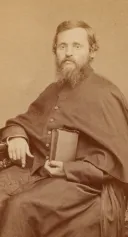
The missionaries are easier to trace than we are. Father L. Villaume made the first contact with the Churu and first reported the treasure; Father E. Durand, who made the 1905 inventory, worked among them; Jacques Dournes arrived in 1946 and spent eight years among the Sre at Kala, south of Da Lat, publishing a Sre dictionary in 1949 and sitting on the commission that fixed how Sre should be written, before he left in 1955 for the Jarai at Cheo Reo. Father F. Darricau came in 1954 and set up a highland center at M’lon in 1958; twenty-two years of his mission produced nearly two thousand Christians. Jean Cassaigne, who founded the leper settlement at Di Linh and later became bishop of Saigon, published on the Koho of that district in 1943. Of the Churu converts of that generation the church record keeps one sentence: they burned their protective spirits, and it was an event in the villages.
By 1966 the split among the Koho was already plain. The Kil in the high mountains wanted only to be left as they were. The Sre, Lat and T’ring around Di Linh and Da Lat were, the handbook says, anxious to get an education and willing to accept change, and some of them had been through Vietnamese schools and held government posts. It names none of them either.
What has happened to the land
In Lac Duong district in Lam Dong, in two communes where about 85 percent of households are Koho, the forest is held by state forest enterprises, forest management boards and people’s committees. One percent of the forest land is managed by individual households. Poor households — overwhelmingly Koho — farm on average 0.70 hectares, against 1.27 to 1.47 for the better off. The policy documents for the same programs state that ethnic minority people in particular have been clearing forest and turning it into settlements and farmland. The survey data behind that assertion show the opposite: the poorest households had cleared less land than the wealthier ones. See Land taken for coffee and Got pushed off.
And then there is what is not there. Three major reports on our country — Repression of Montagnards in 2002, No Sanctuary in 2006, Montagnard Christians in Vietnam in 2011 — between them mention the Koho twice, in a population table and in the letters of BAJARAKA, and mention the Churu, the Ma and the Raglai not once. Lam Dong, Lac Duong, Di Linh, Duc Trong, Ninh Thuận and Bình Thuận do not appear. The international record of the Central Highlands is a record of the northern and central provinces. That is not evidence that nothing has happened in the south. It is evidence that nobody with standing has gone and looked.
What we have not found
Not one published first-person account by a living Koho, Ma, Churu or Raglai person: no interview, memoir, testimony or signed piece. The closest we came is a sung dialogue recorded by a Frenchman in the 1950s, a deacon in North Carolina whose people we could not confirm, a Raglai diviner named only in a missionary magazine, and a thesis we cannot find.
We do not have an independent count of the Ma, the Churu or the Raglai since the 1960s. We do not have a non-state source on Churu silverwork and ring-making, which is their best-known craft, nor on the Raglai mã la gongs or the chapi. We have not found the rest of the Koho origin story of the kite and the crab, which the handbook begins and cuts off. We have not reached a single museum catalog outside Vietnam that holds Koho, Ma, Churu or Raglai material, though Boulbet and Dournes both collected. The French scholarly archive that holds the original prayers and the fullest Ma ethnography — Boulbet’s Pays des Maa’, his study of the miir, the Persée run of the Bulletin — was closed to us.
If you are Koho, Ma, Churu or Raglai, we would rather print your account than any of the above. See How to record an elder.
See also: The smaller peoples, The Mnong, Dega tribes and languages, Dega women.
Sources
- Minority Groups in the Republic of Vietnam, Department of the Army Pamphlet 550-105, Cultural Information Analysis Center, Center for Research in Social Systems, The American University, 1966 — read at the Internet Archive. The Koho chapter (pp. 407–442), the Ma chapter (pp. 457–486), the Raglai chapter (pp. 593–618) and the Cham chapter (pp. 883–890). Every quotation on this page was checked against the book’s own page images: the cover name at p. 409, Koho matriliny and the wedding at pp. 417 and 419, the Sre and the Kil at p. 431, the rice as liver and flesh at p. 426, the yang bri at p. 426, Ma patriliny at pp. 457 and 465, the longhouse altar at p. 461, the French and 1937 at pp. 460 and 464, “Orang Glai” at p. 593, the maternal uncle at p. 601, the hidden name at p. 602, La Yoan and the organization at Choah at p. 608, Raglai property and the missing arts at p. 609, the Chamic languages at p. 888, and the repeated weapons verdict at pp. 58, 95, 130, 220, 315, 354, 394, 442, 484 and 817
- Jean Boulbet, Dialogue lyrique des Cau Maa’ (Tam pot maa’), Publications de l’École française d’Extrême-Orient vol. 85 — read at the Internet Archive. The Ma words for village, country and forest; the Koon Cau; the sung dialogue and how it is heard; the gong orchestra walking the longhouse; his own dates, 1947 to 1963; and the passage on what the war did to the Ma country
- H. Parmentier and E. M. Durand, “Le Trésor des rois chams,” Bulletin de l’École française d’Extrême-Orient 5 (1905) — a scan of the offprint. The guardians coming down to Tinh My, the granary at Cvab, the two priests and the two granaries at Lavañ, the sacrifices required to open them, the state of the textiles, the patents going back to Minh Mạng, the theft of 1886, and the Lat and Ma deposits near Da Lat. The scan’s optical character recognition is poor and we have kept only what we could read twice
- Thiên Hựu Nguyễn Thành Thống, “Người Chu-Ru, các vị Thừa sai và Nhà thờ Ka-Đơn,” Sao Biển Nha Trang, July 13, 2014 — a Vietnamese Catholic diocesan writer, working from the French missionary record, who identifies Lauan and Kayon as Churu villages and gives the missionary chain and the Touneh names. Not a state source; a church one, and we name it as the link it is
- Shine Toshihiko, “The Montagnards and the Prum Kings (the Cham Kings)” (2007) — the paper. More than a dozen stores of Cham royal treasure still held in Koho, Raglai and Churu villages, from fieldwork in 2003 and 2004
- Leif Tore Trædal and Pål Vedeld, “Livelihoods and Land Uses in Environmental Policy Approaches: The Case of PES and REDD+ in the Lam Dong Province of Vietnam,” Forests 8(2):39 (2017) — the two Lac Duong communes, the 85 percent, the 1 percent of forest land in household hands, the 0.70 hectares, and the mismatch between what the policy documents say about minority clearing and what the survey found
- Human Rights Watch, Repression of Montagnards (2002), No Sanctuary (2006) and Montagnard Christians in Vietnam (2011) — the Koho figure of 122,000, the meaning of BAJARAKA, and the silence on the four southern peoples, which we checked report by report
- IRFA, biography of Jacques Dournes — the eight years among the Sre at Kala, the 1949 dictionary and the transcription commission, and the move to the Jarai in 1955
- Jean Boulbet, Pays des Maa’, domaine des génies: Nggar Maa’, Nggar Yang (École française d’Extrême-Orient, 1967) — cited for the title, which is itself a Ma doublet: the country of the Ma, the country of the spirits. We could not obtain the book
Compiled September 2026. The 1966 handbook’s evaluative words are quoted, never adopted. Place names in our own country are written plainly; the names of cited works and the spellings inside quotations stand as printed.